Skip to content
Photonews Logo Photonews logo
  • Home
  • Pakistan
    • Punjab
    • Sindh
    • Khyber Pakhtunkhwa
    • Azad Jammu Kashmir
    • Balochistan
    • Gilgit – Baltistan
  • World
  • Business
  • Entertainment
  • Videos
    Ricky Gervais Alley Cats official Netflix trailer
    Videos

    Ricky Gervais ‘Alley Cats’ Trailer Sets August 7 Debut

    July 23, 2026 2 Min Read
    Sam Fender Olivia Dean break UK chart record with Rein Me In after 16 weeks at No. 1.
    Videos

    Sam Fender, Olivia Dean Break 30-Year UK Chart Record

    July 12, 2026 2 Min Read
    Angry Birds Movie 3 trailer by Paramount animated sequel before December 2026 release
    Videos

    Angry Birds Movie 3 Trailer Sets Dec 23 Release

    June 30, 2026 1 Min Read
  • Sports
  • Technology
  • Offbeat
  • Blog
  • Contact
Reading: Pakistan Counterterrorism Strategy Crisis Demands a New Approach
PhotoNews PakistanPhotoNews Pakistan
Font ResizerAa
Search
  • Home
  • Pakistan
    • Punjab
    • Sindh
    • Khyber Pakhtunkhwa
    • Balochistan
    • Azad Jammu Kashmir
    • Gilgit – Baltistan
  • World
  • Business
  • Entertainment
  • Videos
  • Sports
  • Technology
  • Offbeat
  • Blog
  • Contact
Have an existing account? Sign In
Follow US
© 2022 Photonews. All Rights Reserved.
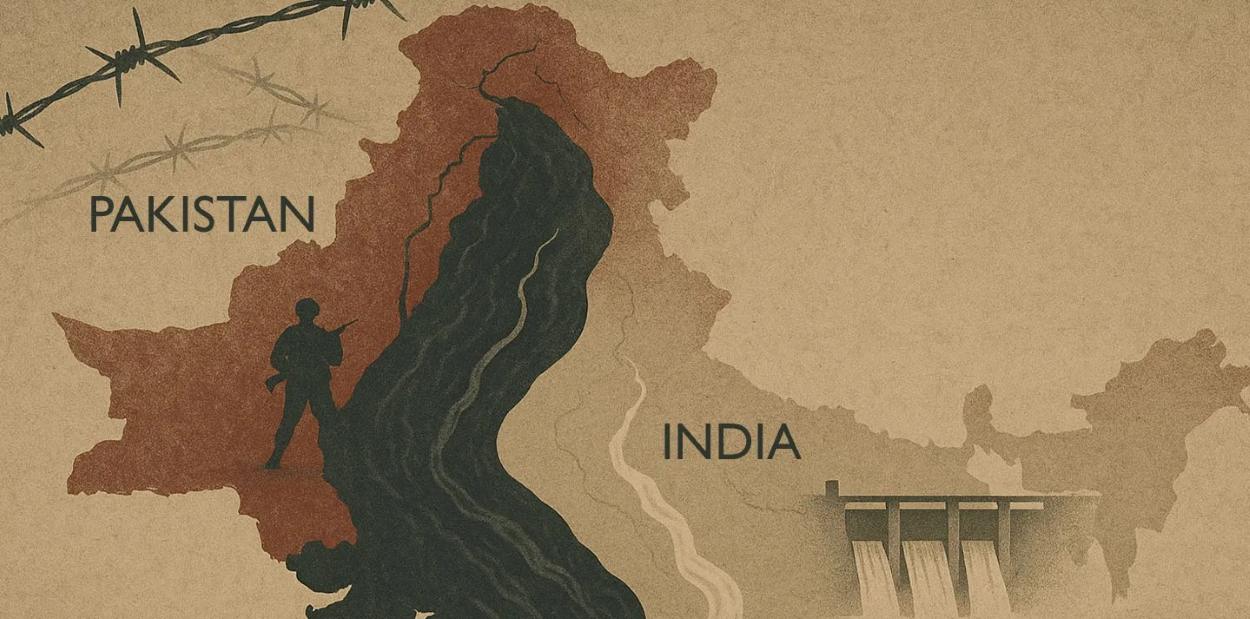
Cover photo of the book “Terrorism and Water Wars: India-Pakistan on the Brink of a Major Conflagration” by Anuttama Banerji and Srini Sitaraman.
PhotoNews Pakistan > Blog > Pakistan Counterterrorism Strategy Crisis Demands a New Approach
Blog

Pakistan Counterterrorism Strategy Crisis Demands a New Approach

Tahir Shabbir
By Tahir Shabbir Published March 20, 2026 4 Min Read
Share
Cover image from “Terrorism and Water Wars: India-Pakistan on the Brink of a Major Conflagration” by Ms. Anuttama Banerji and Dr. Srini Sitaraman.
SHARE

Pakistan is confronting a renewed surge in militant violence, exposing a deepening crisis in its counterterrorism strategy. The central challenge is no longer merely the increase in attacks, but the state’s persistent reliance on a predominantly force-led response to what have become qualitatively distinct security threats.

The core argument is straightforward: Pakistan is managing two separate theatres of violence through a single, broad security template. The first front is in Khyber Pakhtunkhwa and the Pashtun belt of Balochistan, where militancy is ideological, religiously framed, and driven by groups such as the Tehrik-i-Taliban Pakistan (TTP). This front has been further complicated by the regional shift following the Afghan Taliban’s return to power in 2021. The second front lies in Balochistan’s Baloch-majority districts, where the conflict is political rather than religious, rooted in longstanding grievances over marginalisation, resource allocation, autonomy, and rights.

This distinction is critical. One conflict is transnational and ideologically driven; the other is sub-nationalist and political in character. Yet both are met with a near-identical response: military operations and intelligence-based kinetic action. While such operations may yield short-term tactical gains, these have consistently failed to translate into durable stability, as violence tends to re-emerge in more adaptive forms. The problem, therefore, is not the use of force per se, but an over-reliance on it to the exclusion of broader strategic tools.

This critique echoes within official policy circles. The Prime Minister’s Office has framed Azm-e-Istehkam as a multi-domain, whole-of-system vision intended to reinvigorate the revised National Action Plan (NAP), distinguishing it from a narrow military operation. However, the gap between strategic framing and implementation remains pronounced.

Institutional Fragmentation and the Coordination Gap

A significant structural weakness lies in Pakistan’s fragmented institutional response. Civilian oversight has been marginalised, and coordination among stakeholders remains weak. This is particularly evident in the role of the National Counter Terrorism Authority (NACTA), which is formally mandated to coordinate national counterterrorism efforts. While NACTA’s framework continues to centre on the NAP, policy direction remains abstract. Initiatives such as Azm-e-Istehkam and the revised NAP have been criticised for lacking clearly assigned responsibilities, enforceable timelines, and measurable benchmarks, shortcomings that undermine effective execution.

What is required is a holistic approach calibrated to the distinct nature of each conflict. In Khyber Pakhtunkhwa, targeted security action must be integrated with governance reforms, robust local policing, and a credible ideological counter-narrative to counter extremist influence. In Balochistan, a political insurgency driven by deep-seated grievances cannot be resolved by force alone. A sustainable approach demands genuine political dialogue, inclusive representation, transparent resource-sharing, and strengthened local governance.

This direction aligns with official recognition of the need for prevention. NACTA has noted the approval of the National Policy for the Prevention of Violent Extremism, which advocates a whole-of-society approach to addressing root causes. Translating this policy into practice, however, remains the central test.

TAGGED:Featured
Share This Article
Facebook Twitter Pinterest Whatsapp Whatsapp LinkedIn Email Copy Link Print
Leave a comment

Leave a Reply Cancel reply

Your email address will not be published. Required fields are marked *

Advertisement

Recent Posts

Water hydrant in Karachi supplies tanker trucks for urban distribution

Karachi Water Supply Disruption to Hit Five Areas for 48 Hours

President Recep Tayyip Erdoğan and Iraqi Prime Minister Ali al-Zaidi speak during a joint press conference after bilateral meetings in Ankara, Türkiye, on July 28, 2026.

Iraq Türkiye Oil Pipeline Deal Targets 750,000 Bpd

Kuwait Army General Headquarters official emblem representing the country's armed forces leadership.

Kuwait Drone Attack Damages Government Site, Vehicles

Post Archives

More Popular from Photonews

Official emblem of the Azad Jammu and Kashmir Government on a green background.
Azad Jammu Kashmir

AJK Refugee Seats Face August 2 Vote Amid Dispute

2 Min Read
OpenAI logo on a glowing circuit board with electronic components, symbolizing artificial intelligence and advanced computing.
Tech

1,100 AI Workers Ask US to Help Pace AI Development

2 Min Read
Side-by-side editorial collage of former child star Kristy McNichol in her youth (left) and in a recent appearance (right). Image Credit: ABC | MEGA.
Entertainment

Kristy McNichol Photo Captures Rare Carnie Wilson Meeting

1 Min Read
Sports

Di María Urges Messi to Keep Playing for Argentina

Ángel Di María urged Lionel Messi to keep playing for Argentina after the 39-year-old captain led…

July 26, 2026
Sports

Inter Miami Beat CF Montréal 1–0 After Berterame’s Injury

Inter Miami beat CF Montréal 1–0 at Stade Saputo in Montréal on Saturday, July 25, after…

July 26, 2026
Sports

Jimmy Butler Haircut Prompts AI Joke From Stephen Curry

Jimmy Butler's haircut photographs prompted an AI joke from Golden State Warriors teammate Stephen Curry after…

July 29, 2026
Sports

Slavko Vincic Retires as Enzo Red Card Theory Spreads

Slavko Vincic has retired one week after refereeing Spain’s 1-0 extra-time win over Argentina in the…

July 28, 2026
PhotoNews Pakistan

Always Stay Up to Date

Subscribe to our newsletter to get our newest articles instantly!

    Categories

    • World
    • Pakistan
    • Punjab
    • Sindh
    • Khyber Pakhtunkhwa
    • Balochistan
    • Azad Jammu Kashmir


    • Top News
    • Business
    • Entertainment
    • Sports
    • Videos
    • Tech
    • Offbeat
    • Blog
    • About Us
    • Privacy Policy
    • Code of Ethics & Editorial Standards

    © 2026 Phototnews
    All Rights Reserved.

    Welcome Back!

    Sign in to your account

    Lost your password?