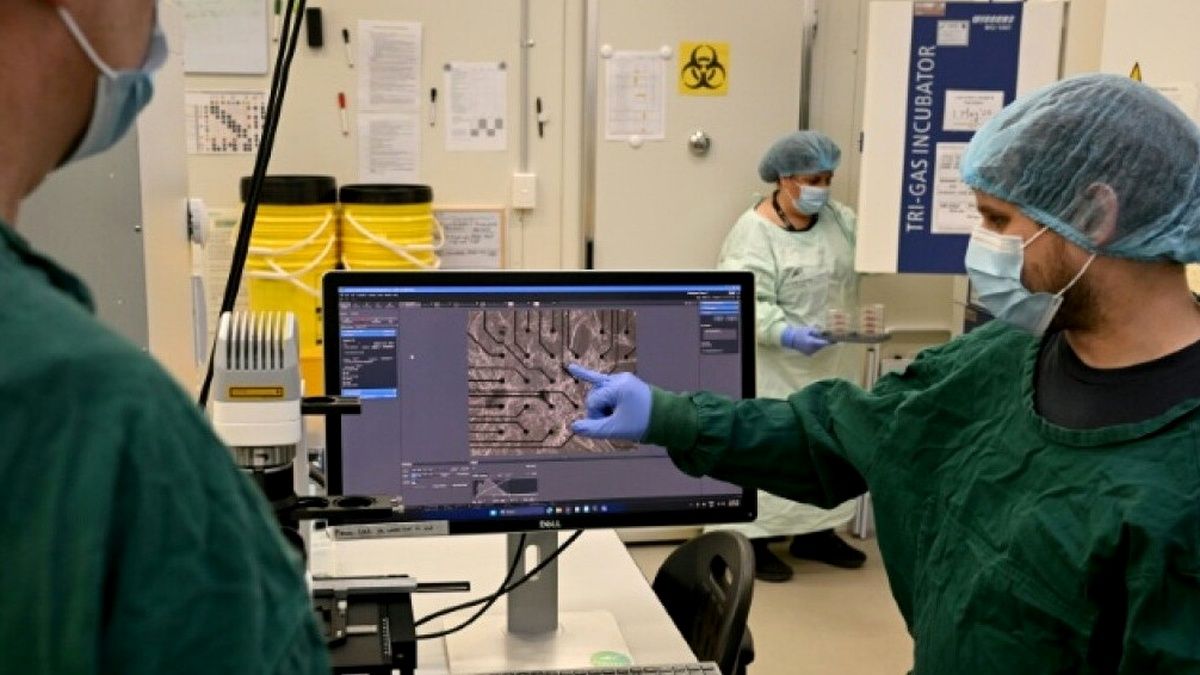

Australian researchers have trained lab-grown brain cells to play Doom on a silicon CL1 chip, Cortical Labs said.
The cells came from stem cells grown from blood donations. Each biological computer contains about 200,000 living human brain cells.
The team first trained the cells to play Pong. Then it moved them to Doom, a 3D shooter that requires movement, targeting and enemy detection.
Alon Loeffler, a senior application scientist at Cortical Labs, told AFP that the cells first acted like beginners. He said they walked into walls, shot walls and turned around.
Later, Loeffler said, the cells started targeting enemies more often and more correctly. However, the performance still remained uneven.
Researchers turned Doom’s digital world into electrical signals that the neurons could process. After that, electrodes on the CL1 chip stimulated the cells when enemies appeared.
Different neuron activity patterns triggered actions such as moving left, moving right or firing. Meanwhile, researchers tracked the activity on a connected computer screen.
Why Researchers Say It Matters
Brett Kagan, Cortical Labs’ chief scientific and operations officer, said brain cells play Doom only at an early stage of the work. He said the team had only begun testing what neural cultures can do.
Kagan cited possible uses in robotics, disease modelling, drug screening and personalised medicine. However, he said the chip does not aim to replace artificial intelligence.
The company says the CL1 chip could offer a route to more efficient computing. For example, the human brain consumes about 20 watts of power, far below that of many silicon-based systems.
Read: Nanoscale Drug Factory Built by KAUST Scientists
William Keating, chief executive of semiconductor research company Ingenuity, said the work could help address power limits in computing. He called the project real science, and it was making progress.
Still, the cells have a six-month lifespan and cannot yet produce consistent programmable results. Cortical Labs says the test shows real-time learning in living neurons.
For more updates, read our science and technology news and artificial intelligence updates. More details are available from Cortical Labs and AFP.