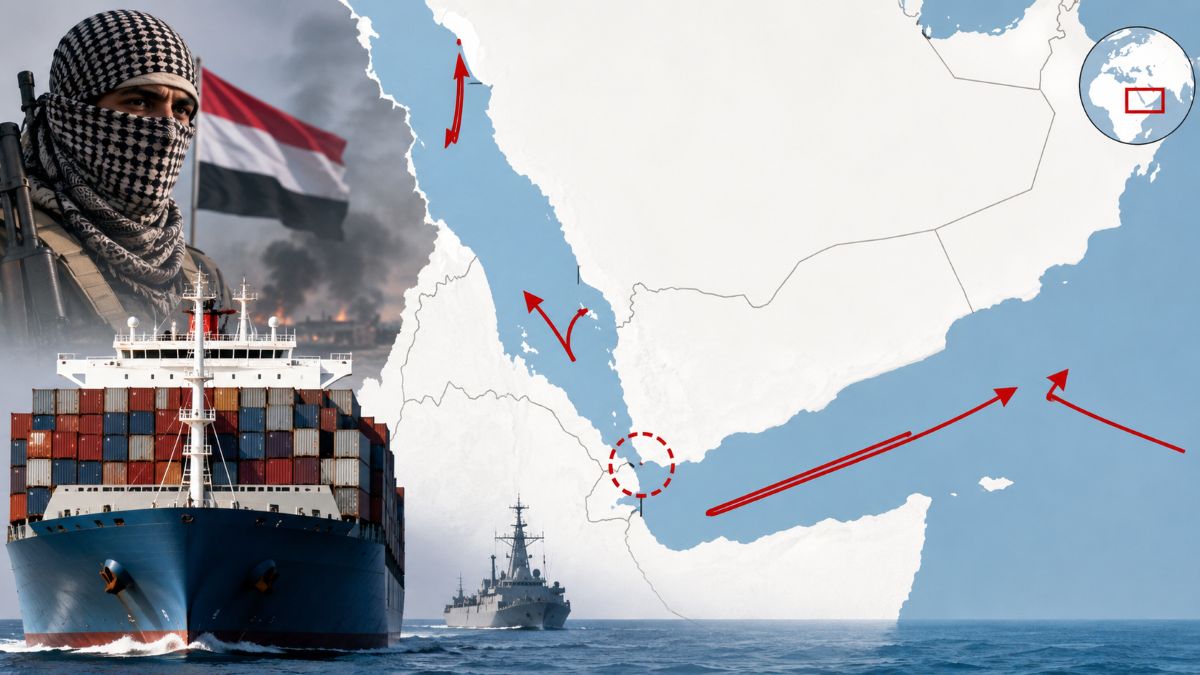

SANAA: The Houthi blockade on Saudi-linked shipping through the Red Sea and Bab al-Mandeb Strait began July 20, threatening the kingdom’s oil-export routes.
Houthi military spokesperson Yahya Saree announced the maritime embargo would take effect immediately. He described it as an “eye for an eye” response to what the group called a Saudi blockade of Yemen.
However, the restrictions target Saudi commercial vessels and ships linked to Saudi ports. They do not cover all traffic through the Bab al-Mandeb, according to the Associated Press.
Meanwhile, the Saudi-led coalition said it would use force to protect vessels travelling through the strait. Saudi Arabia’s Foreign Ministry also rejected the Houthis’ allegation that Riyadh was besieging Yemen.
The escalation followed an attack on Sanaa International Airport. The Houthis blamed Saudi Arabia. However, Yemen’s internationally recognised government claimed responsibility. It said the attack aimed to prevent an Iranian aircraft from landing.
Previously, Houthi political bureau member Mohammed al-Bukhaiti told Al Jazeera that the group could target Saudi airports. He also threatened action in the Bab al-Mandeb against countries involved in hostilities against Yemen.
Read: Houthi Red Sea Attack Threat Raises Fresh Shipping Fears
A complete closure of the strait could remove about 7% of global oil supplies, Reuters reported. Therefore, Saudi Arabia increasingly depends on its East-West Pipeline and the Red Sea port of Yanbu. The conflict has restricted exports through the Strait of Hormuz.
In addition, the United States and Pakistan condemned the maritime threats. Islamabad reaffirmed its commitment to a mutual defence agreement with Saudi Arabia.
Later, the Houthis claimed missile and drone attacks against two Saudi oil tankers. The group accused the vessels of violating the blockade. However, independent authorities had not confirmed the full extent of the damage.