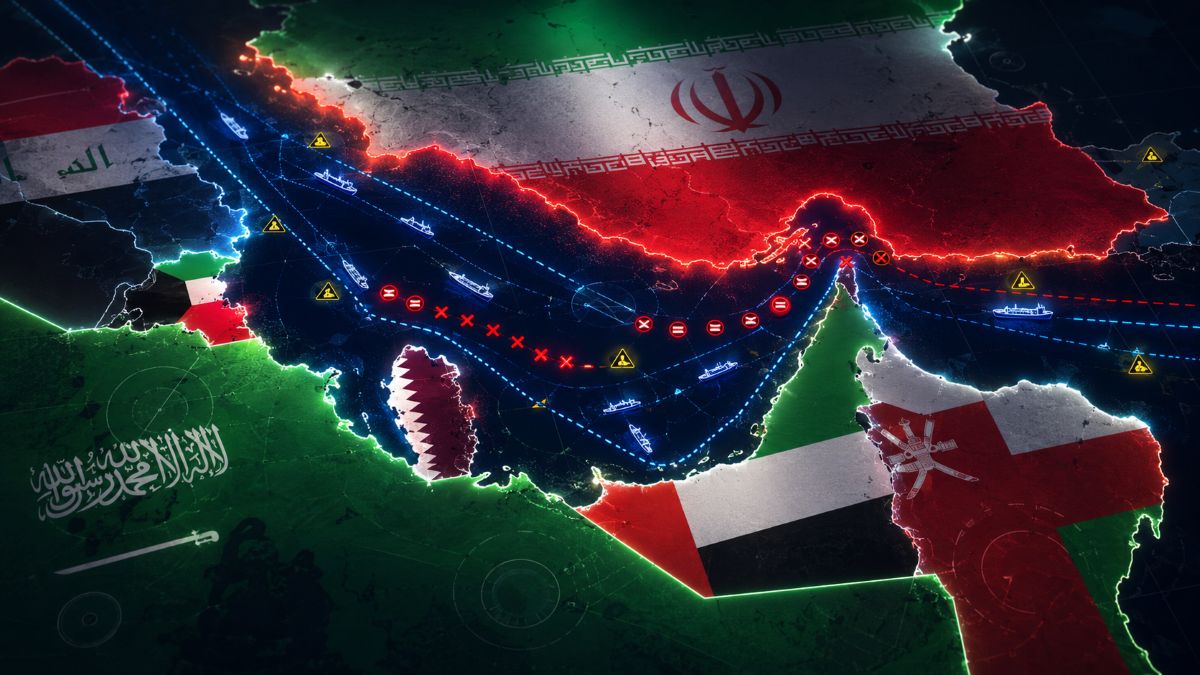

Iran said on Friday that Hormuz transit routes must follow Tehran-approved arrangements, warning that safe passage could not be guaranteed through parallel corridors outside its coordination.
Kazem Gharibabadi, Iran’s deputy foreign minister, said any credible framework for the Strait of Hormuz must involve Iran as a coastal state.
The Islamic Revolutionary Guard Corps said passage through the waterway was possible only through routes announced by Iran, state broadcaster IRIB reported.
Iranian state TV said at least three foreign oil tankers turned back after an IRGC warning over alleged unauthorised transit. Current reports also cited renewed concerns after a Singapore-flagged vessel was hit near the strait.
Read:Oil Prices Fall as Middle East Supply Rises
The Singapore Maritime and Port Authority said the vessel completed its transit and all 21 crew members were safe. It called the incident a breach of international law.
Iran’s Foreign Ministry also criticised a joint statement by the United States and the Gulf Cooperation Council. It called the statement “interventionist, irresponsible and provocative”.
The ministry urged Gulf states to support a nuclear-weapon-free zone in the Middle East. It also said regional security should depend on regional countries, not foreign military presence.
The International Atomic Energy Agency also sought stronger access to Iran’s nuclear programme. Director General Rafael Grossi said Iran’s stated intentions were insufficient and called for a robust verification system.
The dispute came as Lebanon-Israel talks continued in Washington. Hezbollah Secretary-General Naim Qassem said Israel must leave Lebanon unconditionally, while Israeli forces continued operations in southern Lebanon