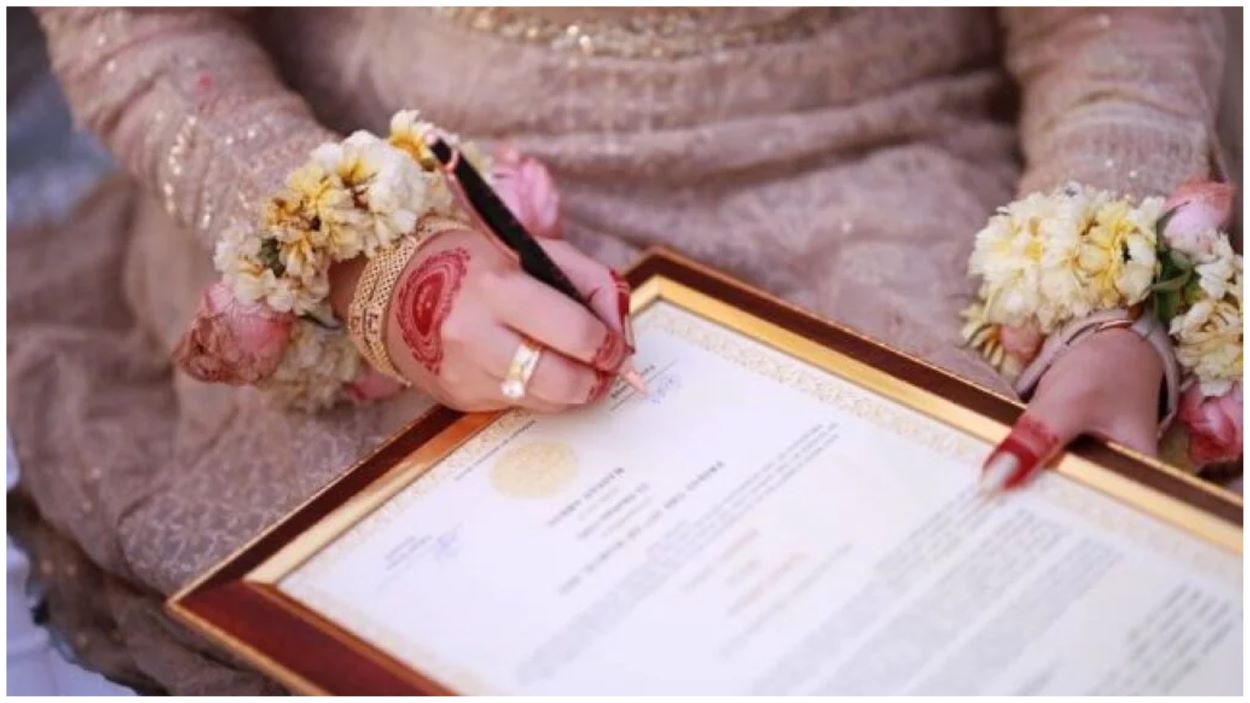

The Lahore High Court has ruled that Haq Mehr is a legal right of the wife and a binding obligation on the husband, not a discretionary favour.
The court said Haq Mehr is a lawful and religious right. It also declared the amount or property promised at the time of marriage to be a legally enforceable debt against the husband.
The ruling said commitments made during or at the time of marriage remain binding. The court added that written agreements beyond the Nikah Nama can also carry legal force.
The case involved a woman who sought enforcement of an agreement promising her a five-marla house and maintenance during iddat. She told the family court that her husband signed the separate agreement on the wedding day.
The trial court ruled in the woman’s favour. The husband challenged the decision before the Lahore High Court and claimed the agreement was fabricated later.
Read: Afghan Girl Alia Flees Marriage By Taxi After School Ban
The Lahore High Court rejected the appeal after reviewing evidence and witness testimonies. It upheld the family court’s decision.
The court noted that witnesses had confirmed the agreement’s authenticity during family court proceedings. It said the testimony established the document’s legal validity.
The judgment said women often do not claim Haq Mehr during marriage because of social and domestic pressure. However, it ruled that not claiming Haq Mehr does not mean a woman has waived her right.
The court said Haq Mehr can be fixed verbally, in writing or after marriage under Islamic principles. It may also be increased with mutual consent.