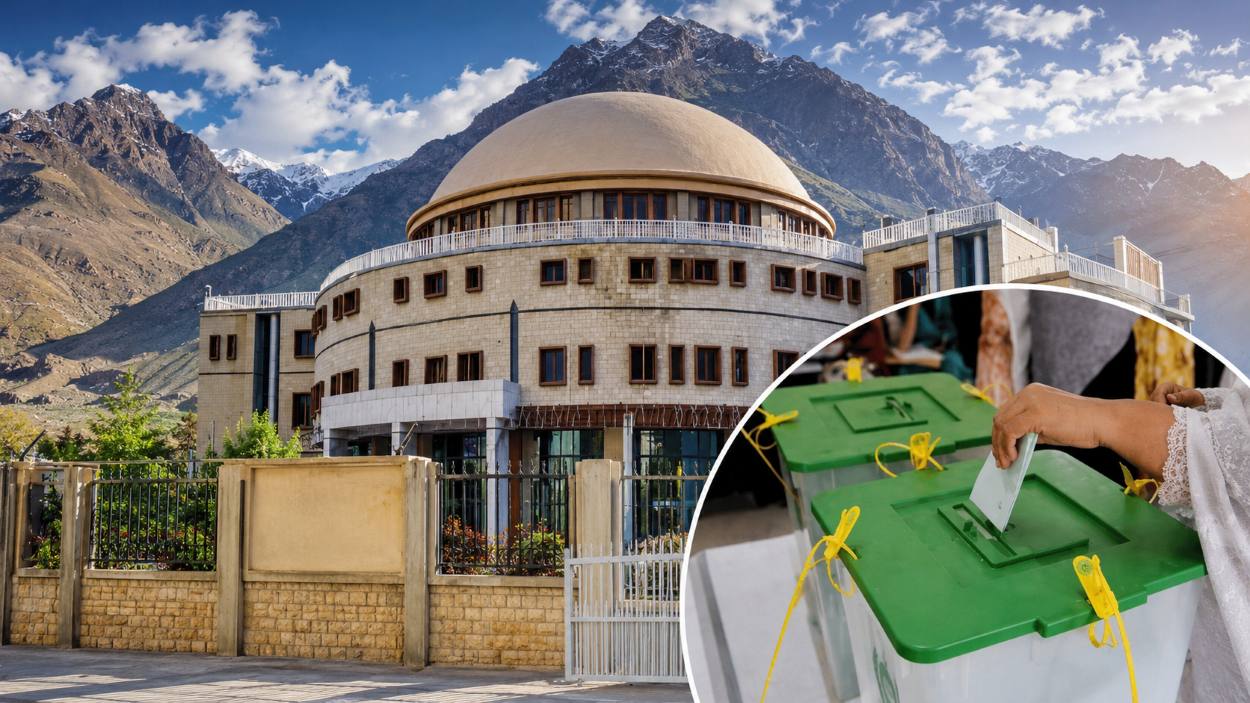

Gilgit-Baltistan elections will be held on June 7, with representation, development and accountability shaping the main campaign debate in the region.
The vote will take place in a constitutionally unsettled region of strategic importance to Pakistan. Candidates are expected to face questions over local needs beyond campaign promises.
Campaigns in Gilgit-Baltistan often highlight roads, schools, bridges, jobs and public schemes, but voters also listen to rival claims about who initiated, financed, or completed these projects.
Accountability becomes harder when rival claims compete in areas where development moves slowly. Still, voters find ways to judge representatives based on their record in office.
Pressure over climate risks, jobs, education, energy and health services will likely confront the next government. The election raises pressing questions about planning and delivery as well.
Read: Gilgit-Baltistan Elections Agents Deadline Set
Candidates are greeted by calls for clear plans that detail priorities, costs, responsibilities, and yearly milestones. They must also clarify how elected members will coordinate with the federal government in Islamabad.
Glacial lake outburst floods, land erosion, and fragile livelihoods pose risks to Gilgit-Baltistan. As a result, climate resilience remains central to many campaign platforms.
Another major concern is youth employment. Voters are expected to seek comprehensive job plans, not just temporary government posts and political recommendations.
The region contributes to Pakistan through tourism, geography and connectivity. However, it still lacks the same constitutional voice as the provinces.