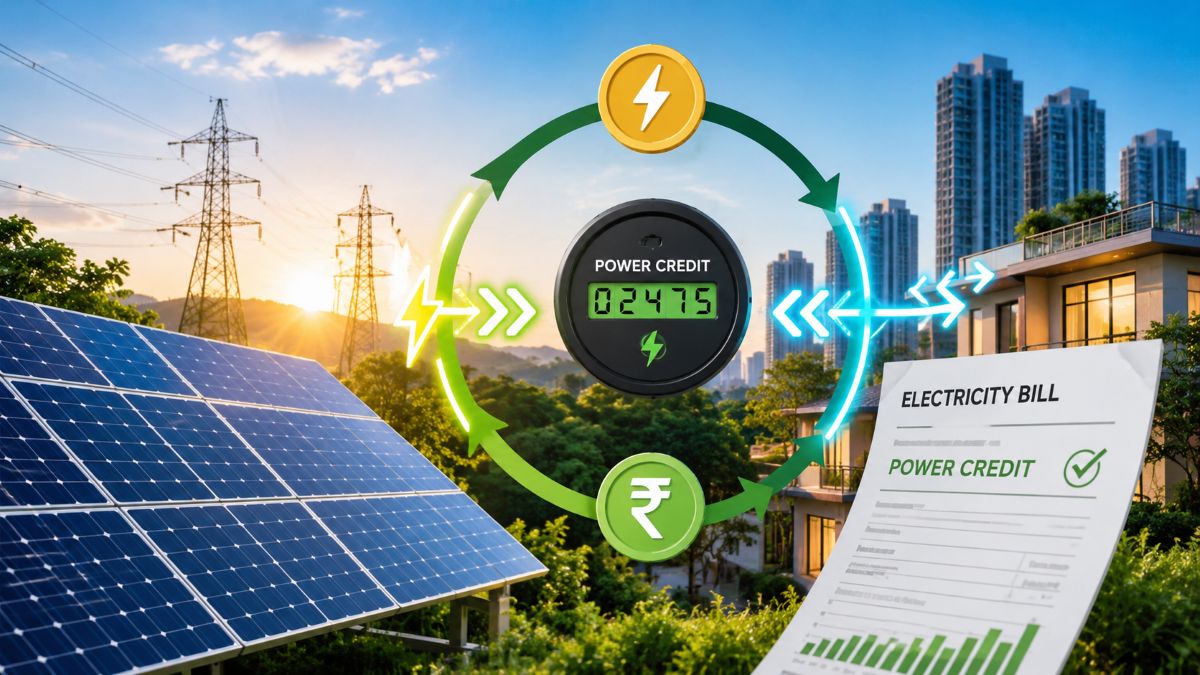

The federal government is planning a Solar Wheeling Policy that would allow consumers and businesses to generate solar power at one location. Additionally, they could use credits at another. This would take place through the national grid.
Rawalpindi Chamber of Commerce and Industry President Usman Shaukat shared the details after a meeting between Prime Minister Shehbaz Sharif and business leaders. He said the prime minister told industrialists that the government was working on a framework. Specifically, this framework concerns a policy regarding solar wheeling.
Under the proposed system, consumers could install solar panels on land in villages or remote areas and convert the generated electricity into energy credits. In the context of the Policy, those credits could then offset electricity use at homes, apartments, offices, or factories in cities.
The policy is expected to help urban residents who lack rooftop space for solar systems. Additionally, this initiative, centred on solar wheeling policy, could also benefit families and businesses that own rural land. However, they may operate in Islamabad, Karachi, Lahore or other major cities.
Read: Solar Application Fees Face Power Division Pushback
For example, an apartment resident could install solar panels on family-owned land in a village. Then, they could use the credits to reduce their city’s electricity bill under the regulations set by the solar wheeling policy.
Shaukat called solar wheeling a “game changer” for the industry. In his view, this policy could mean businesses benefit from access to cheaper electricity. Furthermore, they could see operating costs fall. As a result, they could become more competitive through the adoption of solar wheeling policy ideas.
He said energy wheeling is already used in several countries and major cities. The system allows electricity generated at one site to flow through the grid and count toward consumption at another site. Additionally, similar models could be implemented under the Solar Wheeling Policy for Pakistan.
According to Shaukat, the proposal has long been demanded by Pakistan’s industrial sector. He said reliable and affordable energy, enabled in part by the solar wheeling policy, remains essential for industrial growth. It also fosters investment and export competitiveness.
Shaukat also urged stronger support for Pakistan’s IT sector through policy reforms, investment facilitation and export-oriented initiatives.