

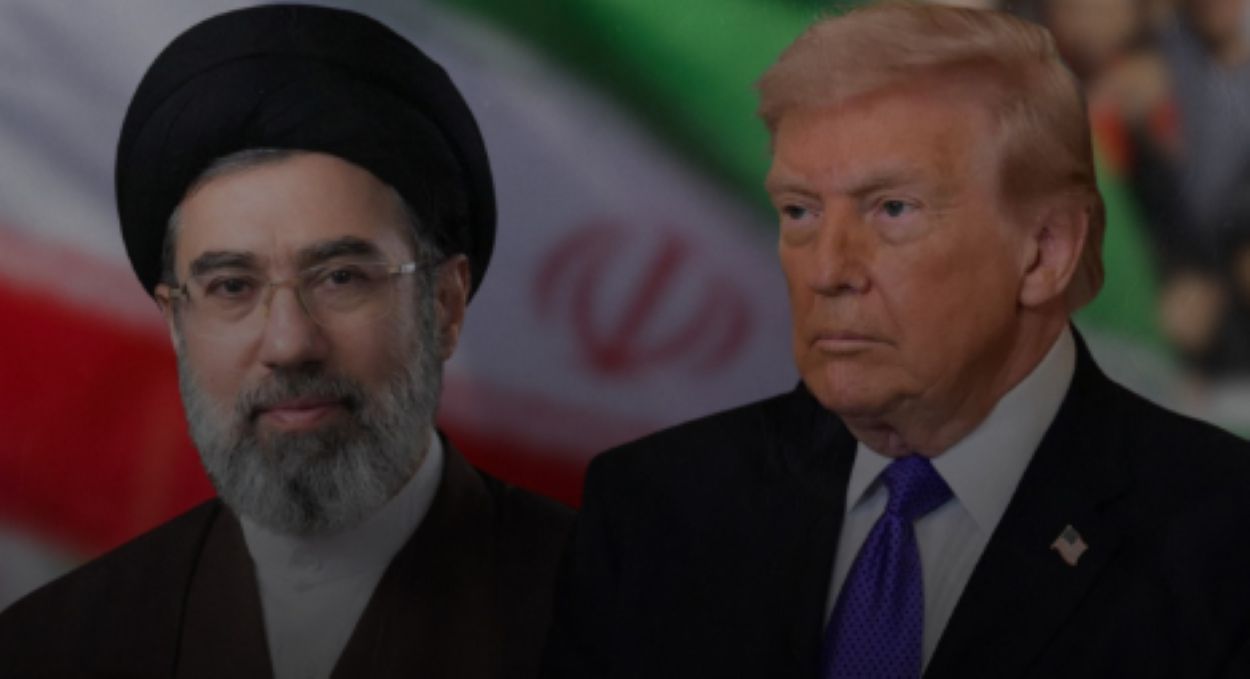

The latest round of confusion over the Trump-Iran deal has left world leaders, markets, and observers weighing hope against uncertainty after President Donald Trump claimed a breakthrough with Tehran during a high-level discussion on the Strait of Hormuz.
The announcement came during a videoconference led by France and Britain, during which dozens of leaders were discussing how to reopen and secure the vital shipping route. Trump’s social media post immediately suggested a diplomatic shift, but the details of any agreement remained unclear.
Trump has publicly insisted that Iran agreed to major US demands, including giving up its enriched uranium, which he has repeatedly referred to as “nuclear dust.” He also declared that the Strait of Hormuz was fully reopened and presented the development as a breakthrough that would ease pressure on the global economy.
However, the confusion quickly followed. Iran has not publicly confirmed the full scope of Trump’s claims, and questions remain over what Tehran has actually agreed to.
Why has the optimism not removed uncertainty
Markets responded positively to the idea of a breakthrough. Oil prices fell sharply as hopes grew that the conflict and shipping disruption could ease. That reaction showed how much the global economy depends on stability in the Strait of Hormuz. Even the suggestion of progress offered immediate breathing room. Still, optimism has been tempered by major unresolved issues. The US naval blockade remains in place until a “100% complete” deal is reached, as Trump called it.
Although Iran announced that the strait was open during a truce period, vessels must still follow designated Iranian routes and operate under Iranian coordination. That means the reopening is not the same as unrestricted commercial passage. It also suggests Tehran is still using access to the waterway as leverage.
Internal scepticism in Iran, where state-linked actors and other power centres appear unconvinced of the possibility of a sweeping breakthrough.
Read: Iran Reopens Hormuz but Warns It Could Close Again
Another layer of uncertainty comes from America’s allies. Trump’s announcement caught participants in the leaders’ videoconference off guard. That moment captured the wider diplomatic mood: relief that some movement may be happening, but doubt about whether the public claims match the actual negotiations. European governments, especially France and Britain, are portrayed as trying to organise a broader multilateral response to the Hormuz crisis while navigating Trump’s more unilateral, pressure-driven approach.
The core disputes remain unresolved, including the fate of Iran’s enriched uranium, the terms of any pause in enrichment, and the final structure of a larger agreement. For now, Trump’s declarations have created momentum and market optimism. But until the terms are clearly confirmed by all sides, the optimism is likely to remain mixed with confusion.



