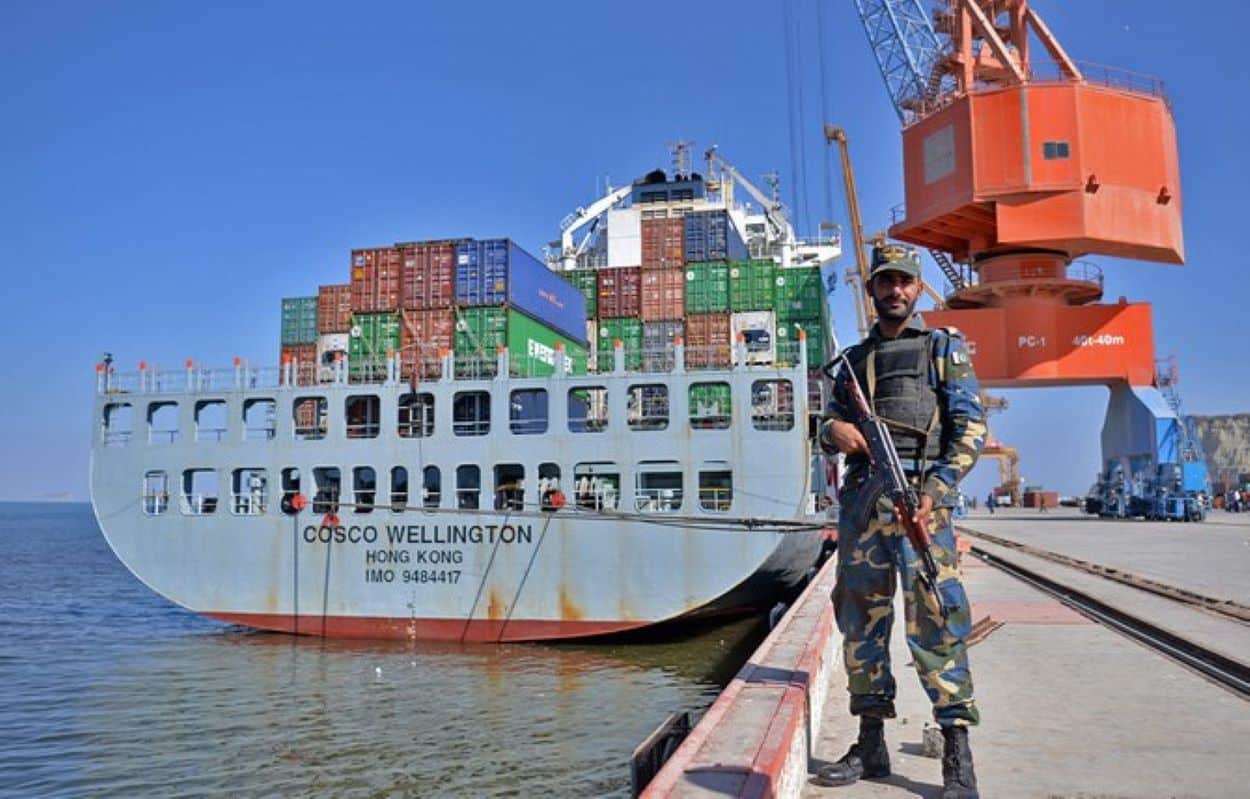

Pakistan reduced port tariffs at Gwadar by up to 40% on May 11, 2026, including transit cargo fees, transhipment charges, and berthing costs, while extending free storage for general cargo for one month.
The move aims to recover Afghan transit trade lost after border closures at Torkham and Chaman crossings, which caused Pak-Afghan trade to fall 53% year-on-year in late 2025, and to counter competition from India-operated Chabahar Port in Iran.
Gwadar handled 11,000 containers in April 2026, exceeding its total volume for 2025, partly due to regional disruptions near the Strait of Hormuz.
The port anchors the China-Pakistan Economic Corridor (CPEC) and provides China with a strategic alternative to conventional maritime routes.
Pakistan is accelerating CPEC Western Alignment projects, including the Trans-Afghan Railway, which links Gwadar to Uzbekistan, with Russia conducting engineering surveys and financing the projected 8–15 million tonnes of annual freight.
This Western Corridor offers a faster, flatter route to Gwadar compared with the longer Kabul-Peshawar line.
The tariff reductions and infrastructure upgrades aim to boost Gwadar’s competitiveness against Chabahar, where India signed a 10‑year operational contract in 2024 to develop and run the Shahid Beheshti Terminal and where the Taliban government pledged about $35 million in port investment.