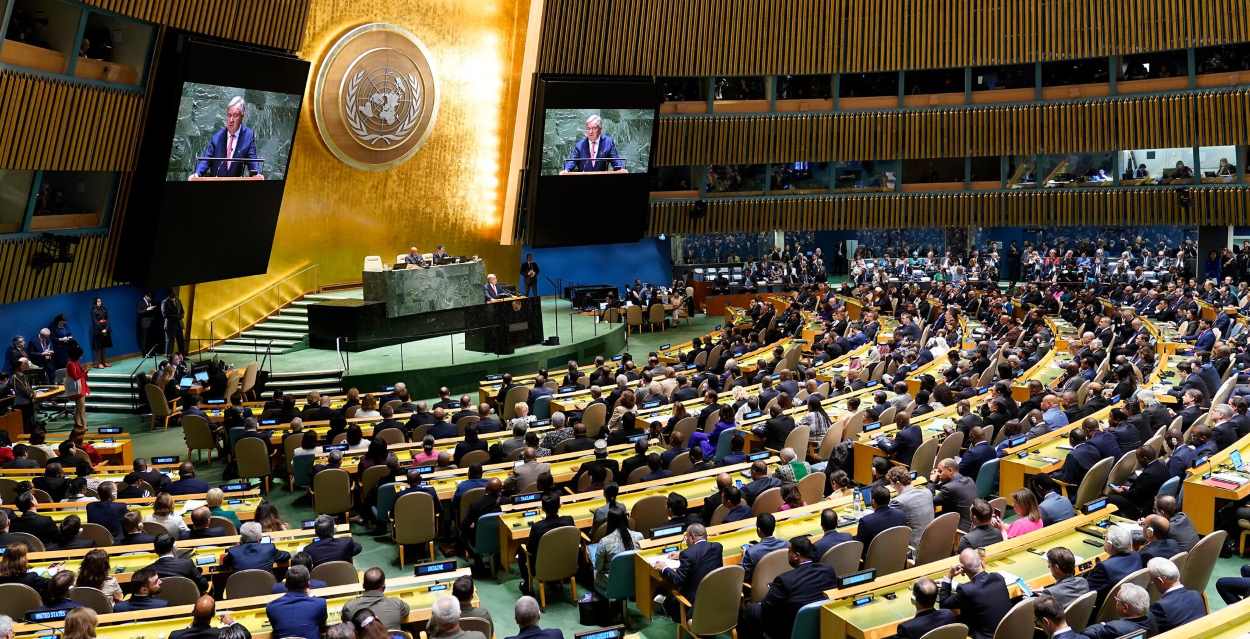

The race to become the next UN secretary-general has entered a decisive stage. Four candidates are competing to succeed Antonio Guterres at a time of war, political division, and deep financial strain inside the United Nations.
The candidates will face public questioning from member states and NGOs in a rare open format. The process aims to make the selection more transparent. However, the final decision will still depend heavily on the five permanent members of the Security Council, which hold veto power.
Four candidates are in the running to lead the United Nations when Guterres leaves office on December 31, 2026. Michelle Bachelet, Chile’s former president and former UN human rights chief, says her experience prepares her for a period of crisis and conflict. Her human rights record has also made her a polarising figure in some capitals.
Rafael Grossi, head of the International Atomic Energy Agency, has built a strong international profile. He did so through his work on Iran’s nuclear programme and the Russian-occupied Zaporizhzhia nuclear plant in Ukraine. He has framed his campaign around restoring the UN’s founding mission to prevent war.
Rebeca Grynspan, Costa Rica’s former vice president and current head of UNCTAD, has focused on rebuilding trust in multilateralism. She has highlighted her role in brokering the Black Sea Grain Initiative. She has also stressed the importance of the UN Charter and shared humanity.
Macky Sall, the former president of Senegal, is the only candidate not from Latin America. He has emphasised the link between peace and development. However, critics have questioned his domestic political record and his limited support from African states.
Although all 193 UN member states can participate in public dialogues, the most powerful actors remain the five permanent members of the Security Council. These are the United States, China, Russia, the United Kingdom, and France. Each can effectively block a candidate through the veto system. After the hearings and later straw polls, the Security Council will recommend one name to the General Assembly for formal appointment.
The next leader will inherit an organisation under extraordinary pressure. The UN faces a growing trust deficit and a severe budget crisis, partly linked to the US non-payment of dues. This contest is therefore not just about personality or geography. It is also about whether the UN can restore its relevance while multilateral diplomacy remains under strain.
Washington wants a candidate aligned with American values and interests. That position may clash with the informal expectation that the next leader should be a Latin American woman. Questions about reform, neutrality, development, and crisis management are also likely to dominate the hearings. The process may be more open than before, but the decisive negotiations will still take place behind closed doors.
The public dialogues on April 21 and 22 offer a rare chance to hear each candidate present a vision for the UN’s future. After that, the race is expected to move into the more secretive phase of Security Council straw polls. The contest remains open for now. However, pressure is rising as the UN searches for a leader who can navigate one of the hardest moments in its history.
Each candidate will have three hours to present a “Vision Statement” and answer questions from the 193 member states and civil society organisations.
| Date | Candidate | Background | Key Focus |
| April 21 | Michelle Bachelet | Human rights and managing crises in polarised times. | Human rights and managing crises in polarized times. |
| April 21 | Rafael Grossi | Current IAEA Director General (Argentina). | Preventing nuclear escalation and “saving humanity from war.” |
| April 22 | Rebeca Grynspan | Former VP of Costa Rica; UN Trade & Development head. | Economic resilience and Jewish heritage (surviving the Holocaust). |
| April 22 | Macky Sall | Former President of Senegal. | Link between peace and development; climate vulnerability. |