

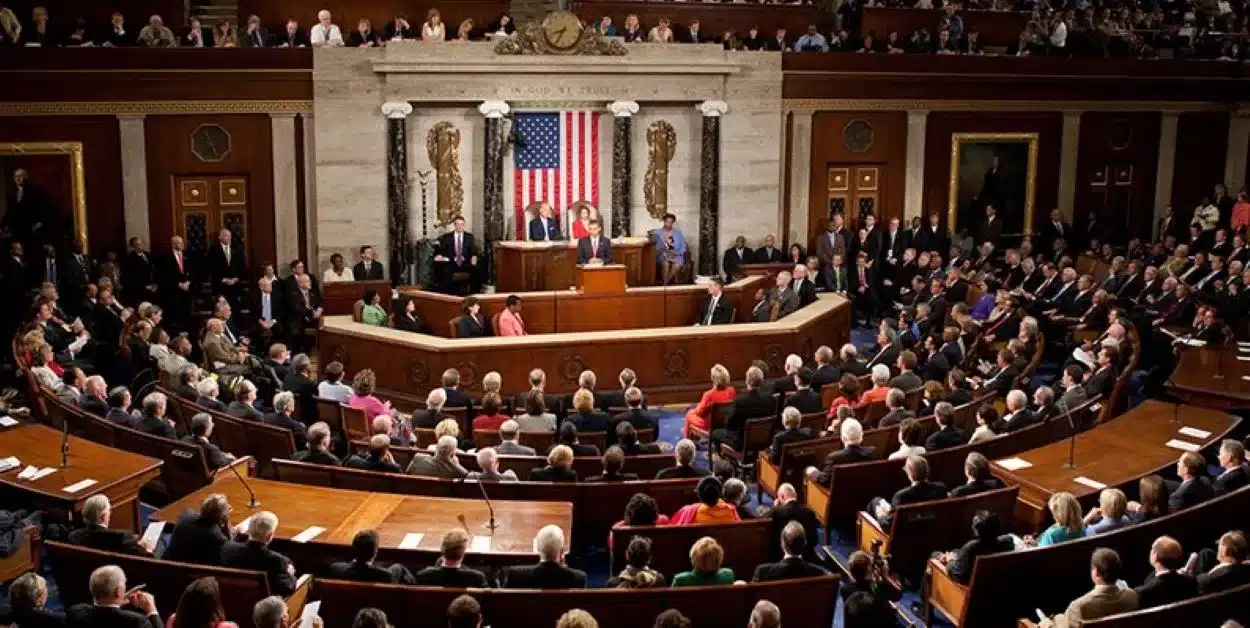

The Senate blocks arms sales resolution push once again, but the latest vote showed growing Democratic support for efforts to halt some U.S. military sales to Israel. On April 15, two resolutions led by Senator Bernie Sanders failed in the Senate, yet more than three dozen Democrats voted to block the sales.
The outcome signaled rising frustration within the party over Prime Minister Benjamin Netanyahu’s policies and the wars in Gaza, Iran and Lebanon. Although Republicans stayed united against the measures, the Democratic shift stood out compared with similar votes in 2024 and 2025.
One resolution sought to stop a $295 million sale involving armoured Caterpillar D9 bulldozers and related support. It failed by a 40-59 vote.
The second measure targeted a $151.8 million sale of 12,000 general-purpose 1,000-pound bombs and support. That resolution also failed, this time by a 36-63 vote.
Support for Sanders’ effort has more than doubled in less than two years. That increase reflects broader unease among Democrats over Israeli military actions and the political cost of continued U.S. backing.
Arizona Senator Mark Kelly was among the notable Democrats who voted in favour of blocking the sales after opposing some previous efforts. In remarks before the vote, he criticised what he called the “reckless decisions” of Netanyahu and President Trump, pointing to risks for civilians in Lebanon and violence in the West Bank.
Not all Democrats backed the resolutions. Senate Minority Leader Chuck Schumer and Senator Kirsten Gillibrand voted against blocking the sales, joining Republicans in opposition. Senator John Fetterman also remained opposed. That split reflects a deepening divide inside the Democratic Party. While activists and some lawmakers want stronger limits on U.S. support for Israel, party leadership and other members still oppose such moves.
Read: Pakistan Likely to Host Next Round of US-Iran Talks: White House
The vote came after mounting pressure from antiwar activists. Nearly 100 protesters were arrested during demonstrations calling on Schumer and Gillibrand to support the Sanders measures. Those protests have added urgency to a debate that is no longer limited to Capitol Hill. Advocacy groups are now treating these votes as a clear public record of where senators stand on military aid to Israel.
The resolutions were largely symbolic because they faced strong Republican opposition in a GOP-controlled Senate and were unlikely to become law. Even so, the rising number of Democratic votes in support gave Sanders and allied activists a stronger platform to argue that opinion inside the party is changing.



