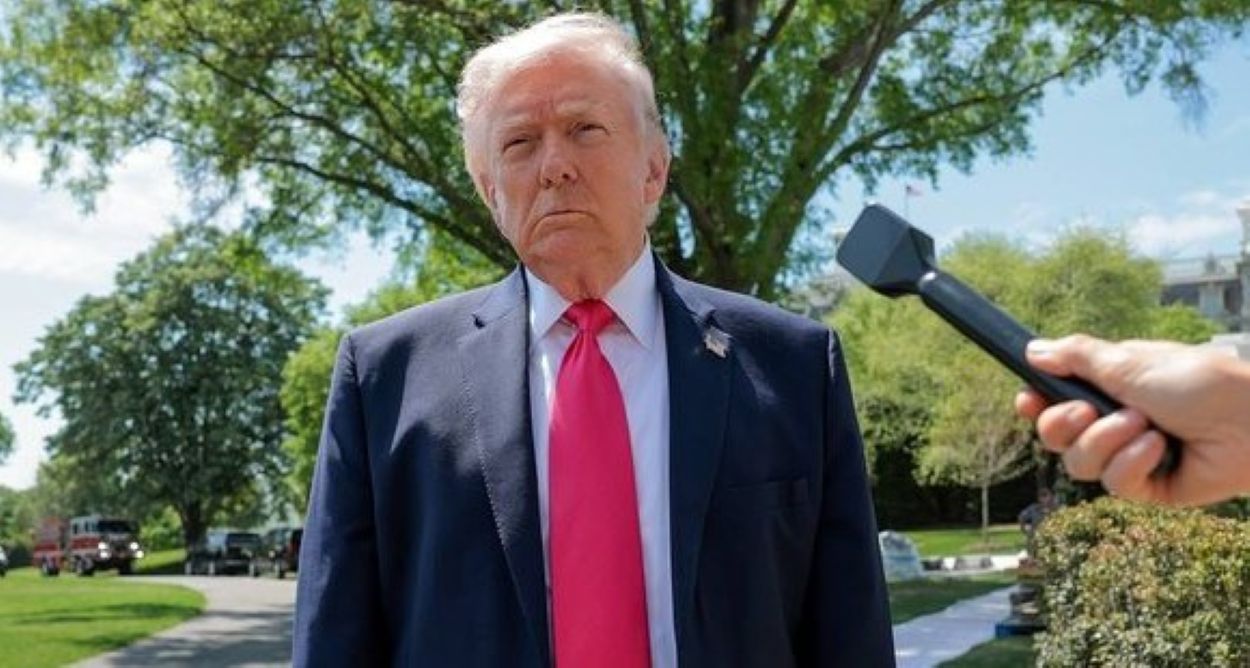

US President Donald Trump said Thursday that Iran had agreed to hand over its enriched uranium stockpile, a claim that has put the Trump-Iran enriched uranium deal at the centre of fast-moving diplomacy over the Middle East war. He also said Washington and Tehran were close to a peace agreement that could help end weeks of conflict.
Trump suggested he would even consider travelling to Pakistan to sign an eventual agreement. However, Iranian officials had not independently confirmed his statement about handing over enriched uranium, while Tehran continued to insist its nuclear programme is for civilian purposes.
Trump described the uranium stockpile as “nuclear dust” and said a deal was within reach. The comments came after the United States had threatened renewed airstrikes and a continued naval blockade if Tehran refused to accept terms for ending the conflict that began on February 28.
At the same time, Iran’s ambassador to the United Nations said Tehran was “cautiously optimistic” about ongoing talks. That leaves a gap between Trump’s public confidence and Iran’s more careful messaging. The core disagreement remains unresolved. Washington is reportedly seeking a 20-year suspension of Iran’s enrichment program, while Tehran has proposed a five-year pause, an offer US officials rejected.
US President Donald Trump says Iran has agreed not to have a nuclear weapon and will hand over its enriched uranium.
He praised mediators from Pakistan and said he would travel to Islamabad if a deal is signed. pic.twitter.com/5q18ZpyEwQ
— Al Jazeera Breaking News (@AJENews) April 16, 2026Pakistan has emerged as an important player in the diplomatic effort. Iranian state television showed Pakistan’s army chief, Asim Munir, meeting Iran’s speaker of parliament, Mohammad Bagher Ghalibaf, as Islamabad pressed for progress after the first round of talks ended without a deal.
White House Press Secretary Karoline Leavitt said further discussions would likely take place in Islamabad, although Pakistan’s foreign ministry said no date had been set. Trump’s suggestion that he might visit Pakistan to sign an agreement has increased Pakistan’s visibility in the negotiations. That mediation effort comes as Pakistan seeks to position itself as a bridge between Washington and Tehran amid wider regional instability.
Read: Trump Says Iran Deal In Islamabad Could Prompt Visit
Despite talk of peace, pressure on Iran remains intense. Washington has maintained a blockade on Iranian ports, while the US Central Command claimed to have halted economic trade going into and out of Iran by sea. Fresh sanctions targeting Iran’s oil industry were also announced. Meanwhile, senior Iranian military figures warned they would respond if the United States tried to police the Strait of Hormuz or block regional shipping.
That means diplomacy is advancing alongside continued threats, leaving the wider situation highly fragile. For now, Trump’s remarks suggest momentum toward a deal, but the most sensitive issues — especially uranium enrichment and enforcement terms still appear unresolved.