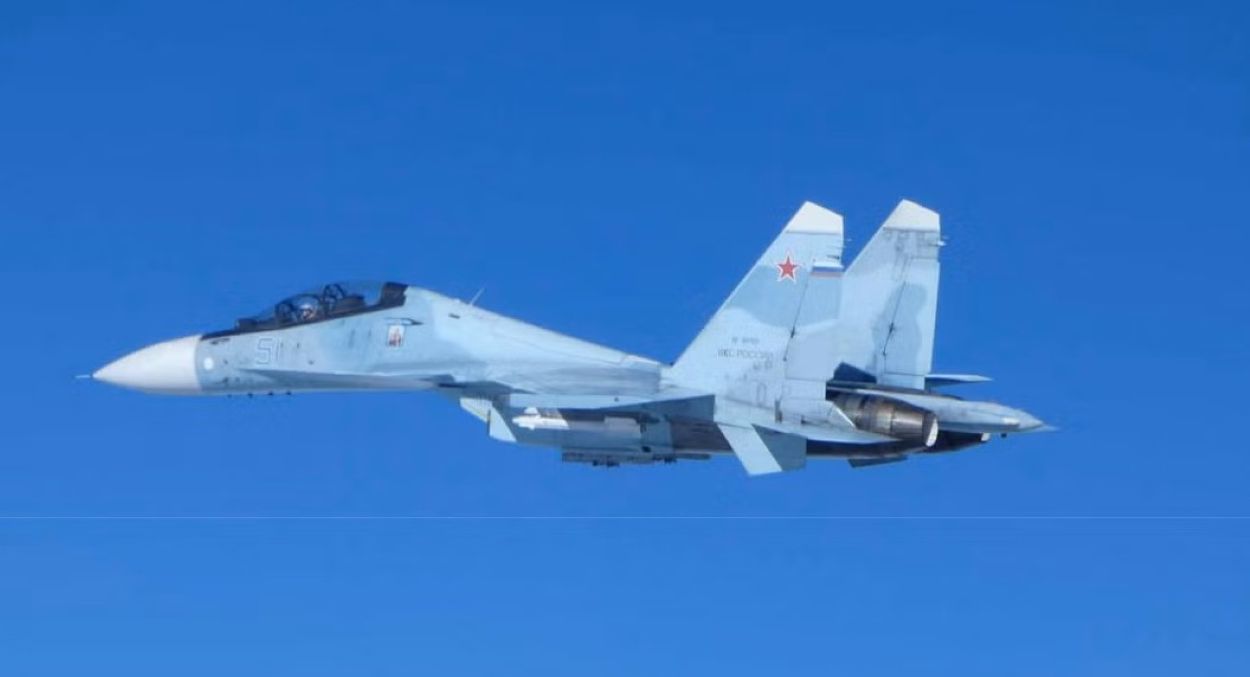

The NATO intercept of Russian bombers in the Baltic incident added fresh strain to Europe’s security picture after alliance aircraft shadowed a large Russian formation over the Baltic Sea.
According to current reporting, the mission involved French Rafales based in Lithuania alongside aircraft from Sweden, Finland, Poland, Denmark, and Romania, responding to Russian military planes flying over neutral waters.
The Russian formation reportedly included two Tu-22M3 strategic bombers escorted by around 10 fighter jets. No aerial engagement took place, and Russia said the flight was pre-planned and conducted in line with international airspace rules.
The operation was one of the more visible recent shows of force over the Baltic region. French Rafales launched from Šiauliai Air Base in Lithuania as part of NATO’s Baltic Air Policing mission, which routinely responds to Russian military aircraft approaching allied airspace.
The Associated Press reported that allied forces intercepted the Russian aircraft on April 20. It added that such flights often operate without transponders, filed flight plans, or communication with civilian air traffic control. That combination regularly prompts allied monitoring and quick-reaction scrambles.
This was not just a routine patrol story. The size of the Russian formation and the multinational NATO response made it a clear signal of military readiness on the alliance’s eastern flank. It also comes amid heightened focus on European security as tensions with Moscow remain elevated. For NATO, these missions serve both operational and political purposes. They reassure frontline allies in the Baltic region while showing that alliance air policing remains active and coordinated.
The incident also unfolded amid a political dispute over NATO’s role beyond Europe. It coincided with President Donald Trump’s criticism of the alliance, including his description of NATO as a “paper tiger.” Earlier this month, reports linked that phrase to Trump’s broader frustration with allies over Iran and burden-sharing.
That contrast sharpens the story. While Trump questioned the alliance’s strength, NATO air forces mounted a visible and coordinated response over the Baltic. Russian long-range flights over the Baltic are unlikely to stop, and NATO air interceptions will likely continue as long as allied states see them as a challenge to regional stability and air safety. The latest episode shows how quickly military signalling can return to the foreground, even when global attention shifts elsewhere.