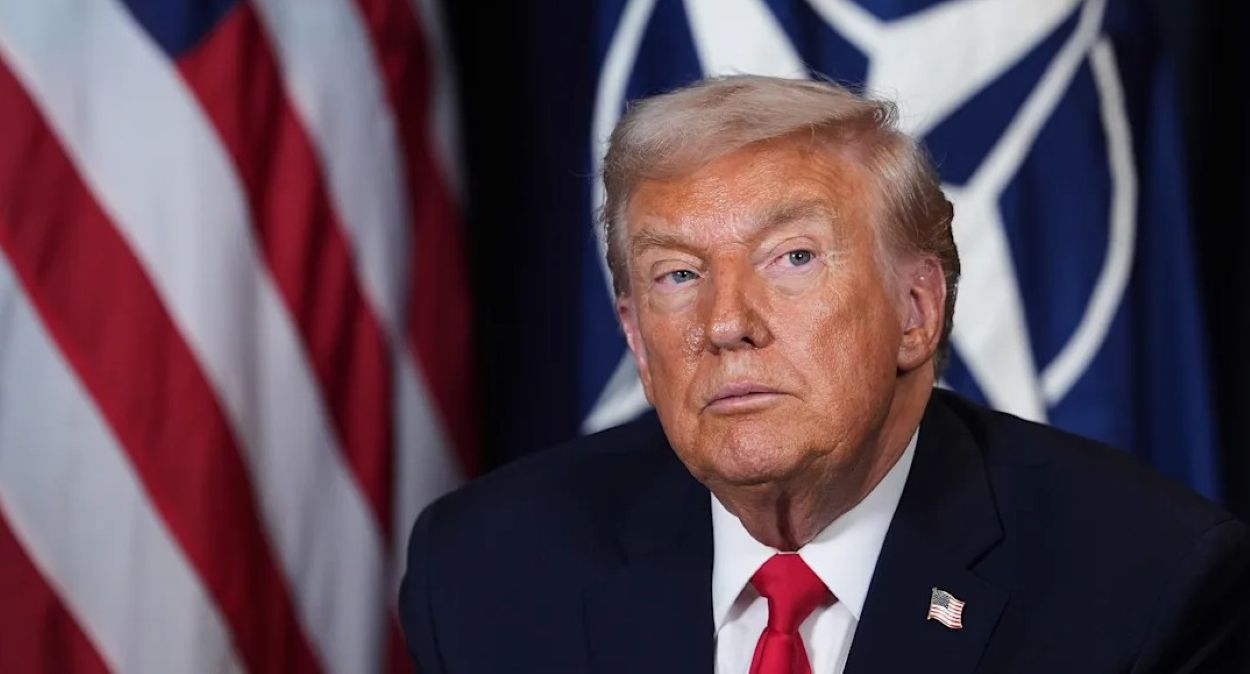

NATO allies reject Iran blockade efforts proposed by U.S. President Donald Trump, creating a fresh strain inside the military alliance as the conflict with Iran deepens.
On Monday, several NATO members said they would not take part in a U.S.-led blockade of Iranian ports. Instead, Britain, France and other European countries proposed a separate multinational mission to restore safe navigation in the Strait of Hormuz after fighting ends.
Trump said the U.S. military would eliminate any Iranian ships that came near the blockade, which began on Monday after weekend talks failed to end the six-week war with Iran. At first, Trump said the effort would involve other countries and target shipping through the Strait of Hormuz. Later, the U.S. military clarified that the blockade would apply only to ships entering or leaving Iranian ports.
Since the war began on February 28, Iran has largely blocked the waterway for all ships except its own. The move has raised fears over long-term control of one of the world’s most important energy routes. British Prime Minister Keir Starmer made his position clear, saying Britain would not support the blockade despite what he described as “considerable pressure.” He said the UK would not be dragged into the war and instead backed a coordinated international plan focused on protecting shipping once hostilities stop.
French President Emmanuel Macron said France would organise a conference with Britain and other partners to prepare a multinational mission to restore navigation in the strait. This mission would be defensive and separate from the countries directly involved in the conflict. Its purpose would be to create rules for safe passage and coordinate naval escorts for tankers once the security situation improves.
Officials could hold a planning meeting involving about 30 countries as soon as Thursday, either in Paris or London. Expected participants include the Gulf states, India, Greece, Spain, Italy, the Netherlands and Sweden. The proposed force would seek to reassure commercial shipping without becoming a belligerent in the conflict. Reports say the mission would keep Iran and the United States informed, but neither country would play a direct role.
JD Vance says the Iranian delegation in Pakistan could not finalise a deal because it lacked authority and needed approval from higher leadership in Tehran.
He said the US made its red lines clear, put serious terms on the table, and left Islamabad after concluding that the… pic.twitter.com/jr3ZkySzV2
— Photo News (@PhotoNewsPk) April 14, 2026Another point of friction inside NATO
The disagreement adds to broader tensions between Trump and several NATO governments. Trump has threatened to withdraw from the alliance and is also weighing a reduction of U.S. troop levels in Europe. That comes after some countries reportedly denied U.S. military aircraft access to their airspace for strikes on Iran.
NATO Secretary General Mark Rutte had previously told European governments that Trump wanted concrete commitments to help secure the Strait of Hormuz. However, not all allies appear ready to follow Washington’s approach.
Read: Trump Attacks Pope Leo Over Immigration and Foreign Policy
Turkish Foreign Minister Hakan Fidan also urged the parties to pursue diplomacy and reopen the strait through negotiations. He warned that assembling an international force for the area would be complicated.