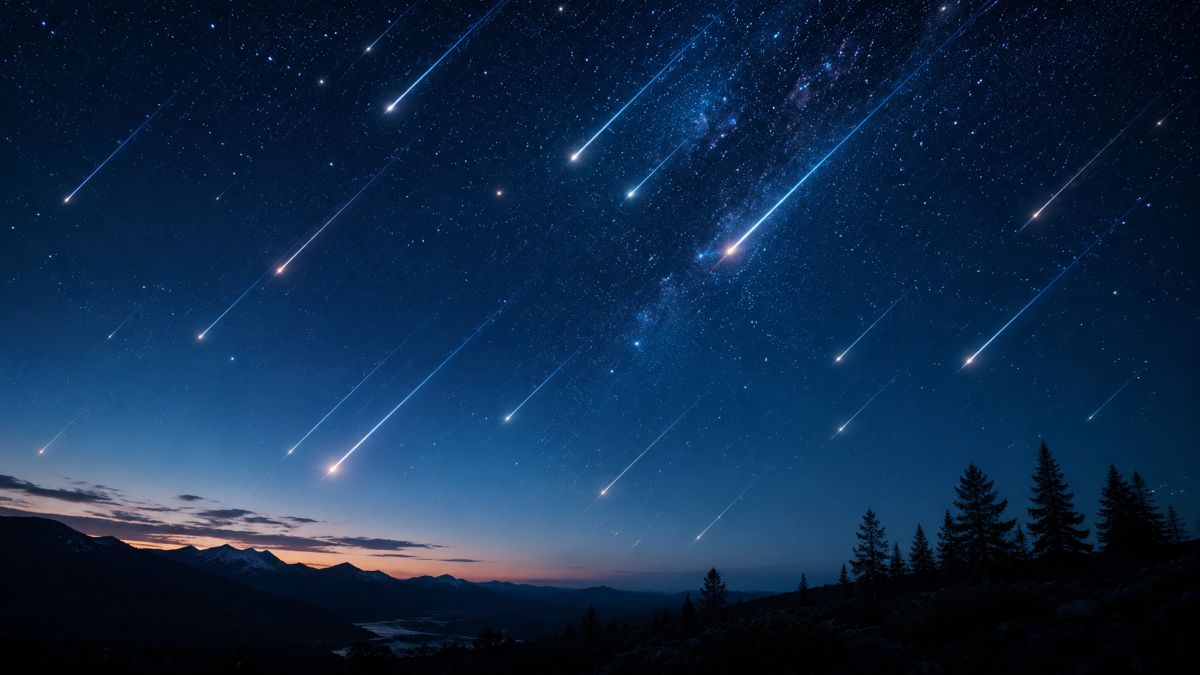

LONDON: June Bootids 2026 will peak this week during an active period from June 22 to July 2, with forecasts pointing to weak activity for the unpredictable meteor shower.
The International Meteor Organisation said the debris trails that produced the 1998 and 2004 outbursts are not currently in Earth’s path. In-The-Sky.org also lists the shower as active from June 22 to July 2, with peak rates around June 27.
The June Bootids usually produce only a few meteors per hour. Royal Museums Greenwich said the shower delivered up to 100 meteors per hour in 1998 and 20 to 50 in 2004, while a predicted 2010 outburst produced fewer than 10.
The shower occurs when Earth passes through debris left by comet 7P/Pons-Winnecke, which orbits the Sun about every six years. Bootsid meteors enter Earth’s atmosphere at about 18 kilometres per second.
That speed is much slower than the Leonids, which can reach about 70 km/s. As a result, Bootid meteors can appear as long, gentle streaks rather than fast flashes.
Read: 2025’s Final Supermoon to Light Up Pakistan’s Sky on December 4 & 5
The American Meteor Society said the radiant is best placed in the evening sky after dark. Northern Hemisphere observers have the best chance because the radiant rises higher in the evening sky.
Observers should choose a dark location, avoid city lights and allow at least 20 minutes for their eyes to adjust. Viewers should scan a wide area near the Boötes constellation in the western or southwestern sky instead of staring directly at the radiant.