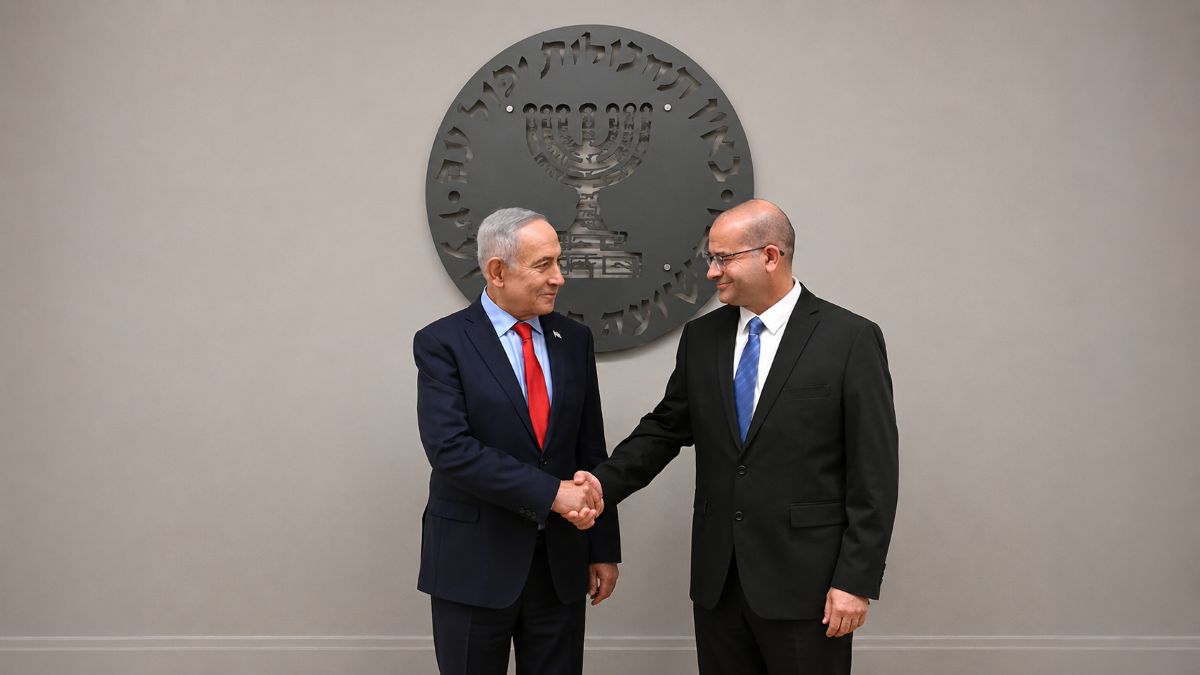

Roman Gofman took office as Israel’s Mossad chief on Tuesday, saying the agency would continue covert operations against Iran and its regional allies.
At the handover ceremony, Gofman said Israel’s actions had changed the balance of power in the Middle East. However, he said the “task is not yet complete.”
Israeli Prime Minister Benjamin Netanyahu also used the ceremony to target Tehran. He said Iran’s ruling system would “ultimately fall” and would not threaten Israel again with nuclear weapons or ballistic missiles.
Outgoing Mossad chief David Barnea gave a similar message in his farewell address. He said regime change in Iran remained “a possible and achievable goal” for Israel.
Gofman succeeds Barnea after serving as Netanyahu’s military secretary. Unlike several previous Mossad chiefs, he comes from a military background rather than the agency’s traditional intelligence ranks.
The appointment has drawn debate in Israel. Supporters describe Gofman as a combat-tested commander, while critics question whether a close Netanyahu ally should lead the country’s main spy agency.
Meanwhile, analysts told Iran International that Gofman will likely keep Iran at the centre of Mossad operations. Beni Sabti of the Institute for National Security Studies said Gofman had a hard line toward Tehran.
Read: Israel Eyes Expanded Ties with Islamic Nations Through Abraham Accords
Sabti said Gofman may focus on Iran’s nuclear and missile programs, Hezbollah and Tehran’s regional proxy network. He also expected wider covert operations, intelligence gathering and agent recruitment.
Alex Winston, a news editor at The Jerusalem Post, told Iran International that Gofman showed personal bravery during the October 7 Hamas attacks. Winston said Gofman drove south to join the fighting before militants wounded him.
The leadership change comes as US-Iran talks continue without a breakthrough. US President Donald Trump has said he still wants an agreement to prevent Tehran from obtaining a nuclear weapon.