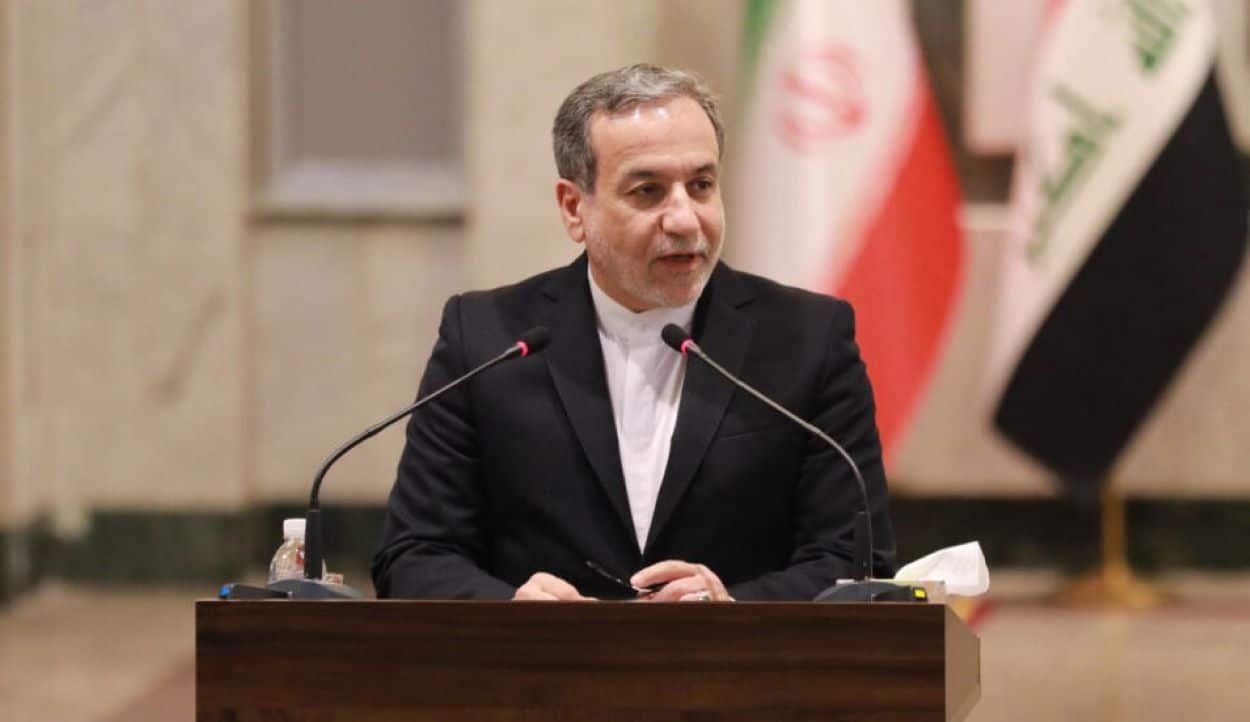

Iran blames US-Israel war fallout on what it called the “aggressors,” with Foreign Minister Abbas Araghchi saying Washington and Tel Aviv bear responsibility for the consequences of the conflict. His remarks came during a meeting in Tehran with South Korea’s special envoy, who discussed regional tensions, maritime security, and bilateral ties.
The meeting also highlighted the growing urgency around the Strait of Hormuz, where South Korea is seeking safe passage for ships and crews affected by the blockade and wider instability.
Araghchi said Iran’s actions in the Strait of Hormuz were aimed at protecting national security and interests. He argued that responsibility for the consequences lies with the parties carrying out the aggression, while Tehran continues to frame the conflict as a defensive response.
Although a temporary ceasefire announced on April 16, 2026, remains technically in place, recent incidents have continued to threaten the truce. That has kept maritime security and diplomatic contacts at the centre of regional attention.
South Korea pushes for safe Hormuz transit
South Korea’s special envoy, Chung Byung-ha, asked Iran to help ensure the swift and safe passage of all ships, including Korean vessels, through the Strait of Hormuz. Seoul’s priority is clear: protecting shipping routes, seafarers, and broader economic interests linked to Gulf energy supplies.
26 Korea-related ships and 173 Korean crew members remain stranded in the waterway. It also notes that around 40 Koreans remain in Iran, adding to the urgency of ongoing talks.
Read: Iran’s Araghchi to Meet Putin After U.S. Strikes on Nuclear Sites
Beyond maritime safety, the meeting also touched on broader bilateral relations. Chung expressed hope that diplomacy between Iran and the United States could resume, helping restore peace and stability in the region.
Araghchi, for his part, said Tehran remains ready to cooperate on bilateral ties and would continue to pay attention to Korean nationals staying in the country. The exchange reflects South Korea’s practical approach as it tries to protect its interests without taking a central role in the wider conflict.