

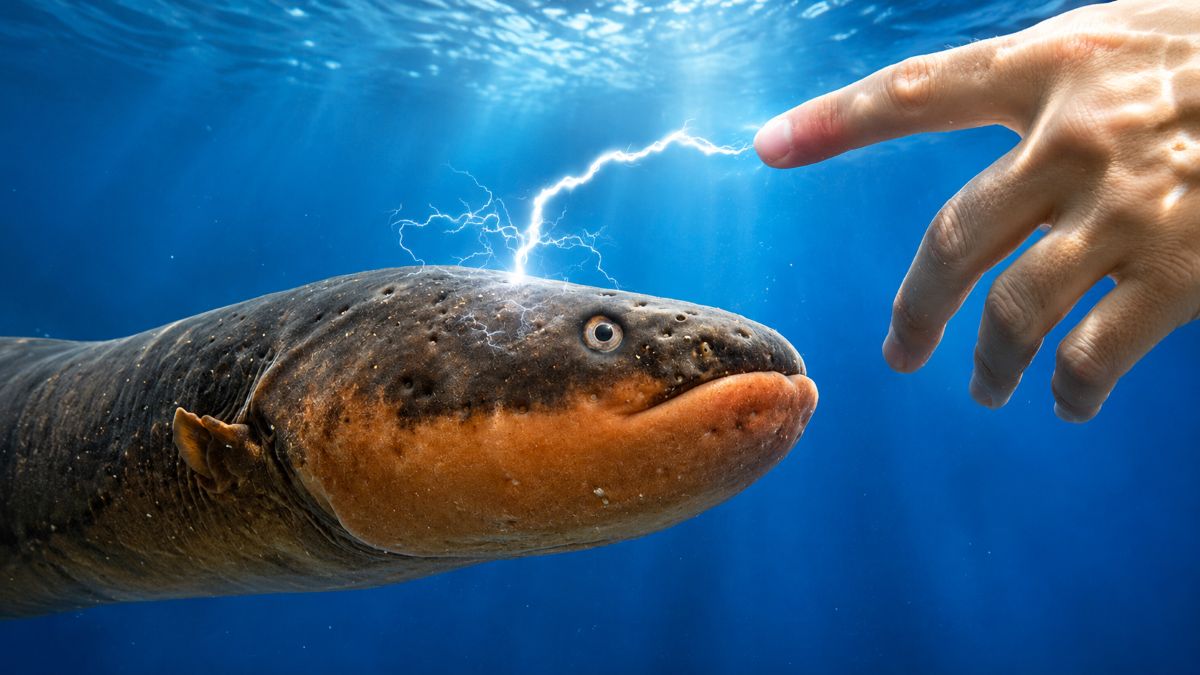

Electric eels can fire an electric eel shock of up to 860 volts, using the blast to stun prey, defend themselves and move through dark freshwater habitats.
The highest recorded voltage comes from Electrophorus voltai. Electric eels live in the Amazon and Orinoco river basins in South America.
Their bodies work like living batteries. About 80% of the body contains electric organs filled with electrocytes that discharge charges together.
The eel uses weak pulses under 10 volts for navigation and communication. These signals help it sense objects in muddy water.
For hunting, the eel fires stronger double or triple pulses. These shocks force hidden prey to twitch, revealing its location.
The eel then sends rapid high-voltage bursts. The pulses freeze the prey’s muscles, leaving it unable to escape.
Electric eels can also curl around prey to focus the shock. This move sends more current through the target.
Biologist Kenneth Catania of Vanderbilt University also documented leaping attacks. In that defence move, the eel rises from the water and presses its chin against a threat. Electric eels are not true eels. They belong to a group of freshwater fish called knifefish.



