

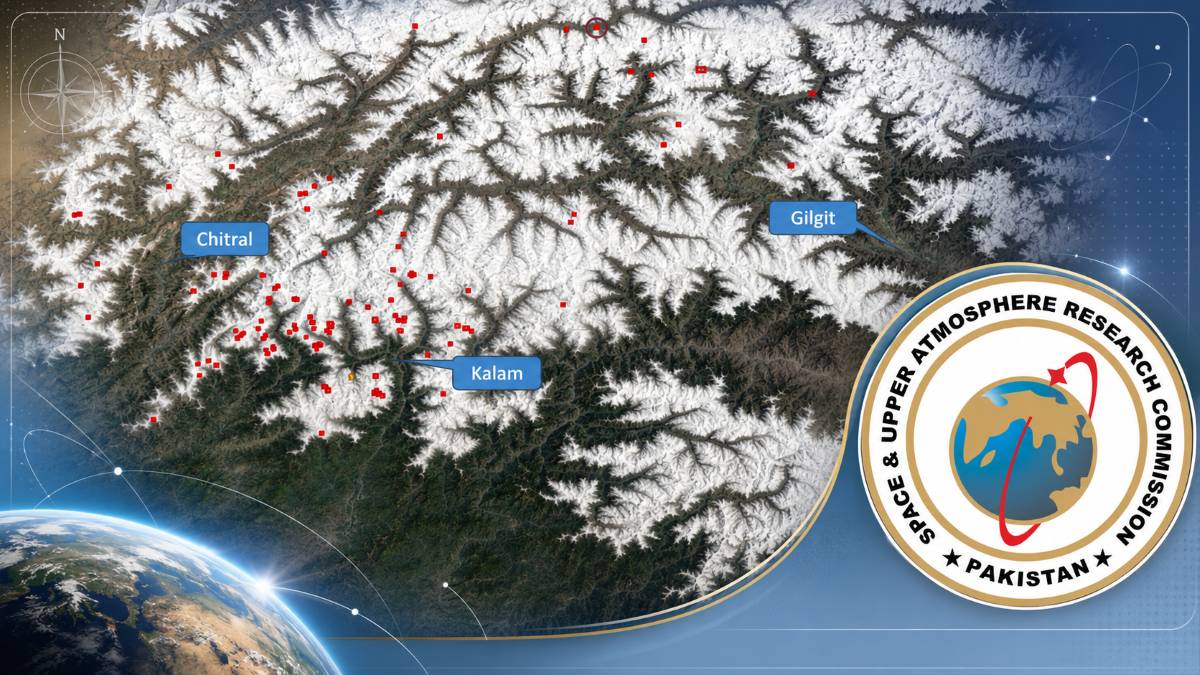

Suparco glacial lakes monitoring has identified 130 potentially dangerous lakes in northern Pakistan, with 24 currently unfrozen and under close satellite observation, officials said.
The Space and Upper Atmosphere Research Commission said its latest assessment used satellite images captured on May 31 and June 1, 2026.
SUPARCO said the lakes pose a potential risk to downstream settlements from glacial lake outburst floods, a recurring hazard in mountainous regions.
The agency said most of the identified lakes remain frozen, while the 24 unfrozen lakes were measured to assess their surface areas and potential risks.
Satellite-based mapping also identified nearby populations vulnerable to potential flooding, using a grid-based method to show people living within each 100-by-100-metre area around monitored lakes.
Read: Glacial Lake Outburst Floods Ghizer District, Creates Artificial Lake
SUPARCO said it shares regular updates with the National Disaster Management Authority, provincial disaster management bodies, Gilgit-Baltistan authorities and the Ministry of Climate Change’s technical committee.
The agency said high-risk lake identification relied on data from the Provincial Disaster Management Authority of Khyber Pakhtunkhwa and the Gilgit-Baltistan Disaster Management Authority.
Read: NASA El Niño Warning Follows Warm Pacific Wave Data
Mohammad Saleem Shaikh, media spokesperson for the Ministry of Climate Change and Environmental Coordination, said the findings were “not a cause for panic, but a call for preparedness.”
Shaikh said Pakistan had strengthened hazard mapping, community-based adaptation programmes and early warning mechanisms with SUPARCO, NDMA and provincial authorities.
Suparco also warned that El Niño conditions could bring weaker-than-normal monsoon rainfall, more heat waves in spring and summer, droughts and warmer winters later in 2026.



