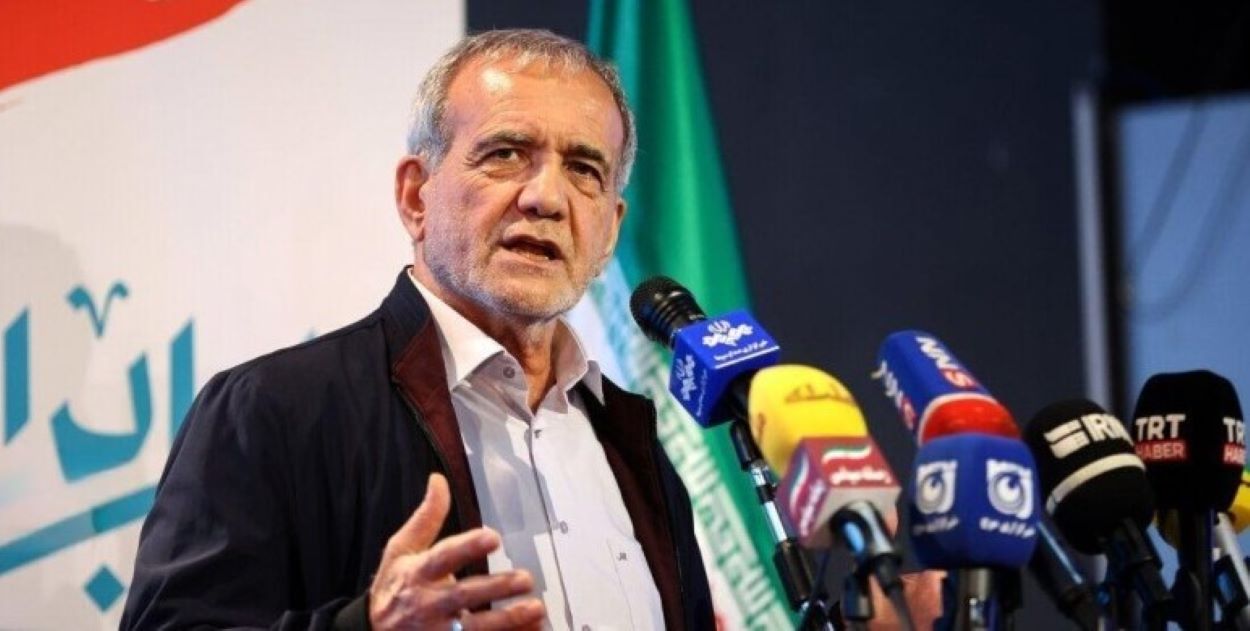

Pezeshkian warned amid Iran tensions, calling for restraint and urging diplomacy, while also stressing that Tehran remains ready to defend itself.
Iranian President Masoud Pezeshkian said that war serves no one’s interests and urged pursuing rational, diplomatic paths to lower tensions. At the same time, he said Iran must stay distrustful of its enemies and prepared to respond to renewed pressure.
Pezeshkian presented dialogue as the preferred route, but paired it with a firm warning. He made clear that Iran would defend itself against what he described as repeated adventurism by the United States and Israel.
He also criticised the US naval blockade as provocative and illegal. In his view, that move undermines confidence in Washington’s seriousness about diplomacy.
His remarks came during a day marked by sharply different developments inside Iran. The execution of two prisoners, the reported rejection of a second round of peace talks in Islamabad, and fresh maritime escalation after the seizure of the M/V Touska.
Taken together, those events suggested that while the presidency was offering a diplomatic off-ramp, other parts of Iran’s system were taking a harder line. That contrast once again highlighted the divided tone often seen in Tehran during periods of crisis.
Pezeshkian’s language aligns with his broader reformist approach. He often presents Iran as rational and open to dialogue, especially for international audiences and moderate domestic listeners.
However, the core decisions on nuclear policy, retaliation and the Strait of Hormuz do not rest mainly with the presidency. Instead, more hardline institutions inside Iran’s power structure shape those choices.
The timing of Pezeshkian’s remarks mattered because the ceasefire was due to expire on Wednesday, April 22. With preparations for possible talks continuing in Islamabad and markets reacting to Hormuz risks, his message appeared designed to preserve a narrow diplomatic opening.
At the same time, Tehran seemed to be placing responsibility for any future escalation on the United States, especially over the blockade and recent maritime incidents. That framing could become more important if tensions rise again in the Gulf.
For now, Pezeshkian’s statement underlines the uncertainty surrounding the crisis. His tone was more measured than that of Iran’s judiciary, parliament or the military, yet it still carried a warning that Iran would not back down under pressure.
As a result, the message did not signal a breakthrough. Instead, it showed that diplomatic language and hardline positioning are still moving side by side inside Iran’s response to the crisis.