

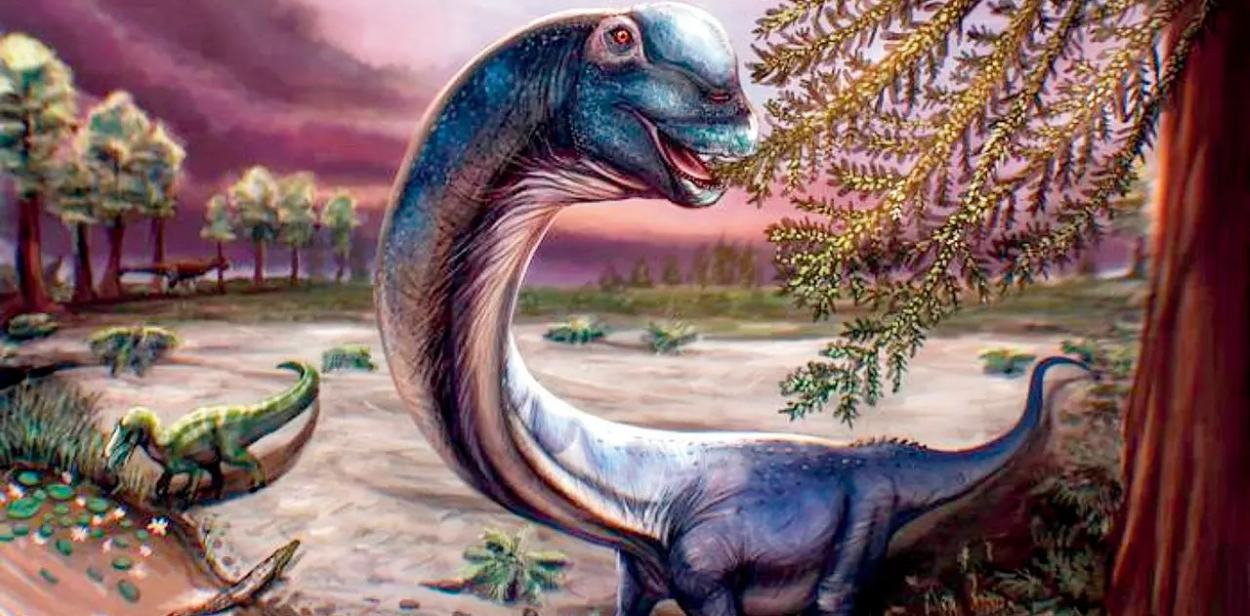

Chaiyaphum, Thailand: Scientists discovered Nagatitan chaiyaphumensis, a massive new sauropod in northeastern Thailand. It weighed about 27 tonnes, roughly the weight of nine adult Asian elephants, and measured 27 meters (89 feet) long.
The fossils date to 100–120 million years ago during the Early Cretaceous period. Researchers led by Thitiwoot Sethapanichsakul, a UCL PhD student, published the findings in Scientific Reports.
The team recovered vertebrae, ribs, pelvis fragments, and a 1.78-meter-long humerus.
They estimated its diet as bulk browsing on conifers and possibly prehistoric seed ferns. Nagatitan did not chew its food.
The species belongs to the Euhelopodidae subgroup, a group of sauropods unique to Asia. Researchers nicknamed it “the last titan” because it lived in Thailand’s youngest dinosaur-bearing rock formations.
Later, the region became a shallow sea, ending large sauropod habitation there.
Nagatitan dwarfs Thailand’s previous sauropods, weighing at least 10 tonnes more than Dippy the Diplodocus.
Read: New Dinosaur Species Discovered in China Sheds Light on Jurassic Era Diversity
While smaller than South American giants like Patagotitan and Argentinosaurus, it is Southeast Asia’s largest known dinosaur.
A life-size reconstruction is displayed at the Thainosaur Museum in Bangkok. The discovery marks Thailand’s 14th named dinosaur species and highlights the region’s rich but understudied dinosaur fossil record.



