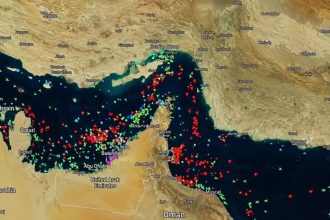



Iran has changed its tactics for ship attacks in the Strait of Hormuz to keep oil prices high and influence November’s US midterm elections, two senior Iranian officials told Reuters.
Their plan extends operations into the Gulf of Oman and more distant waters. Iran’s leadership in Tehran approved the strategy, the officials said.
A US military official described a shift towards unarmed spotters in small boats. According to the official, Iran’s Islamic Revolutionary Guard Corps (IRGC) uses them to identify potential targets, including US naval vessels.
American strikes destroyed much of Iran’s radar capability, the official said. Spotters now help the force locate ships.
During an incident last week, US forces identified a dhow whose occupants were relaying targets to the IRGC, the official claimed. They ordered those aboard to leave before destroying the vessel. The official reported no casualties.
Neither the Pentagon nor Iran’s Foreign Ministry immediately responded to requests for comment.
One Iranian official put the start of the revised tactics at roughly 10 days before the account’s publication. Both officials described changes in the type and frequency of attacks but withheld operational details. They identified ships breaching Iran’s restrictions as targets. They said their goal was to prevent such vessels from passing through the strait.
“Such vessels would be safe nowhere, even outside the Strait of Hormuz,” one official warned.
Maritime security sources identified at least five incidents involving tankers and other commercial ships around Hormuz in the preceding 48 hours. Their analysis included drone strikes and reports to United Kingdom Maritime Trade Operations (UKMTO).
Separate assessments by maritime security sources identified attacks off Qatar and the United Arab Emirates. Those assessments drew on UKMTO reports and information from regional security companies.
Read: Iran Hardliners Back Threat to Strike Gulf Data Centres
Iran has restricted passage through Hormuz since US and Israeli strikes began on February 28. Before the war, the waterway carried about a fifth of global oil and liquefied natural gas trade. Some oil shipments have continued despite the restrictions.
Washington maintains a naval blockade of Iranian ports and has extended sanctions to pressure Tehran into an agreement. US President Donald Trump has indicated that he would refrain from further attacks before the vote.
In its October 11 assessment, the US Navy-led Joint Maritime Information Centre rated the threat to merchant shipping as severe, its second-highest level. It reported continuing IRGC attacks, attempted attacks and harassment, including drone overflights and surveillance of commercial vessels.