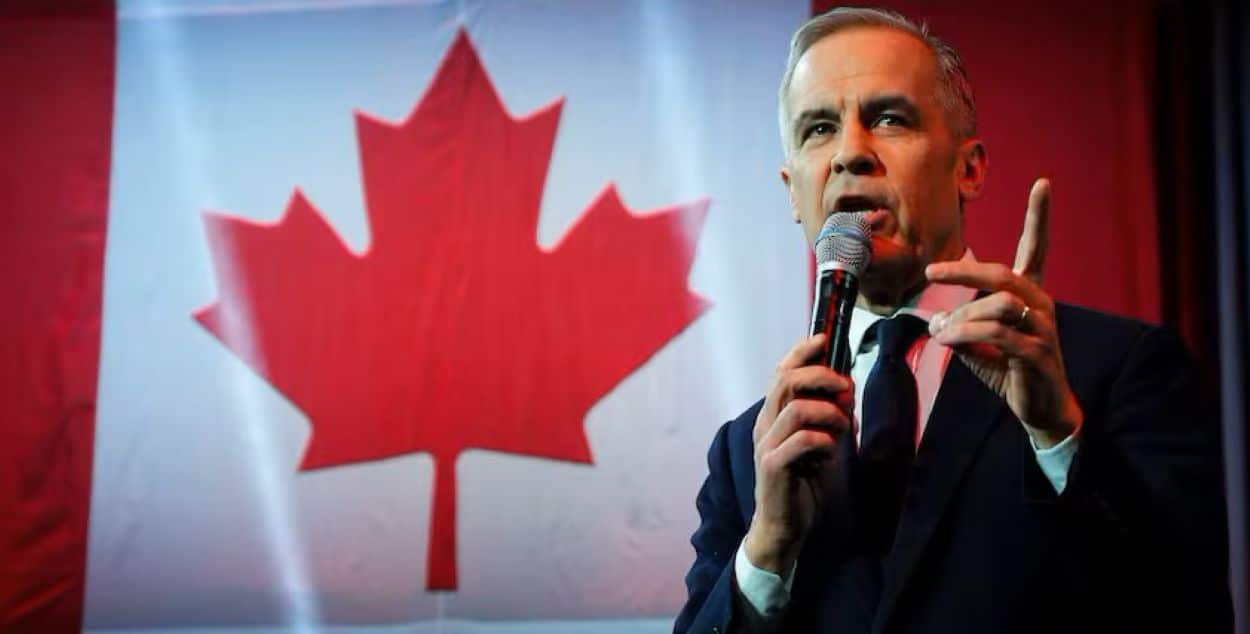

Prime Minister Mark Carney has made it clear that he rejects US trade concessions as a condition for opening formal negotiations with Washington. Speaking in Ottawa, Carney said Canada would not offer more concessions just to get to the table as both sides prepare for a review of the Canada-United States-Mexico Agreement, or CUSMA.
He made the remarks after reports indicated that the Trump administration wants Canada to pay an “entry fee” before broader trade talks begin. Carney rejected that approach, saying the United States cannot dictate the terms of the negotiation.
Asked directly whether Canada would make further concessions to begin talks, Carney answered with a firm “No.” He added that both countries have trade concerns and that Canada has already submitted counter-proposals for discussion.
Carney said the process should lead to a mutually successful outcome, but he also warned that negotiations will take time. His comments underline Ottawa’s position that any new deal must come through balanced bargaining rather than preconditions set by Washington.
On the U.S. side, Trade Representative Jamieson Greer said a renegotiation of CUSMA is necessary and suggested Washington does not want to simply renew the existing agreement without changes. He argued that Canada is “doubling down on globalisation” by expanding trade ties beyond the United States.
Greer also said some parts of CUSMA are working well, but major issues remain unresolved. He previously indicated Canada is behind Mexico in trade discussions and that a full resolution before the July 1 deadline appears unlikely.
Carney has also announced a new advisory council on Canada-U.S. economic relations. The group includes major industry voices from sectors affected by tariffs, as well as prominent political figures from across party lines. Its first meeting is scheduled for April 27, 2026.
Read: Mark Carney Secures Majority Government in Canada
CUSMA is due for a mandatory review before July 1, 2026, making the coming weeks especially important for both governments. The talks are likely to be difficult, with both sides still far apart on strategy and priorities.
The dispute highlights a deeper divide between the two governments. Canada is signalling it wants reciprocal negotiations without upfront concessions, while the Trump administration appears to favour pressure tactics to reshape trade on its own terms.