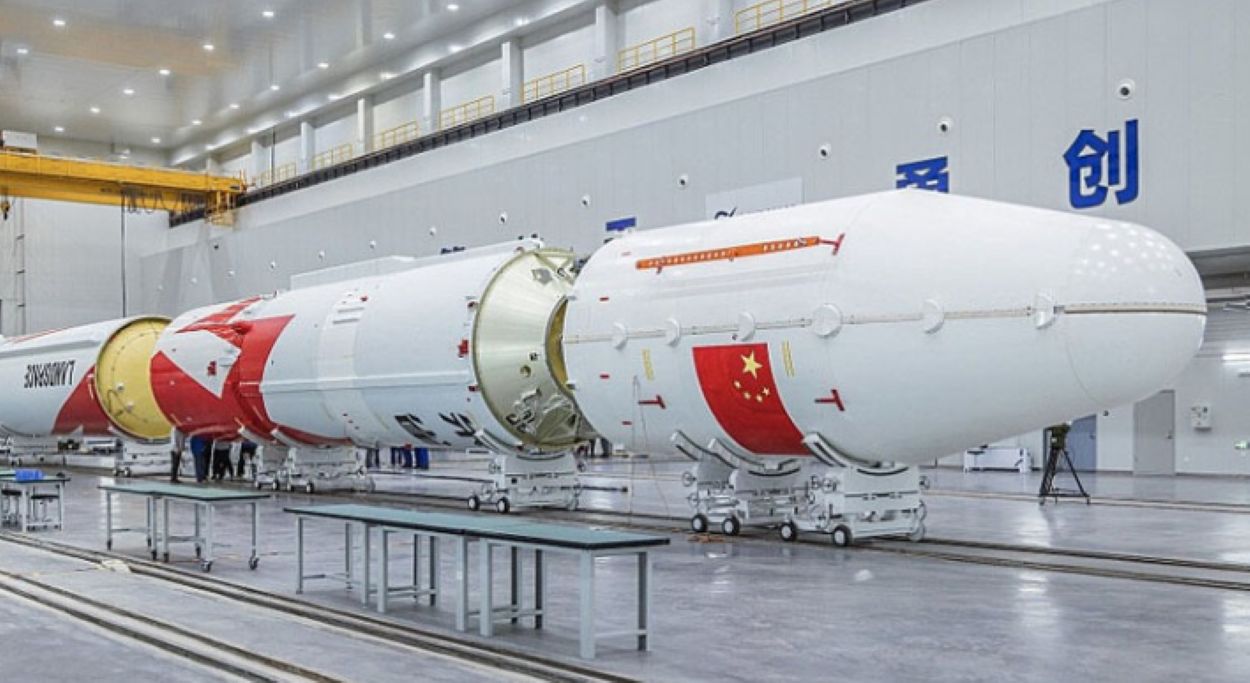

The Beijing Satellite Town aerospace hub will become a major centre for China’s expanding commercial space sector, with authorities expecting to complete its core area in the second half of 2026. The project will support satellite manufacturers and operators as the country pushes ahead with industrial expansion.
The development reflects China’s broader drive to standardise and scale up its commercial space market. State-backed media reports that commercial launches now make up more than 60% of all space launches in the country.
The new hub will strengthen the aerospace industry by bringing related businesses together and improving the movement of talent, capital, and technology. In practical terms, it will create a more integrated base for companies engaged in satellite production, operations, and related services.
Beijing Satellite Town will help move the sector away from isolated projects and toward more efficient, high-frequency commercial activity. Several factors are driving this growth. Faster launch approvals, increased localisation of components, and continued capital injections from industrial funds.
It also notes that many aerospace companies are now rushing to go public. Gao Yibin, head of the Strategic Research Department at Future Aerospace, said these trends are helping push China’s trillion-yuan commercial space market toward scale and standardisation.
Several major scenarios are expected to drive sustained growth in 2026. These include low-Earth-orbit constellation networking, satellite internet, space computing power, and 6G air, space, and ground integration.
Together, these areas point to a broader effort to build a more advanced and connected space infrastructure. They also suggest Beijing is positioning itself at the centre of that transformation. The importance of Satellite Town goes beyond construction.
It reflects a broader national effort to build a more mature commercial aerospace ecosystem. The project brings manufacturers, operators, investors, and researchers together in one place. If completed as planned, it could strengthen Beijing’s role as a central hub for China’s long-term ambitions. Those ambitions include satellite internet, launch services, and the development of space-based technology.