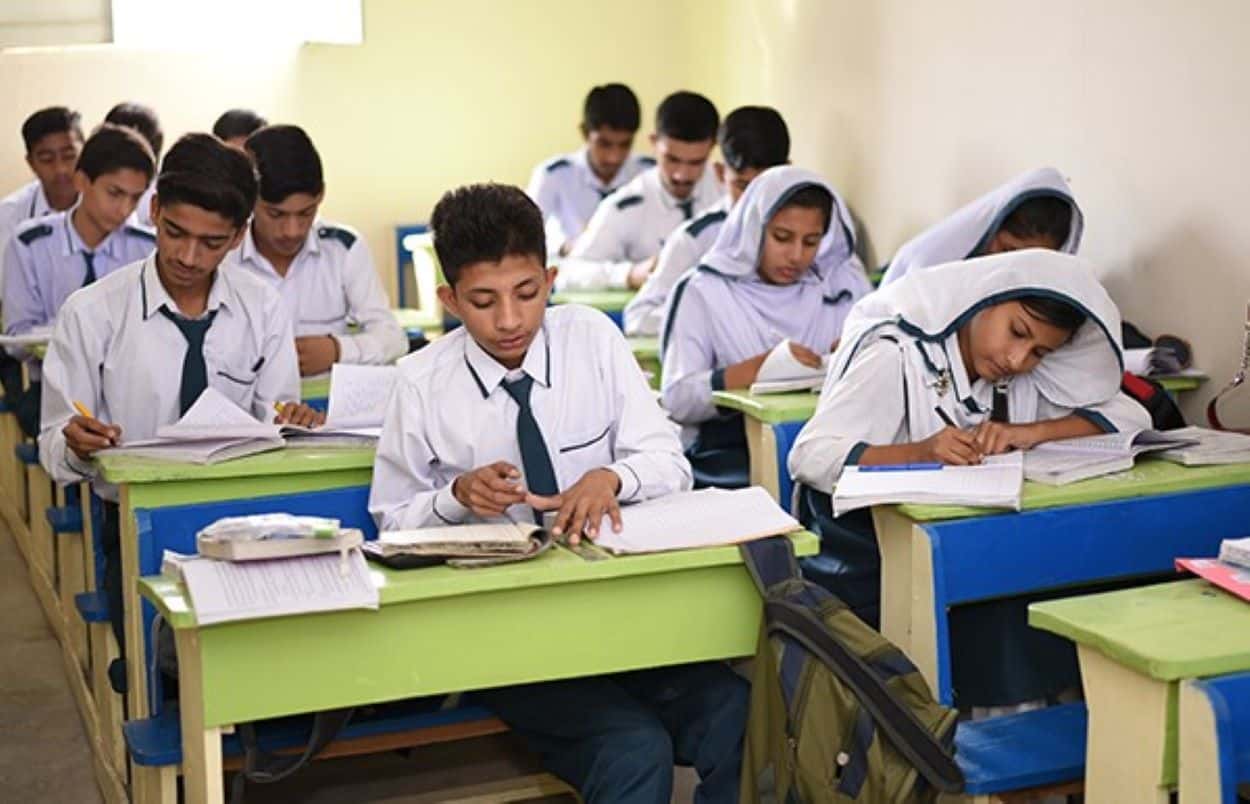

The Sindh government has tightened private school rules by banning the sale of syllabus books, uniforms, and stationery inside school premises, a move aimed at reducing financial pressure on parents and curbing forced purchases. The School Education and Literacy Department has formally barred schools from compelling parents to buy items from specific shops or vendors.
Schools must now provide a complete list of required books and stationery at the start of the academic year so parents can buy them from the open market at competitive prices. It also says notebooks carrying a compulsory school monogram or logo can no longer be imposed, while setting up sales stalls inside schools has been declared punishable.
Official Sindh School Education and Literacy Department resources publicly show an active notifications system and private-school oversight framework, which supports the administrative context for such directives.
Sindh Private School Rules
The main change is aimed at school-linked commercial pressure on families. School administrations can no longer require parents to use designated suppliers for books, uniforms, or stationery.
That matters because many parents have long complained about being pushed toward higher-cost vendors or branded materials tied directly to schools. The new rules are designed to open those purchases to regular market competition instead.
The Directorate of Inspection and Registration of Private Institutions has warned that violations could result in severe penalties, including heavy fines and even the cancellation of school registrations.
The new school sales restrictions are a broader tightening of oversight after recent safety concerns. It says the Sindh government earlier issued strict fire safety instructions for private schools across the province.
Under those directives, schools have been told to install fire alarms, smoke detectors, and fire extinguishers. They must also keep emergency exits and staircases clear, inspect electrical systems regularly, display evacuation plans, and conduct regular fire drills.
Schools must train teachers and staff in emergency response, make arrangements for students with disabilities and other vulnerable children, and designate assembly points for emergencies. Authorities have warned of action against schools that fail to comply.