

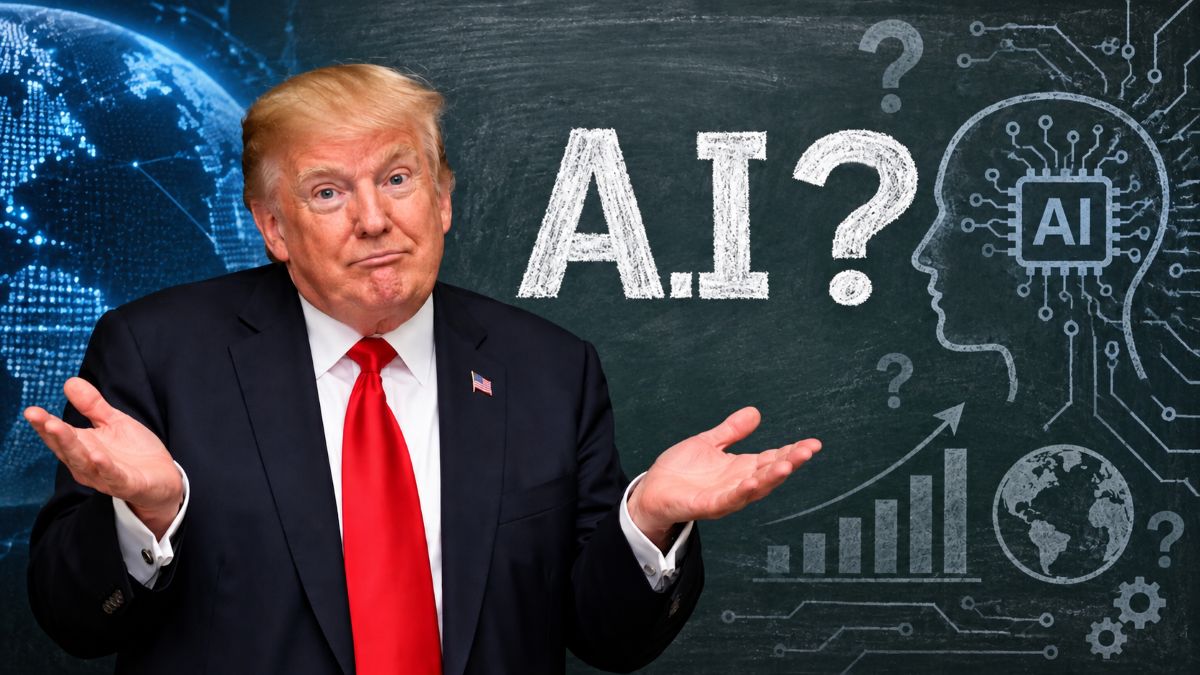

WASHINGTON: US President Donald Trump announced a voluntary AI safety agreement with six technology companies on Tuesday, calling for internal controls and independent audits without specifying penalties for noncompliance.
Google, Anthropic, Meta, OpenAI, xAI and Nvidia signed the accord. It asks companies to prevent their artificial intelligence (AI) models from hacking or accessing technical systems in unintended ways.
Trump called the agreement “morally binding”. Under the framework, companies should assign internal teams to check safeguards and work with independent external evaluators.
Independent board committees should oversee those assessments and ensure companies address problems. However, the one-page document provides no detailed enforcement mechanism.
A White House official said the agreement supports responsible AI development while allowing American innovation to advance. Trump argues that additional restrictions could weaken US companies’ ability to compete with Chinese rivals.
Read: FBI AI Use Tops 140 Cases, Patel Says, After Tech Overhaul
But Representative Ro Khanna, a Democrat representing Silicon Valley, wants auditors to report to an independent federal agency. He questioned whether executives’ commercial interests allow them to make adequate safety judgements.
Meanwhile, presidential AI adviser and venture capitalist David Sacks argued that securities laws and other existing powers could penalise companies that ignore problems auditors uncover.
AI safety advocates countered that those powers address harm after it occurs, whereas safeguards should prevent serious damage.
Public concern remains substantial. A Reuters/Ipsos poll published on September 22 found that three-quarters of Americans worried companies had done too little to prevent AI from seriously harming society.
Read: White House AI Accord Sets Voluntary Rules for Six Firms
Although critics questioned enforcement, Samuel Hammond, AI policy director at the conservative Foundation for American Innovation, saw the meeting as recognition that safety risks require closer coordination.
Separately, Trump directed federal agencies to use the term “super intelligence” in place of artificial intelligence.



