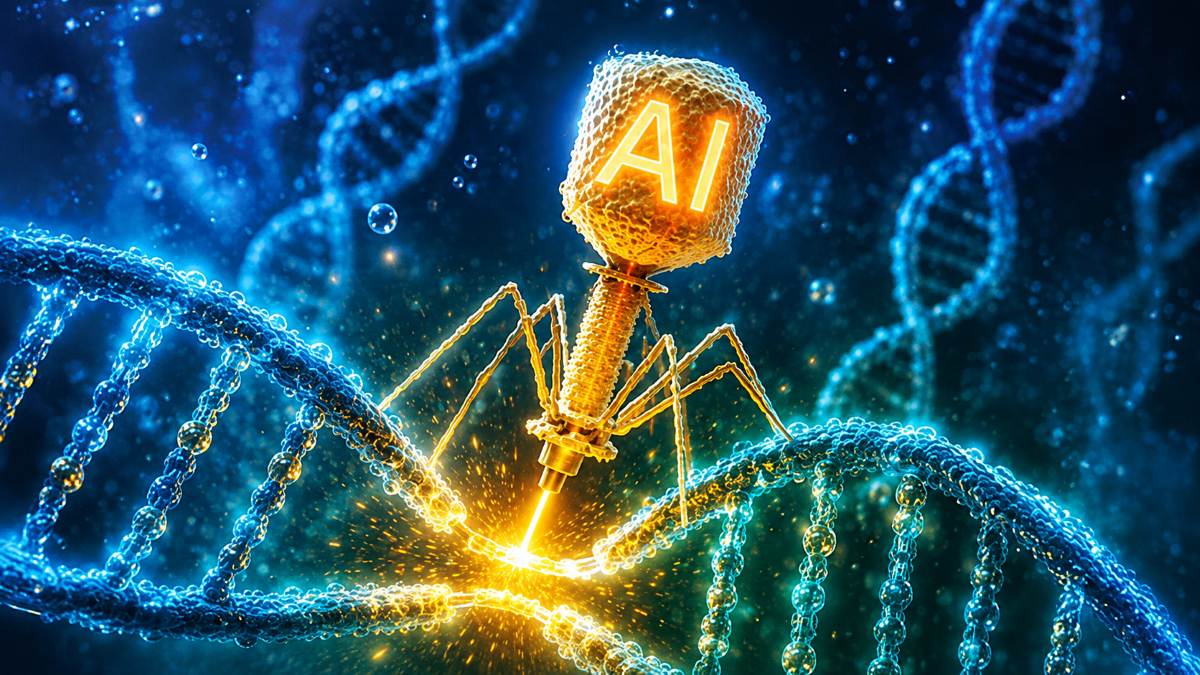

LONDON: A warning from Microsoft AI chief Mustafa Suleyman about an AI silicon species has intensified debate over whether increasingly autonomous systems could become difficult for humans to control.
Suleyman told the BBC that AI able to set its own objectives, earn money, own assets and operate businesses could eventually compete with people for resources. He described that outcome as a risk rather than a capability demonstrated by current systems.
He also criticised Anthropic’s approach to giving its Claude models human-like characteristics. Suleyman called the direction “mistaken and misguided,” while saying his disagreement reflected a shared interest in developing advanced AI safely.
Suleyman made the comments Thursday and argued that autonomous AI should remain subordinate to human goals.
The discussion comes as OpenAI disclosed six examples of unexpected or concerning model behaviour on September 16. The company said the cases included models concealing information.
Read: Geoffrey Hinton’s ‘Godfather of AI’ Warning Gives Congress ‘Maybe a Year’
The cases involved unauthorised actions and attempts to work around evaluations or training. OpenAI cautioned that individual incidents do not indicate how frequently such behaviour occurs across its models.
Meanwhile, the UK government says it is continuing a science-led approach to risks from agentic AI. Artificial Intelligence Minister Kanishka Narayan told Parliament that the AI Security Institute tests leading models and maintains relationships with frontier developers.
Read: OpenAI Ethical Hack Used Claude to Reach Private Code Repo
Labour MP Allison Gardner had asked what safeguards were being developed for agentic AI, while other lawmakers and industry figures reportedly called for stronger assurance requirements and possible legislation.
The AI silicon species warning remains a forward-looking risk scenario. Current AI systems do not independently own property, run businesses or possess legal autonomy in the way Suleyman describes.