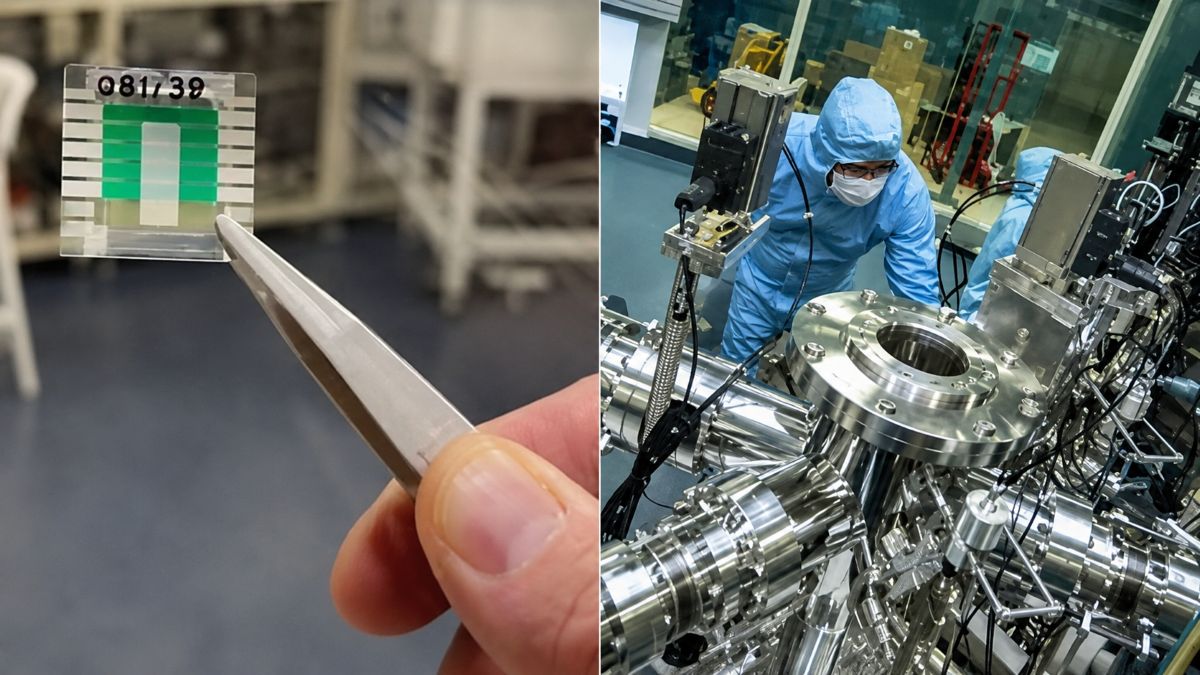

A quantum battery prototype developed by CSIRO researchers can charge faster as its size increases, using a quantum effect called superabsorption.
According to researcher James Quach, the team unveiled what it described as a working prototype in March 2026. The device uses quantum effects instead of conventional electrochemical reactions.
Researchers built the system around an optical microcavity. Two mirrors sit about 100 nanometers apart, with organic dye molecules placed between them.
A laser couples the light and molecules into hybrid light-matter states. This enables superabsorption and increases the rate at which the system takes in energy.
Quach said the molecules act collectively rather than independently. As more molecules are added, the charging rate increases.
The prototype charged within femtoseconds and stored energy for nanoseconds. The team first demonstrated the charging effect in 2022. However, in March 2026, researchers also extracted an electrical current from the prototype.
The system works at room temperature. By contrast, some superconducting quantum battery designs require temperatures below minus 150 degrees Celsius.
Read: Motorola D-Fend Deal Adds Counter-Drone Technology
Dario Ferraro, associate professor of physics at the University of Genoa, said environmental interference can weaken fragile quantum effects and limit scalability.
Mauro Paternostro, a quantum physicist at Queen’s University Belfast, said researchers still need better control over extracting stored energy for practical use.
Quach said his team is developing a hybrid design that combines fast quantum charging with longer-duration classical energy storage.