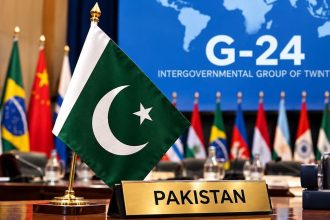



ISLAMABAD: Pakistan assumed the chairmanship of the Intergovernmental Group of Twenty-Four (G-24) on Sunday, as Finance Minister Muhammad Aurangzeb set three priorities for development and international financial reform.
The developing-country bloc coordinates positions on monetary and financial matters, particularly in discussions with the International Monetary Fund (IMF) and the World Bank. It was established in 1971.
In a Ministry of Finance statement, Aurangzeb called the new role a major responsibility. He pledged to strengthen developing economies’ influence over global economic decisions.
His first priority is to place development at the centre of policymaking. Aurangzeb argued that economic stability should support investment, jobs and productivity, allowing developing economies to pursue lasting growth rather than repeated crisis management.
Pakistan will also press for fairer representation at international financial institutions. He called for greater participation by developing countries in decisions made by the IMF and World Bank.
Read: Pakistan, IMF Reach Staff Deal for $1.21 Billion Funding
A third priority covers timely and affordable development financing, sustainable debt solutions and stronger financial safety nets. Climate resilience and mobilising public and private investment will also feature in the agenda.
Aurangzeb urged stronger cooperation to address financing gaps, climate shocks and economic fragmentation. Pakistan wants to shift the group’s work “from collective voice to collective influence,” he said. Pakistan succeeded Nigeria as chair.
Read: Asim Iftikhar Ahmad Returns as Pakistan’s Foreign Secretary
Aurangzeb said the country would work with G-24 members across Africa, Asia, Latin America and the Caribbean to pursue shared priorities.
Pakistan assumed the G-24 chairmanship on November 1, with Finance Minister Muhammad Aurangzeb pledging to prioritise development financing, stronger international institutions and fairer financial governance.