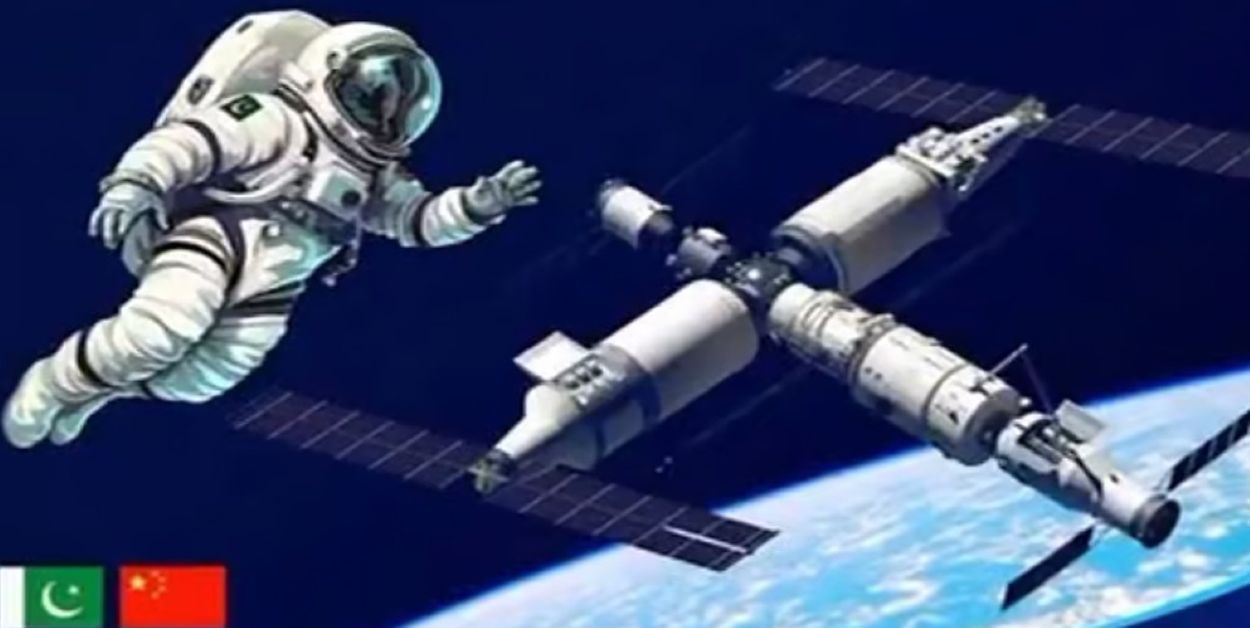

Pakistan’s astronaut selection programme has reached an important milestone as SUPARCO completed the secondary phase of astronaut candidate selection, according to ISPR.
This step marks steady progress in Pakistan’s Human Spaceflight Programme. It also signals deeper cooperation with China in advanced space exploration.
After initial screening in Pakistan, authorities shortlisted two candidates. Both candidates completed detailed medical, psychological, and aptitude assessments at the Astronauts Centre of China. These evaluations followed international human spaceflight standards.
The shortlisted candidates will now begin six months of advanced astronaut training in China. The programme will prepare them for work in a space station environment and mission-specific responsibilities.
After training, officials will select one candidate for a spaceflight mission aboard the Chinese Space Station. The mission is scheduled for October or November 2026. This flight will mark Pakistan’s first participation in a crewed space mission.
#ISPR
Rawalpindi, 07 February, 2026
Pakistan Space & Upper Atmosphere Research Commission (SUPARCO) has achieved yet another significant milestone in #Pakistan’s Human Spaceflight Programme with the successful completion of the secondary phase of astronaut candidates’ selection.… pic.twitter.com/LlEv70rud6
— Pakistan Armed Forces News 🇵🇰 (@PakistanFauj) February 7, 2026The programme operates under the Astronaut Cooperation Agreement signed in February 2025. Pakistan’s prime minister supported the initiative and played a key role in enabling the country’s participation in human spaceflight.
ISPR stated that the Government of the People’s Republic of China strongly supports the programme. China selected Pakistan as the first foreign partner in its astronaut programme. This decision reflects growing trust and cooperation between the two countries.
Earlier, a spokesperson from the China Manned Space Agency confirmed that preparations for the secondary selection phase were underway. These preparations include training schedules, instructional materials, equipment setup, and daily logistics for the astronauts.
During the mission, the selected astronaut will assist with routine space station operations. The astronaut will also conduct scientific experiments on behalf of Pakistan.
This collaboration marks a historic moment in Pakistan-China relations. It highlights expanding cooperation in science, technology, and space exploration. The programme also fits within China’s medium-term planning framework for its space station.