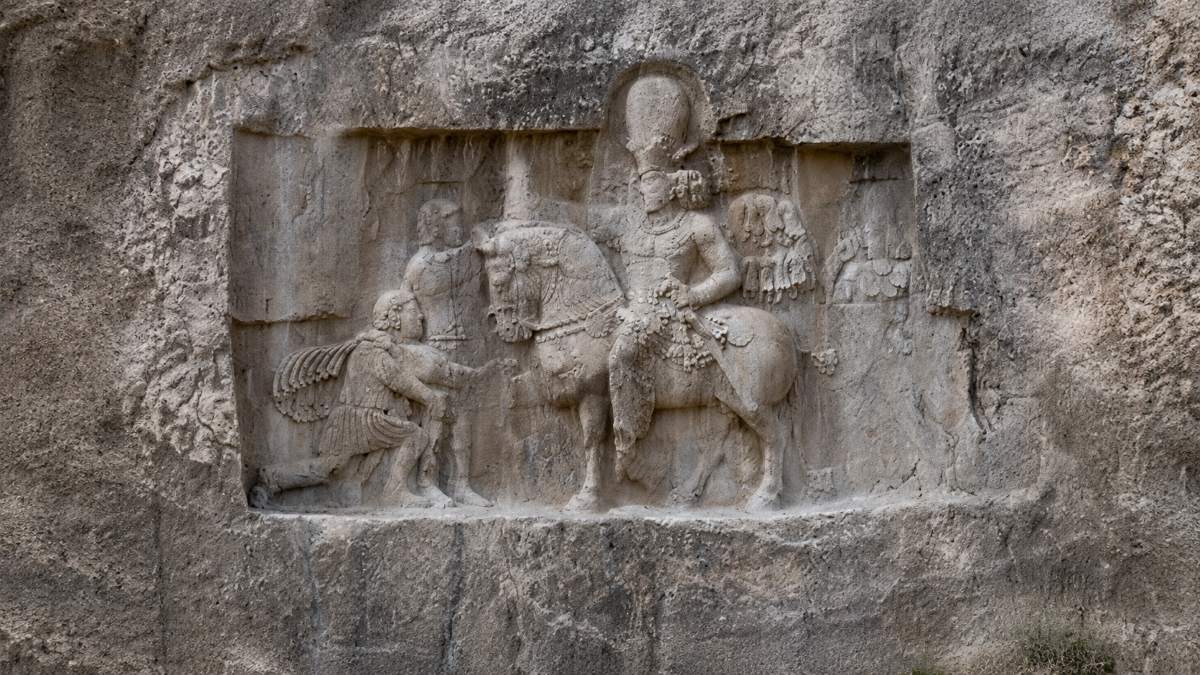

FARS, Iran: The Naqsh-e Rostam relief near Persepolis commemorates one of Rome’s most unusual defeats, when Sasanian King Shapur I captured Emperor Valerian after the Battle of Edessa in 260 CE.
The archaeological site lies about 13 kilometres northwest of Persepolis and contains Achaemenid royal tombs alongside later Sasanian rock carvings.
The most famous relief shows Shapur I mounted on horseback with Roman figures positioned around him in submission.
The kneeling figure as Emperor Valerian, who became the only Roman emperor captured alive as a prisoner of war by a foreign enemy.
Another figure is identified as Philip the Arab, while a fallen figure beneath the horse is commonly linked to Emperor Gordian III. Some identifications have been debated.
The carving served as a visual commemoration of Shapur’s military successes against Rome and was positioned below the earlier Achaemenid tombs.
Read: 7 Contemporary Wonders of the World, Research Opens For Public Vote
That placement has been interpreted as an attempt by the Sasanians to associate their dynasty with the prestige of the earlier Persian empire.
Naqsh-e Rostam preserves monuments spanning more than a millennium, from the Elamite and Achaemenid periods through the Sasanian era.