

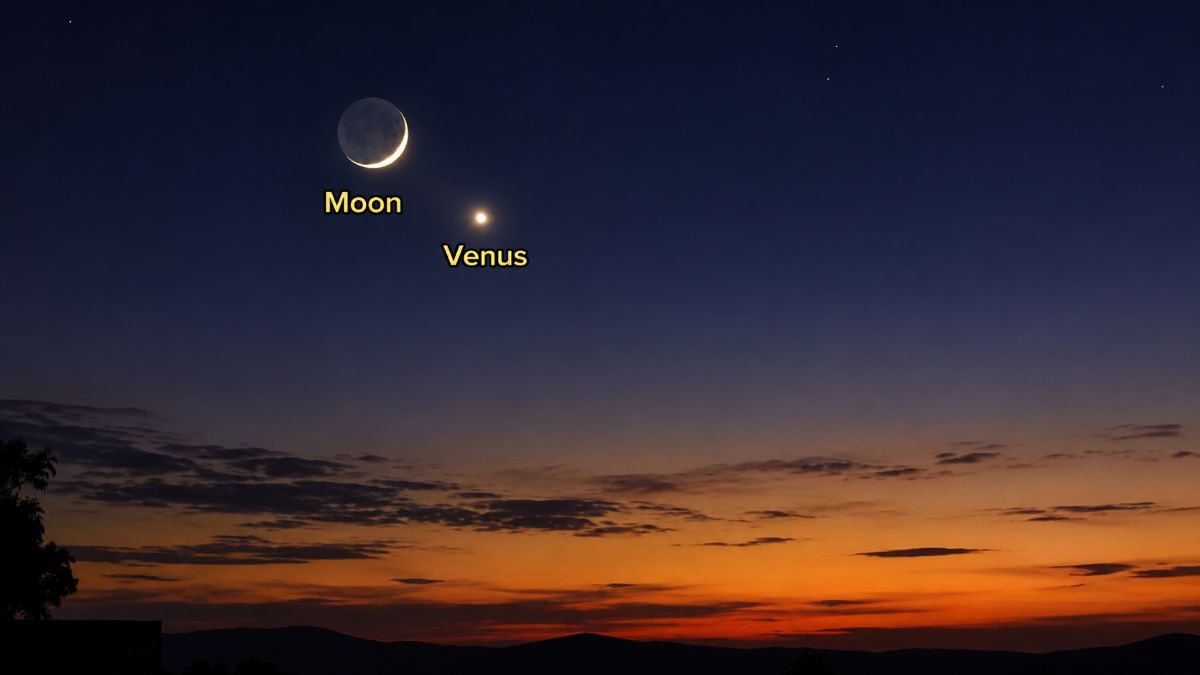

Skywatchers will see the Moon and Venus appear about one degree apart before sunrise on Saturday, November 7, in their closest nighttime conjunction of 2026.
A slender waning crescent moon, with just 3% of its surface illuminated, will appear beside bright Venus. Spica, the brightest star in the constellation Virgo, will shine nearby.
Look low toward the east-southeast about 45 minutes before sunrise. A clear sky and an unobstructed eastern horizon will offer the best chance of seeing the pairing.
Venus spent much of 2026 as the Evening Star. It now shines before dawn as the Morning Star. On Friday, November 6, an 8%-lit crescent moon will appear close to Venus.
Their apparent separation will narrow further the following morning. Earlier in the week, another grouping will offer a view of several objects before sunrise.
Read: Mars Moon Dust Could Unlock Secrets of the Solar System
On Monday, November 2, the Moon will appear near reddish Mars, bright Jupiter and Regulus, the brightest star in Leo. Jupiter will be the most prominent point of light.
Read: Partial Lunar Eclipse to Cover 96% of Moon for Billions
By Tuesday, the waning lunar crescent will appear less than one degree from Regulus, with both planets still nearby. The Southern Taurid meteor shower will also be active on Thursday, November 5. It produces relatively few meteors but occasionally delivers bright fireballs.
Meanwhile, darker evening skies will offer views of Taurus, the Pleiades star cluster and Orion as they rise in the east. The next major meteor event will be the Leonid shower, which is expected to peak on November 17–18.