KARACHI, Sindh: The Mir Raza Ali inquiry summoned his business partners, friends, a cab driver and two police officers for September 3 as the commission examined discrepancies in his post-mortem record.
Sindh High Court Justice Omar Sial, who heads the one-man judicial commission, issued notices to business partners Ahmed and Abdullah, friends Haitham and Raziq, cab driver Ahsanullah, SDPO Shara Faisal Arshad Afridi and SHO Firozabad Adeel Afzal.
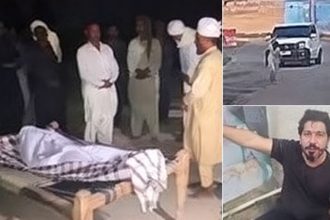
Mir Raza Ali, an IBA graduate and businessman, went missing on July 28. Authorities found his body the following day in Gulistan-e-Jauhar, Karachi. His father has consistently maintained that someone murdered his son and has rejected suggestions of suicide.
The autopsy identified a gunshot wound to Mir Raza’s back. The medical report also documented signs of violence, injuries to his feet, bloodstains on tissue in the lower part of his body, and a deep injury and fracture around his jaw.
During Tuesday’s proceedings, medico-legal officer Dr Osama Sheikh, who conducted the first autopsy, told the commission that he had never discussed suicide. He said the final post-mortem report was released on August 11, following Mir Raza’s exhumation and a review of the subsequent chemical examination reports.
Read: Mir Raza Ali Inquiry Opens WhatsApp, Email for Public Tips
The commission questioned why the final post-mortem findings differed from the earlier report, including discrepancies in handwriting. It also raised the possibility of conducting a forensic examination to determine how and why the record had changed.
Dr Osama denied facing any pressure and said he had shared all relevant matters with Police Surgeon Dr Summaiya, who raised no objection. He also told the commission that DIG East Farrukh Lanjhar called him to the Chief Minister House, where SSP Samiullah Somroo was also present, and asked him to provide a timeline of events.
Police official Muhammad Arif, who operates a Talaash app device, told the commission that the device could not detect fingerprints when he examined Mir Raza’s body. Arif said the condition of the fingers led him to suspect that someone may have attempted to erase the fingerprints.
The commission also questioned why police personnel, rescue workers and others could see visible marks on Mir Raza’s body while the initial medical examination did not consistently document them.
Speaking after the hearing, family counsel Advocate Jibran Nasir said the proceedings supported concerns the family had raised from the outset. He also questioned the circumstances in which officials and the medico-legal officer went to the Chief Minister’s House and sought clarity over the purpose of those meetings.
The commission adjourned the proceedings until September 3.