

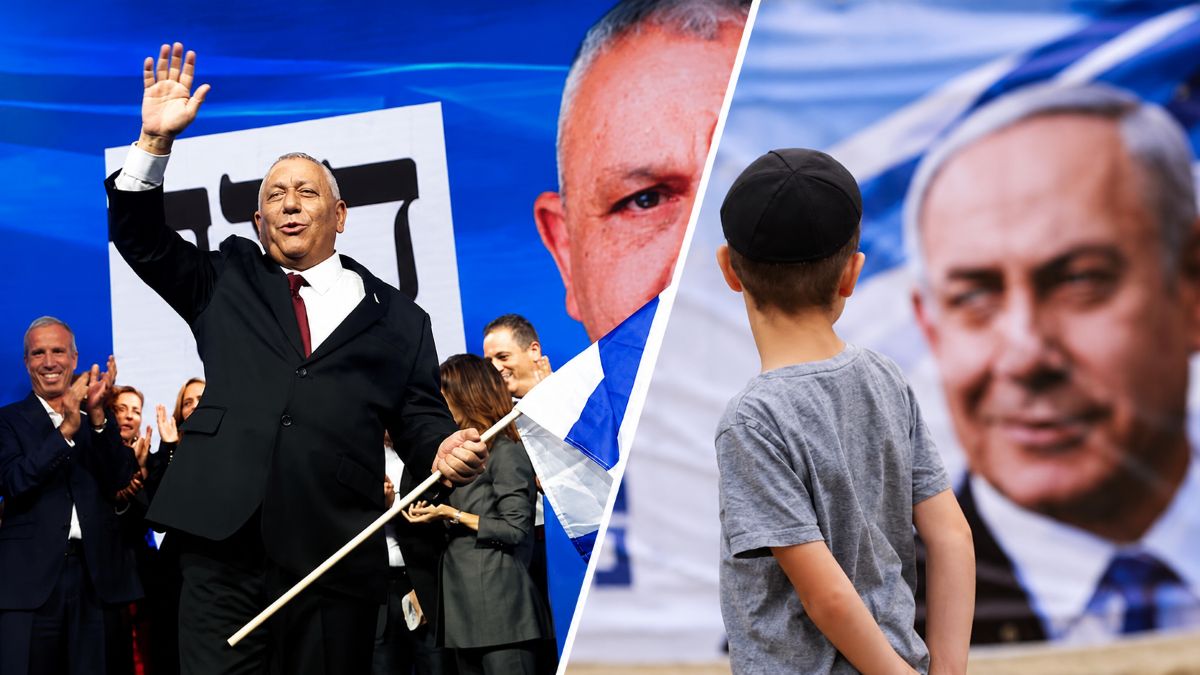

JERUSALEM: Israeli election exit polls projected a narrow lead for opposition leader Gadi Eisenkot over Prime Minister Benjamin Netanyahu on Tuesday, but neither bloc reached the threshold for a parliamentary majority.
Three major television broadcasters put Eisenkot’s opposition alliance at 52 or 53 seats, compared with 50 for Netanyahu’s bloc.
Parties need at least 61 seats in Israel’s 120-member Knesset to form a majority government. Netanyahu’s Likud party remained the largest individual party in the projections, with 24 or 25 seats.
Eisenkot, a former military chief, leads the centrist Yashar party. Arab-majority parties were projected to win 17 or 18 seats combined, compared with 10 in the 2022 election.
Exit polls counted those seats separately from the two principal political blocs. Their support could matter in coalition negotiations, although the projections do not indicate which parties will agree to govern together.
Read: Israel Election Tests Netanyahu as Eisenkot Challenges
Tuesday’s election was Israel’s first since the Hamas-led attacks of October 7, 2023. The Central Elections Committee reported a 74.3% voter turnout by 8:00 pm local time.
Eisenkot interpreted the projections as showing public distrust of Netanyahu’s government. Former Prime Minister Yair Lapid described the figures as a severe defeat for the governing alliance.
Netanyahu had earlier accused opponents of trying to steal the election. Election authorities confirmed they are investigating a suspected irregularity involving cash envelopes.
They described the incident as isolated. Likud also requested an extension of voting hours beyond 10:00 pm, but the committee rejected the proposal.
Television exit polls remain provisional and may change as officials count the ballots. Israel’s Central Elections Committee is scheduled to publish the official results on November 4. With input from Bloomberg and France 24.