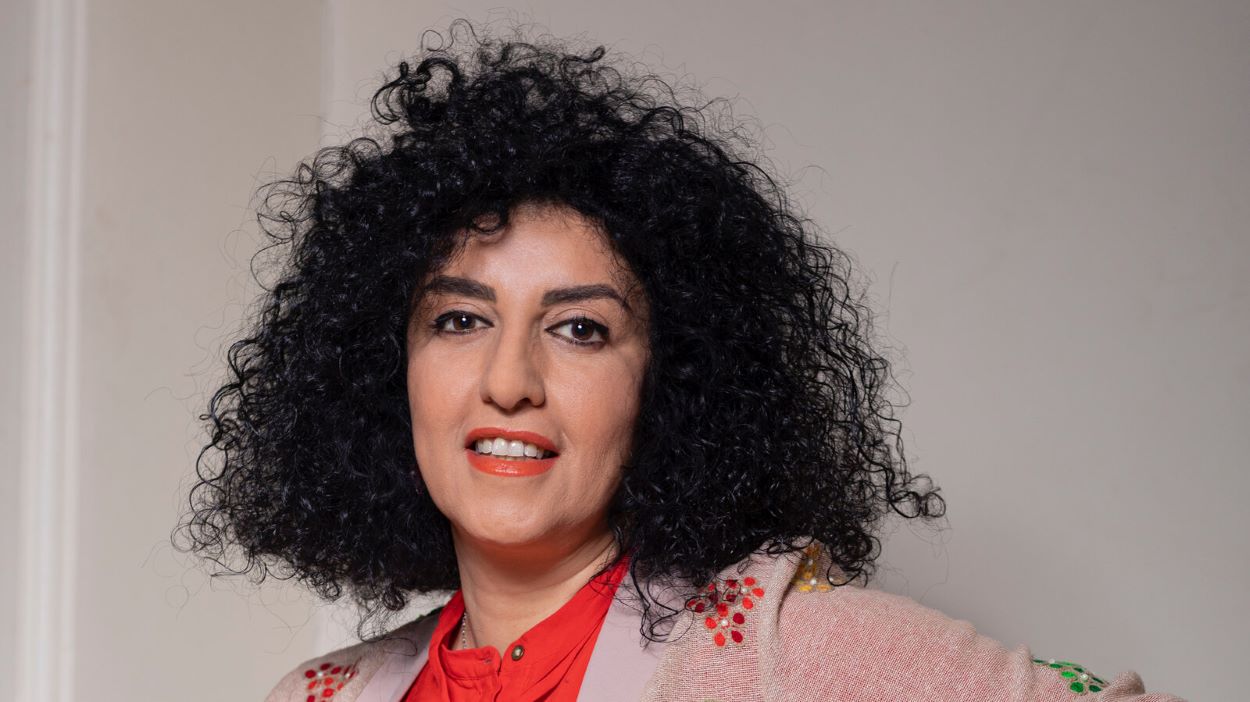

TEHRAN: Iran’s war hardship is leaving ordinary people under severe economic and social pressure, Nobel Peace Prize laureate Narges Mohammadi told the Associated Press in an interview published Saturday.
Mohammadi, 54, said Iranians were carrying the cost of continuing conflict, U.S. sanctions and intensified domestic repression. She described conditions as leaving people with little space to recover from overlapping crises.
The Iranian human-rights activist received the 2023 Nobel Peace Prize for her campaign against the oppression of women and for human rights and freedom, the Norwegian Nobel Committee said.
Mohammadi also said public resistance had continued despite stronger state pressure. She linked that defiance to the protests that followed the 2022 death of Mahsa Amini after her detention by Iran’s morality police.
Her interview coincides with the release of her memoir, “A Woman Never Stops Fighting.” Mohammadi began writing the book while imprisoned and said fellow inmates helped move pages outside prison.
In one of her first interviews since being released from Iran's Evin prison on temporary medical leave, Iranian Nobel Peace Prize laureate Narges Mohammadi tells @JomanaCNN about her new memoir, her years behind bars and why she continues to speak out despite the risks. pic.twitter.com/LoERZrMKek
— CNN International PR (@cnnipr) September 18, 2026Publishers are releasing French, German and nine other language editions this month. They have scheduled the English and Farsi editions for September 2027.
Read: Iran-France Row Deepens Over Protester Executions in Iran
Authorities released Mohammadi on medical bail earlier this year after she lost consciousness and received hospital treatment. She told AP that she was recovering but could return to prison because her sentence remains suspended.
AP reported that Mohammadi has received prison sentences totalling 44 years and has spent about 10 years incarcerated, including 161 days in solitary confinement.
She said younger Iranians increasingly understood their rights and continued to resist restrictions despite the risks, describing that persistence as a source of hope.