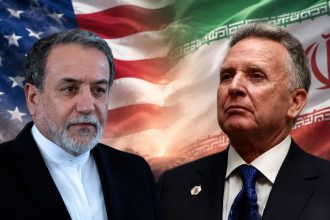



TEHRAN: Iran’s Foreign Minister Abbas Araghchi warned on Sunday that Tehran could retaliate against renewed attacks after US President Donald Trump threatened further military action.
Writing on X, Araghchi claimed Iran had emerged stronger from the previous confrontation. He challenged Trump’s warning that Washington could complete its campaign unless Tehran changed course.
“Be careful; we have unfinished jobs too,” Araghchi wrote. Meanwhile, Armed Forces Chief of Staff Ali Abdollahi warned that another attack would draw a stronger response than before.
An Islamic Revolutionary Guard Corps spokesperson threatened retaliation against Israel if it attacked Iranian energy sites.
Trump issued his warning on Truth Social while endorsing Prime Minister Benjamin Netanyahu of Israel for the October 27 election.
He suggested Washington could act alone if Netanyahu lost power. Separately, Netanyahu told Israeli journalists that removing Iran’s government remained an Israeli objective.
He said he had directed security agencies to pursue that goal and could act without Washington. Araghchi accused Netanyahu of trying to draw the United States into another war for his own political interests.
Read: Trump Issues Iran Warning, Backs Netanyahu Re-Election
Iran’s parliament approved Mehrdad Akhlaghi Ketabchi as defence minister on Sunday. He urged Washington to focus instead on withdrawing its forces safely from the region.
Despite the warnings, Araghchi said Tehran’s seven-day diplomatic proposal remained on the table as Iran reviewed Washington’s response.
Read: Iran Defence Minister Warns Trump After Confidence Vote
Under the plan, Iran would reopen the Strait of Hormuz on the sixth day and begin negotiations on the seventh. Those steps would depend on Washington accepting Tehran’s conditions.
Iran seeks an end to the US blockade of its ports, relief from oil export sanctions and an end to fighting across regional fronts.
In Bahrain, Gulf Cooperation Council foreign ministers called for dialogue on Sunday. But they insisted that talks address Iran’s nuclear and missile programmes, drones and support for armed groups, with Gulf states involved.