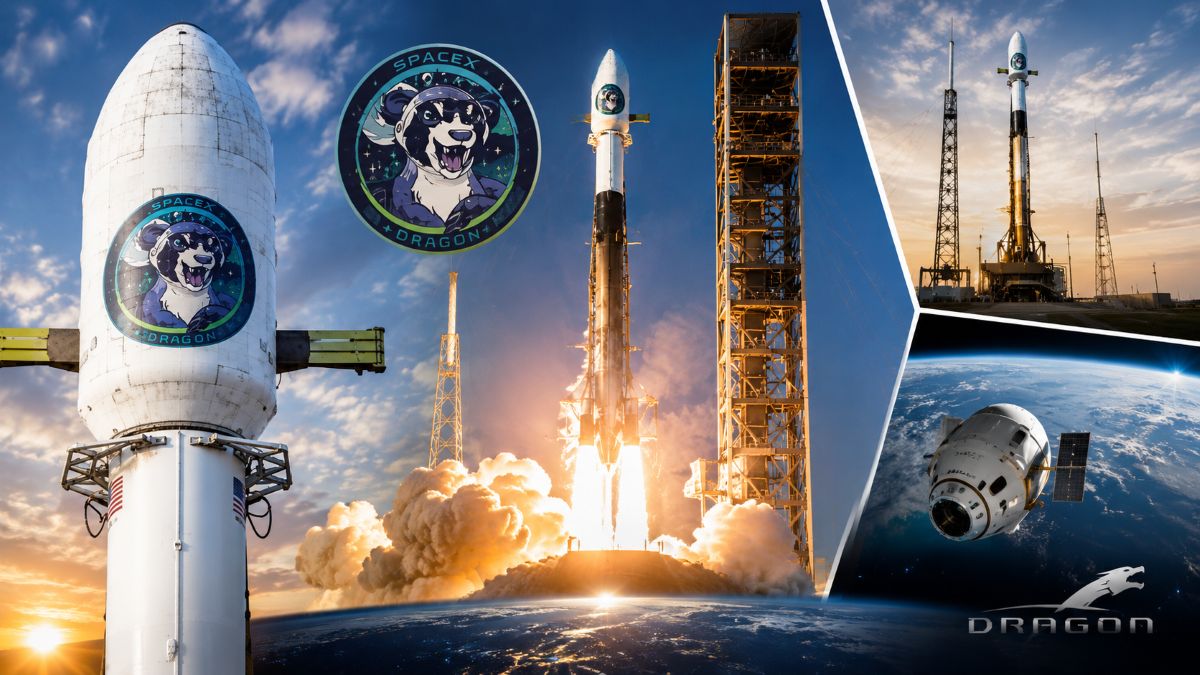

A spent SpaceX Falcon 9 upper stage is expected to strike the Moon near Einstein crater at 06:35 UTC, orbital analyst Bill Gray said.
The object, officially catalogued as 2025-010D, has remained in a high Earth orbit since its January 15, 2025, launch. Gray’s latest calculations place the impact within a few seconds of 06:35:37 UTC.
The upper stage launched Firefly Aerospace’s Blue Ghost Mission 1 and ispace’s RESILIENCE lander toward the Moon. Both companies confirmed that their spacecraft lifted off aboard the same Falcon 9 from NASA’s Kennedy Space Centre in Florida.
Gray estimates that the discarded stage weighs about 4,900 kilograms and will hit the lunar surface at 2.43 kilometres per second, or about 8,700 kilometres per hour. The predicted site lies close to the Einstein crater near the Moon’s sunlit western edge as viewed from Earth.
The Falcon 9 Moon impact could produce a single crater about 17 metres wide. Gray calculated an impact energy of roughly 14.5 billion joules, equivalent to about three tonnes of TNT, but said the event posed no danger to Earth.
The impact flash is unlikely to be clearly visible from Earth because the stage is moving more slowly than most meteoroids that strike the Moon. A plume of ejected lunar material might be detectable through telescopes, although Gray described its visibility as uncertain.
Read: Falcon 9 Launch Contract Covers 18 Space Force Missions
NASA’s Lunar Reconnaissance Orbiter could later photograph the resulting crater, as it did after a separate rocket body struck the Moon in 2022. No official observation plan had been announced at the time of publication.