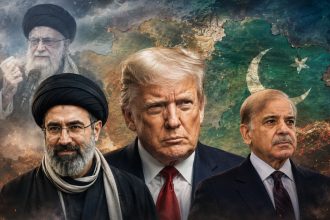

WASHINGTON: A dispute over US-Iran talks deepened on August 3 after President Donald Trump accused Tehran of duplicity.
Iran denied direct negotiations and cited separate Hormuz shipping talks with Oman. Trump said on Truth Social that Iranian leaders had requested negotiations but then publicly denied them.
He called the leadership “unbelievably duplicitous” and demanded either an agreement or “total surrender,” according to The Guardian.
Iranian Foreign Ministry spokesperson Esmaeil Baghaei said Tehran was not currently negotiating with Washington. He added that Foreign Minister Abbas Araghchi had no meetings scheduled with US officials for Monday.
Baghaei said Iran and Oman had exchanged maps for a temporary corridor through the Strait of Hormuz. The proposed corridor would use a single round-trip route rather than separate northern and southern channels.
However, Iran said an agreement would not amount to reopening the waterway. It would also leave the US naval blockade unresolved, according to Iran’s state-run IRNA news agency.
Read: European Diplomacy on Ukraine Struggled to Sway Trump
Trump said on August 2 that he had suspended planned US strikes to allow more time for diplomacy after Gulf leaders urged restraint.
He described the operation as potentially the largest attack since World War II but did not disclose its targets or scale.
The president said a possible agreement would address Hormuz shipping and Iran’s nuclear programme. He set no deadline and warned that the military option remained available.
Separately, Araghchi spoke with Saudi Foreign Minister Prince Faisal bin Farhan and Pakistan Army Chief Field Marshal Asim Munir on August 2. ISNA said they discussed political initiatives to support regional security.
Pakistan brokered the June 18 memorandum that established a framework for ending the conflict.