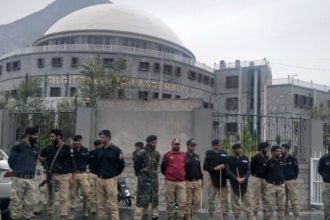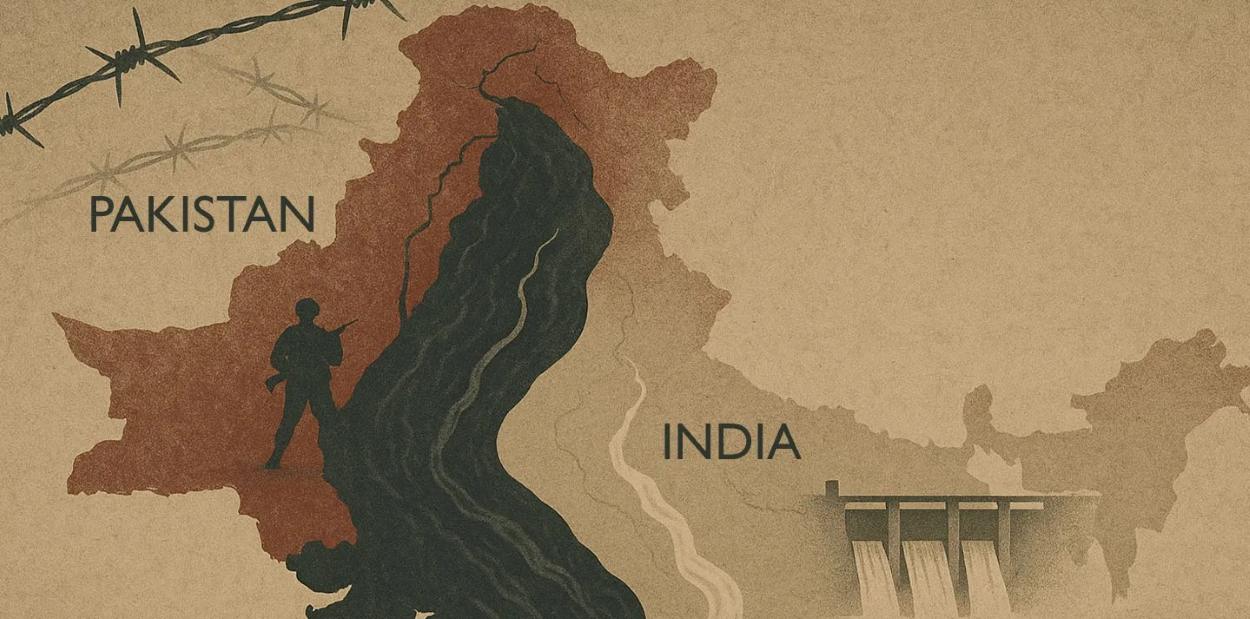

Pakistan is confronting a renewed surge in militant violence, exposing a deepening crisis in its counterterrorism strategy. The central challenge is no longer merely the increase in attacks, but the state’s persistent reliance on a predominantly force-led response to what have become qualitatively distinct security threats.
The core argument is straightforward: Pakistan is managing two separate theatres of violence through a single, broad security template. The first front is in Khyber Pakhtunkhwa and the Pashtun belt of Balochistan, where militancy is ideological, religiously framed, and driven by groups such as the Tehrik-i-Taliban Pakistan (TTP). This front has been further complicated by the regional shift following the Afghan Taliban’s return to power in 2021. The second front lies in Balochistan’s Baloch-majority districts, where the conflict is political rather than religious, rooted in longstanding grievances over marginalisation, resource allocation, autonomy, and rights.
This distinction is critical. One conflict is transnational and ideologically driven; the other is sub-nationalist and political in character. Yet both are met with a near-identical response: military operations and intelligence-based kinetic action. While such operations may yield short-term tactical gains, these have consistently failed to translate into durable stability, as violence tends to re-emerge in more adaptive forms. The problem, therefore, is not the use of force per se, but an over-reliance on it to the exclusion of broader strategic tools.
This critique echoes within official policy circles. The Prime Minister’s Office has framed Azm-e-Istehkam as a multi-domain, whole-of-system vision intended to reinvigorate the revised National Action Plan (NAP), distinguishing it from a narrow military operation. However, the gap between strategic framing and implementation remains pronounced.
Institutional Fragmentation and the Coordination Gap
A significant structural weakness lies in Pakistan’s fragmented institutional response. Civilian oversight has been marginalised, and coordination among stakeholders remains weak. This is particularly evident in the role of the National Counter Terrorism Authority (NACTA), which is formally mandated to coordinate national counterterrorism efforts. While NACTA’s framework continues to centre on the NAP, policy direction remains abstract. Initiatives such as Azm-e-Istehkam and the revised NAP have been criticised for lacking clearly assigned responsibilities, enforceable timelines, and measurable benchmarks, shortcomings that undermine effective execution.
What is required is a holistic approach calibrated to the distinct nature of each conflict. In Khyber Pakhtunkhwa, targeted security action must be integrated with governance reforms, robust local policing, and a credible ideological counter-narrative to counter extremist influence. In Balochistan, a political insurgency driven by deep-seated grievances cannot be resolved by force alone. A sustainable approach demands genuine political dialogue, inclusive representation, transparent resource-sharing, and strengthened local governance.
This direction aligns with official recognition of the need for prevention. NACTA has noted the approval of the National Policy for the Prevention of Violent Extremism, which advocates a whole-of-society approach to addressing root causes. Translating this policy into practice, however, remains the central test.