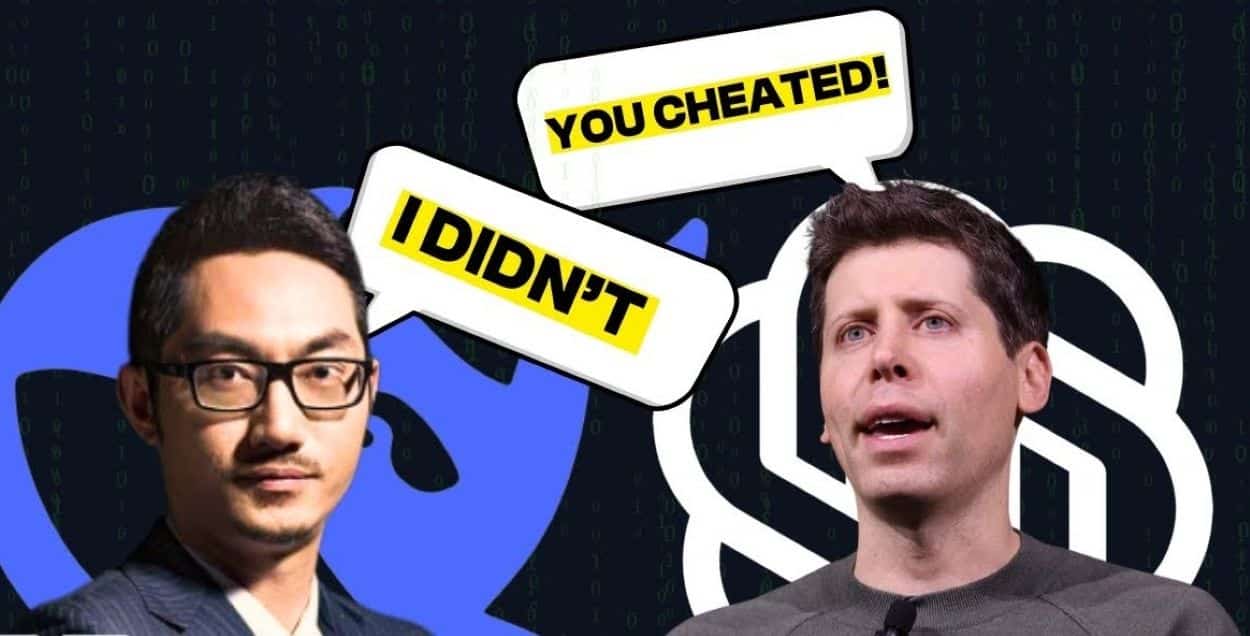

OpenAI accuses DeepSeek of distillation and claims that the Chinese AI start-up attempted to replicate advanced US artificial intelligence models for its own training.
According to a memo submitted to US lawmakers, OpenAI warned that DeepSeek targeted the ChatGPT maker and other leading American AI labs. The company described what it called “ongoing efforts to free-ride” on capabilities developed by US frontier firms.
OpenAI Accuses DeepSeek of Distillation Techniques
In the memo, OpenAI said it observed accounts linked to DeepSeek employees developing methods to bypass access restrictions. The company alleged that these accounts used obfuscated third-party routers and other masking tools to access models.
OpenAI further claimed that DeepSeek employees wrote code to retrieve outputs from US AI systems programmatically. These outputs were allegedly used for distillation, a method that transfers knowledge from a stronger AI model to a newer one.
Distillation typically involves having a powerful, established model evaluate or generate responses. Developers then use those responses to train a separate model more efficiently. While the technique itself is widely known in AI research, OpenAI suggested it was used improperly in this case.
DeepSeek and its parent company, High-Flyer, did not immediately respond to requests for comment, according to reports.
Broader Context: US-China AI Competition
The allegations come amid intensifying competition between the United States and China in artificial intelligence development. Hangzhou-based DeepSeek drew global attention after launching AI models that rivalled leading US systems.
Some Silicon Valley executives previously praised DeepSeek’s models, including DeepSeek-V3 and DeepSeek-R1, which are available internationally. However, OpenAI warned lawmakers that certain large Chinese-language models may be “cutting corners” in their safety training and deployment.
Read: OpenAI Accuses DeepSeek of Copying ChatGPT Amid Its Own Copyright Issues
In its memo to the US House Select Committee on Strategic Competition between the United States and the Chinese Communist Party, OpenAI emphasised that it actively monitors suspicious activity. The company stated it removes users who appear to be attempting to distil its models to develop competing systems.
The dispute highlights growing tensions in the global AI race. As models become more powerful, access controls and intellectual property protections are increasingly strategic.
US policymakers have expressed concern that technological advancements could shift geopolitical balances. Meanwhile, companies on both sides continue to push forward with rapid innovation.
The situation underscores the delicate balance between open research collaboration and competitive safeguards in advanced AI development.