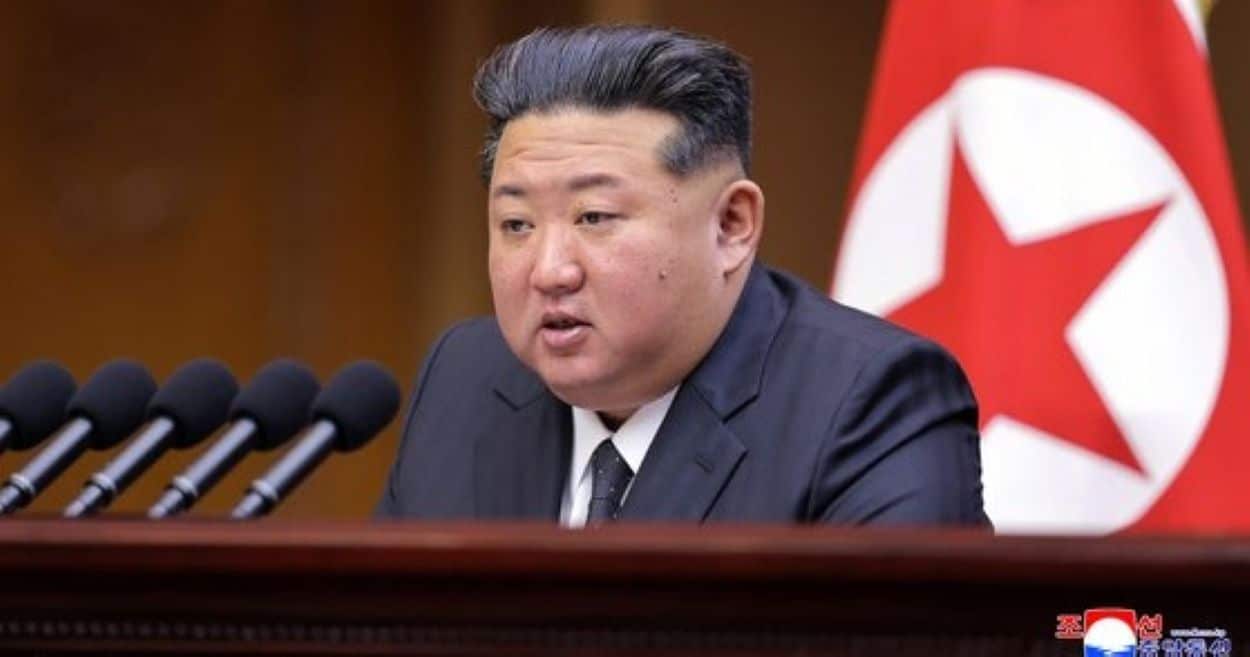

Kim Jong Un reappointed state affairs president after North Korea’s legislature unanimously backed his leadership, according to state media reports. The decision was announced following a session of the Supreme People’s Assembly (SPA).
The State Affairs Commission remains the country’s highest governing body, reinforcing Kim’s continued authority.
The official KCNA report stated that the SPA re-elected Kim during its first session of the 15th term held on March 22. Authorities described the outcome as reflecting the “unanimous will” of the people.
The vote followed the election of 687 deputies to the assembly. State media reported approval rates of 99.93%, with a turnout of 99.99%. Despite official claims, analysts argue that North Korea’s elections lack genuine competition. Experts describe the process as highly controlled, with only one approved candidate per seat.
According to analysts, such events aim to present a formal structure while ensuring predetermined outcomes.
Kim’s Continued Rule and Political Legacy
Kim Jong Un has led North Korea since 2011, following the death of his father. He represents the third generation of leadership after Kim Il Sung founded the state in 1948.
Images released by state media showed Kim presiding over the session, surrounded by senior officials and symbolic imagery of past leaders.
Observers suggest the assembly session may signal future policy directions. Analysts believe it could include constitutional amendments, particularly regarding inter-Korean relations. Experts note that the language used in official speeches may indicate whether North Korea adopts a more confrontational stance toward South Korea.
Read: Kim Jong Un Drives Nuclear-Capable Rocket Launcher at Pyongyang Ceremony
The assembly gathering follows a recent ruling party meeting, highlighting ongoing political consolidation. Analysts view such events as key moments to understand North Korea’s strategic priorities.
As a result, global observers continue to monitor policy signals emerging from the leadership and legislative sessions.