

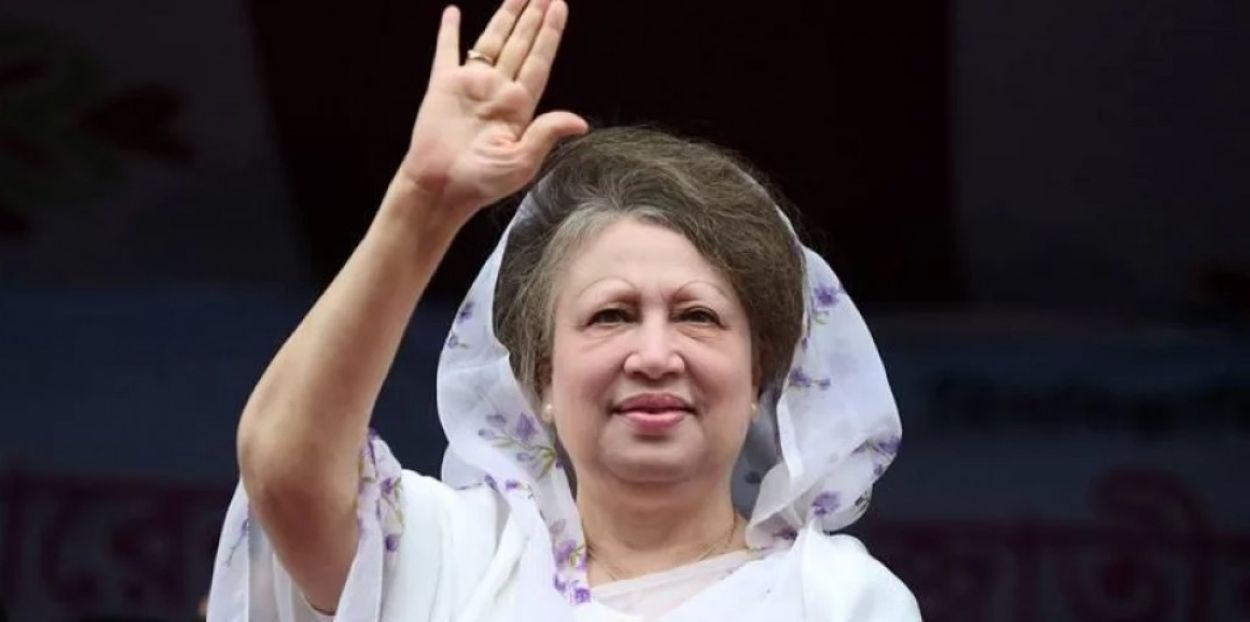

Khaleda Zia, Bangladesh’s first female prime minister and one of the country’s most influential political figures, died on Tuesday after a prolonged illness. She was 80.
Her party, the Bangladesh Nationalist Party, confirmed her death, saying she had suffered from multiple health complications. Doctors said she battled advanced liver cirrhosis, diabetes, arthritis, and heart and chest conditions. Earlier this year, she spent four months in London receiving medical treatment before returning home.
Although Khaleda Zia had remained out of power since 2006 and spent years in prison or under house arrest, she continued to command strong public support. The BNP currently stands as a frontrunner in the parliamentary election scheduled for February.
Her son, Tarique Rahman, the party’s acting chairman, returned to Bangladesh last week after nearly 17 years in self-imposed exile. Many observers view him as a leading contender for the premiership.
The BNP Chairperson and former Prime Minister, Begum Khaleda Zia, passed away today at 6:00 a.m., shortly after the Fajr prayer. Inna lillahi wa inna ilayhi raji‘un. We pray for the forgiveness of her soul and request everyone to offer prayers for her departed soul. pic.twitter.com/KY2948UPD5
— Bangladesh Nationalist Party-BNP (@bdbnp78) December 30, 2025A defining figure in Bangladesh’s politics
Khaleda Zia entered politics after the assassination of her husband, former president Ziaur Rahman, in a failed military coup in 1981. Until then, she had lived largely out of the public eye, focusing on raising their two sons.
In 1984, she took charge of the BNP, the party her late husband founded, and pledged to continue his vision of lifting Bangladesh out of poverty and economic stagnation.
She later joined forces with Sheikh Hasina, leader of the Awami League and daughter of Bangladesh’s founding father, to spearhead a popular movement that toppled military ruler Hossain Mohammad Ershad in 1990.
Their alliance soon collapsed, giving rise to one of South Asia’s most enduring political rivalries. The two leaders became widely known as the “Battling Begums,” a feud that dominated Bangladeshi politics for more than three decades.
Bangladesh's first female prime minister Khaleda Zia dies aged 80 https://t.co/QfOTxb0f4S
— BBC News (World) (@BBCWorld) December 30, 2025In 1991, Bangladesh held what many regarded as its first free and fair election. Khaleda Zia defeated Hasina and became the country’s first female prime minister. She was also only the second woman to lead a democratic government in a Muslim-majority nation, after Benazir Bhutto.
During her first term, she restored the parliamentary system, shifting power back to the prime minister’s office. She encouraged foreign investment and introduced free, compulsory primary education.
She lost power in 1996 but returned with a landslide victory in 2001. Her second term, however, faced growing criticism over corruption allegations and the rise of militant groups.
Controversy, detention, and decline
Political tensions escalated in 2004 after a grenade attack on a rally addressed by Hasina killed more than 20 people. Although Hasina survived, her supporters blamed Khaleda Zia’s government and its allies. The BNP rejected the allegations and later denounced related trials as politically motivated.
In 2006, an army-backed interim government took control amid unrest and jailed both Khaleda and Hasina on corruption charges. Authorities released them ahead of the 2008 elections, which Hasina won.
Read: Bangladesh court convicts son of opposition leader Khaleda Zia
Khaleda Zia never returned to power. The BNP boycotted the 2014 and 2024 elections, while her rivalry with Hasina continued to shape national politics, often triggering strikes and violence that hindered economic progress.
In 2018, courts convicted Khaleda Zia, her son, and aides in a corruption case involving foreign donations to an orphanage trust. She denied the charges and called them an attempt to sideline her family. Authorities later moved her from prison to house arrest in 2020 due to failing health.
Following Hasina’s ouster after a student-led uprising in August 2024, Khaleda Zia regained her freedom. In early 2025, Bangladesh’s Supreme Court acquitted her and Tarique Rahman in the corruption case. Courts also cleared Rahman in the 2004 grenade attack case.
Khaleda Zia’s death marks the end of a political era defined by intense rivalry, mass mobilisation, and deep divisions. Admired by supporters as a steadfast and dignified leader, and criticised by opponents for fostering instability, she remained a central figure in Bangladesh’s public life for more than four decades.



