
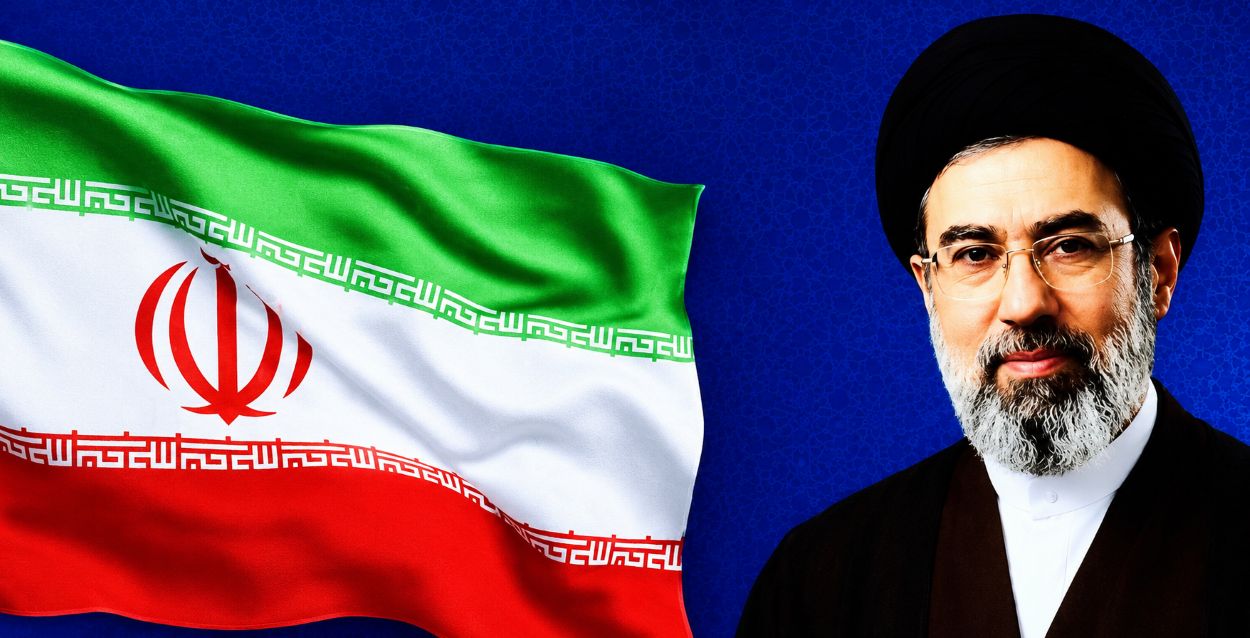

TEHRAN: Iran’s Supreme Leader Ayatollah Mojtaba Khamenei met national security chief Mohsen Rezaei to discuss the Strait of Hormuz and regional security, his office announced on Tuesday. The statement outlined discussions on maritime security and stronger relations with neighbouring countries.
Furthermore, these directive statements were issued following consultations between the Secretary of Iran’s Supreme National Security Council (SNSC), Mohsen Rezaei, and Ibrahim Mohammed al-Dailami, the Houthi movement’s ambassador to Iran.
Their discussions also highlighted the deepening strategic alignment between Tehran and the Ansarullah movement in Yemen on ongoing regional security operations.
The announcement followed Rezaei’s diplomatic talks with senior officials from Pakistan, Saudi Arabia and Turkiye in Tehran on Monday.
Representatives of the three countries, which signed the Makkah mutual defence pact in August, visited Iran to discuss regional tensions.
Rezaei, secretary of Iran’s Supreme National Security Council, described those consultations positively and called for stronger regional cooperation.
He separately met Houthi representative Ibrahim Mohammed al-Dailami in Tehran on Tuesday. Iranian state media said they discussed military developments in Yemen and wider security arrangements.
Read: Iran Fully Prepared, Supreme Leader’s Adviser Says
Rezaei praised Houthi operations against Israel. He advocated regional security arrangements that would reduce foreign military involvement.
Mojtaba Khamenei succeeded his father, Ayatollah Ali Khamenei, in March after US-Israeli strikes killed the former supreme leader on February 28.
Read: Iran-US Talks Stay Open Under Pakistan-Brokered Deal
Since assuming office, he has not appeared publicly and has communicated through written messages. Judiciary chief Gholamhossein Mohseni Ejei and parliament speaker Mohammad Bagher Ghalibaf have also recently reported meetings with the supreme leader.
The United States maintains a naval blockade of Iranian ports, while Tehran asserts control over passage through the Strait of Hormuz.