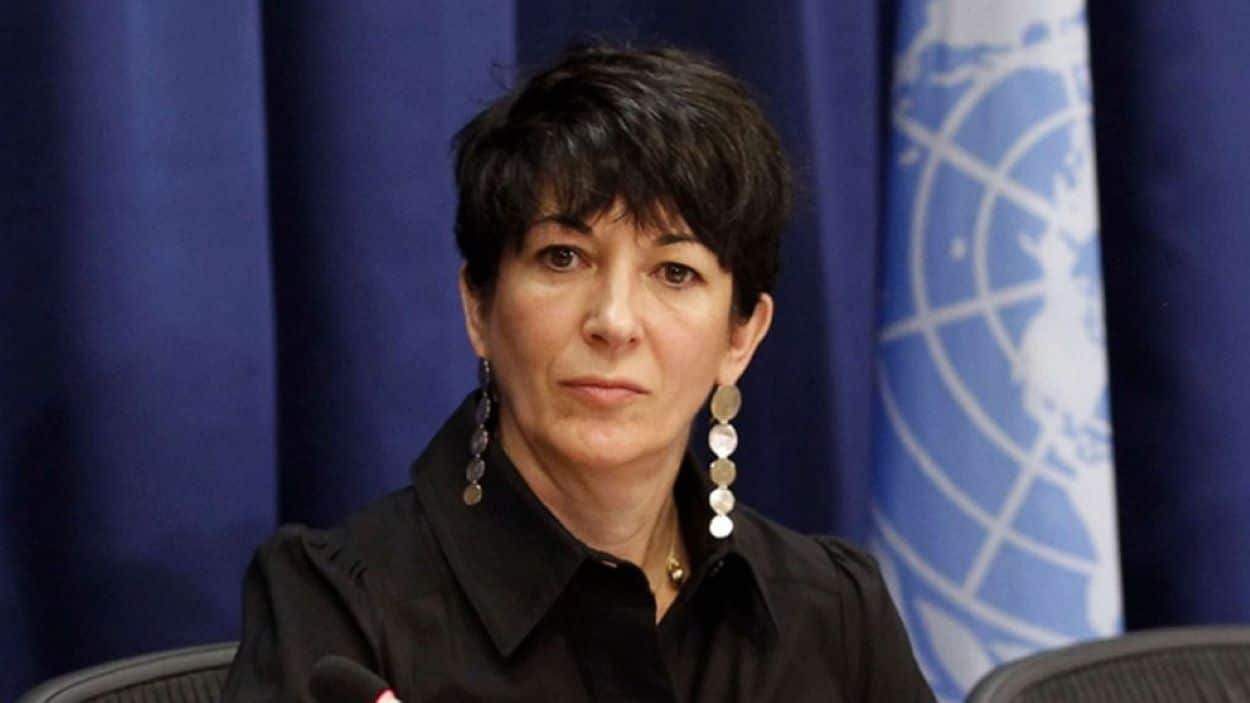

Ghislaine Maxwell refuses to testify before US lawmakers after invoking her Fifth Amendment right against self-incrimination during a congressional deposition. The longtime associate of convicted sex offender Jeffrey Epstein declined to answer questions unless granted clemency by US President Donald Trump, according to her attorney.
Maxwell, 64, is serving a 20-year prison sentence for sex trafficking. She appeared via video link from a Texas prison after being subpoenaed by the House Oversight Committee to discuss her relationship with Epstein and his wider network.
Rather than respond to lawmakers, Maxwell repeatedly invoked her constitutional right to remain silent. The committee ended the session early after she refused to engage.
Ghislaine Maxwell refuses to testify, cites Fifth Amendment
A recording released by the committee showed Maxwell seated in a prison room, wearing a beige uniform and looking down as she answered each question with the same response. She declined to address inquiries about Epstein’s alleged co-conspirators or whether powerful figures were used to shield their activities.
Lawmakers also asked whether Donald Trump ever engaged in sexual activity with individuals introduced by Maxwell or Epstein. Maxwell again invoked the Fifth Amendment.
Read: Sarah Ferguson Shaken by New Details Linked to Jeffrey Epstein Email
Her attorney, David Markus, said she would be willing to speak publicly if granted clemency. He argued that such a step would allow the public to hear a full, unfiltered account of the events surrounding Epstein.
Clemency request and legal positioning
Markus said that if Congress and the public truly want answers, clemency is the only viable path. He also claimed that Trump and former president Bill Clinton, both of whom were once associated with Epstein, were innocent of wrongdoing.
According to Markus, Maxwell alone could explain why no one else has been convicted in the Epstein case. He said the public deserves that explanation.
🚨 EXCLUSIVE: Watch the moment Ghislaine Maxwell pleads the Fifth during her deposition.
She was asked if she was a close friend of Epstein, if she helped him traffic girls, and if she instructed girls to provide sexual favors, among other questions.
Total silence. pic.twitter.com/6yYAyqlw7y
— Oversight Committee (@GOPoversight) February 9, 2026Maxwell remains the only person convicted in connection with Epstein, who died in a New York jail cell in 2019 while awaiting trial on sex trafficking charges.
Background of Maxwell’s conviction
A jury convicted Maxwell in 2021 of recruiting and trafficking underage girls for Epstein. Prosecutors said she played a central role in facilitating abuse involving powerful and wealthy individuals.
Epstein maintained relationships with business leaders, politicians, celebrities, and academics. Despite the network’s scale, no additional prosecutions have followed Maxwell’s conviction.
Read: Naomi Campbell Appears in Newly Revealed Jeffrey Epstein Emails
The Justice Department has stated that it does not expect new criminal cases to emerge from the investigation.
Epstein Files and transparency law
Maxwell’s deposition came amid the release of millions of documents tied to the Epstein investigation. The Justice Department began publishing the files under the Epstein Files Transparency Act, which Congress passed in November.
The law required authorities to release all records related to Epstein while protecting victims’ identities. Officials redacted the names and identifying information of more than 1,000 victims identified by the FBI.
However, the act explicitly barred redactions based on embarrassment, reputational harm, or political sensitivity involving public officials or foreign dignitaries.
Congressional access to unredacted records
Members of Congress gained access to unredacted versions of the Epstein files on Monday. Lawmakers were required to view the records in person at secure Justice Department locations.
Representative Jamie Raskin said he saw names that appeared to have been redacted without clear justification. He described some individuals as enablers or cooperators in Epstein’s activities.
Republican Representative Thomas Massie said he identified six men whose names were removed from public documents despite appearing to be incriminated. He declined to name them but said one held a senior position in a foreign government.
New disclosures fuel controversy
Massie also posted a 2009 email exchange between Epstein and a redacted sender discussing a “torture video.” Later, he said a file had listed businessman Les Wexner as a co-conspirator in a 2019 trafficking case, despite that reference being redacted.
Wexner is the billionaire founder behind major retail and lingerie brands. The Justice Department has not commented on the specific claims raised by lawmakers.
Meanwhile, the House Oversight Committee has summoned Bill Clinton and Hillary Clinton to testify about their interactions with Epstein. The Clintons have requested public hearings to avoid politicisation.