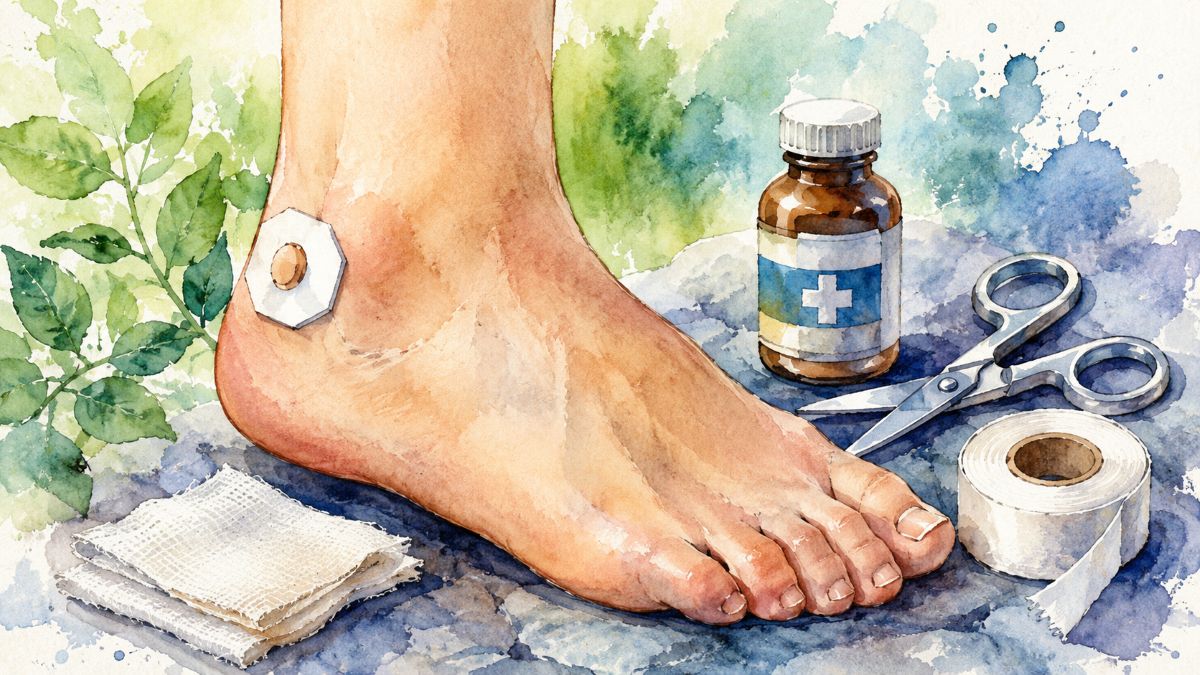

Foot blister treatment should begin by leaving the skin intact, cleaning the area and shielding it from rubbing, the American Academy of Dermatology said in guidance updated July 6.
Foot blisters usually develop when pressure and repeated friction damage layers of skin. Heat and moisture inside shoes can increase rubbing, while fluid collects beneath the damaged surface.
The American Academy of Dermatology advises loosely covering an intact blister with a bandage. A doughnut-shaped pad can help protect blisters in weight-bearing areas, such as the ball or heel of the foot. Most blisters heal within one to two weeks.
People should avoid popping or draining a blister, as breaking the skin can increase the risk of infection. A large and very painful blister may require drainage, but the skin covering it should remain in place.
The National Health Service says a medical professional may drain such blisters with a sterilised needle. If a blister bursts naturally, the area should be washed gently with soap and water. Petroleum jelly and a clean, non-stick dressing can then protect the exposed skin.
Read: Study Reveals Minor Weight Gain Associated with Daily Fruit Juice Intake
Medical care is needed if redness spreads or the area becomes warm, swollen or increasingly painful. Pus and fever can also indicate infection.
People with diabetes, poor circulation or a tendency to develop infections should seek professional advice before treating or draining a blister.
Well-fitting shoes and moisture-wicking socks can reduce future blisters. Dermatologists also recommend protecting known friction points with soft bandages, moleskin, powder or petroleum jelly before walking or exercising.