
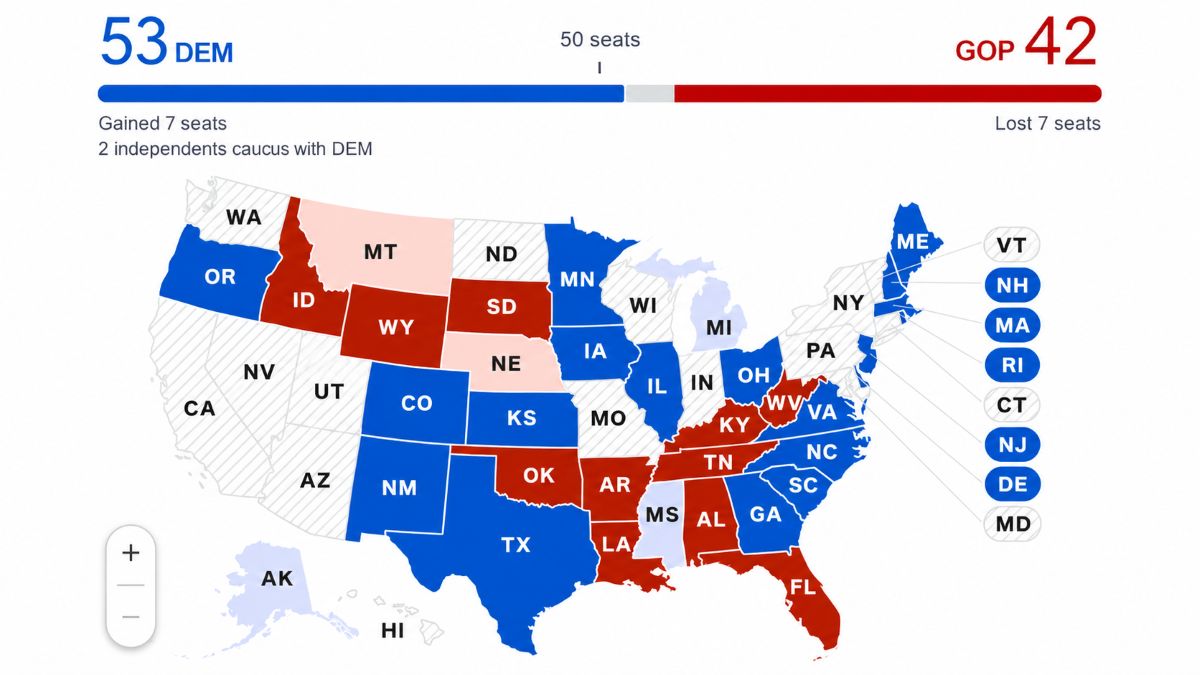

WASHINGTON: On Wednesday, Democrats took control of both chambers of Congress after the US midterm elections, ending Republican majorities in the House and Senate.
Democrats gained Senate seats in South Carolina, Texas, Ohio, Kansas and Iowa. Several victories came in states President Donald Trump won by wide margins in 2024.
The party also secured key House victories. Its gains put Democratic leader Hakeem Jeffries in line to become the first Black speaker of the House, subject to a congressional vote.
Final seat totals remained uncertain as election officials continued counting ballots. Trump told The New York Times that he would accept the results and work with Democrats.
“I am absolutely willing to accept those results,” the president said. CNN’s voter poll found that more than six in 10 respondents disapproved of Trump’s performance.
Read: US Supreme Court Rejects Trump’s California Ballot Bid
Two-thirds believed his economic policies had made conditions worse. Inflation, tariffs and the war in Iran featured among the concerns identified in the election coverage.
Democrats also won several closely watched races. In Texas, James Talarico defeated Republican Ken Paxton in the Senate contest.
Iowa Democrat Josh Turek also defeated Republican Ashley Hinson. CNN projected that Minnesota Lieutenant Governor Peggy Flanagan would win the state’s open Senate seat.
Read: US Midterm Elections Bring Market Focus to AI Regulation and Debt Ceiling
She will become Minnesota’s first Native American senator. In Nebraska, Democrat Denise Powell was projected to win the 2nd Congressional District, becoming the state’s first Hispanic member of Congress.
Control of both chambers would give Democrats greater power to investigate the Trump administration and issue congressional subpoenas.
Read: Trump Attacks El-Sayed at US Midterm Rally in Michigan
A Senate majority would also allow them to block presidential judicial nominees, including appointments to the Supreme Court.
However, Trump’s veto power and the Senate’s 60-vote threshold for most legislation could limit Democratic efforts to advance their agenda.
(With input from CNN and the New York Times)