

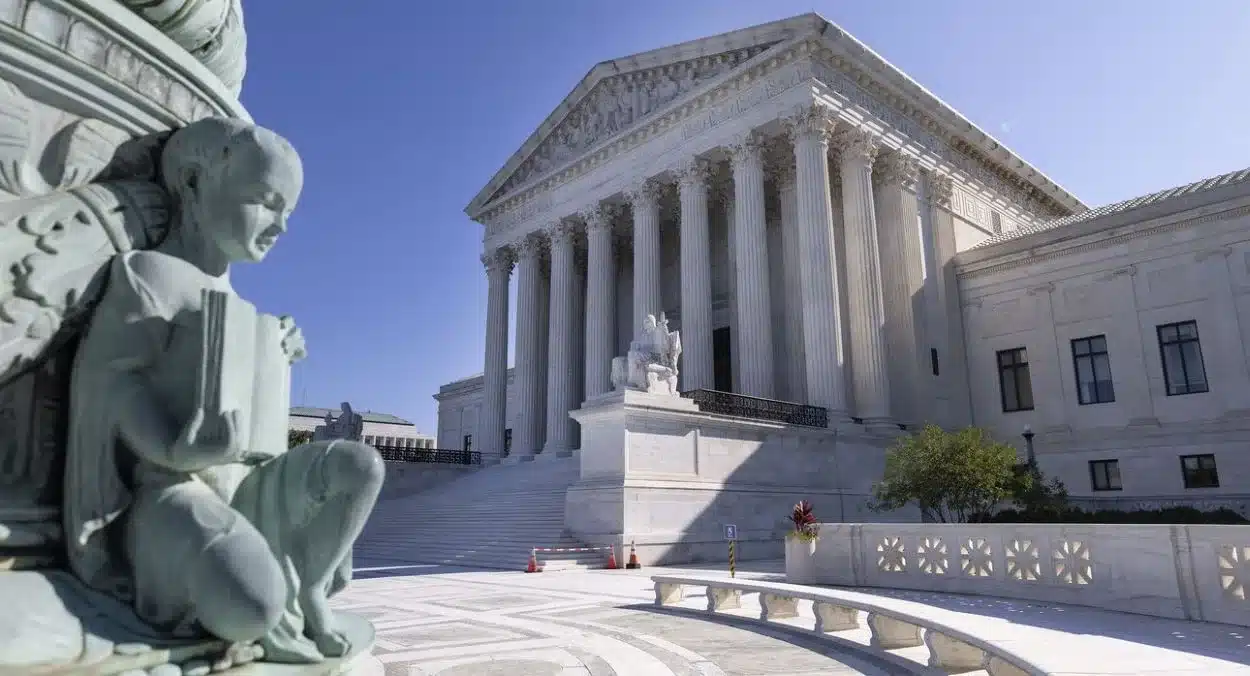

The US Supreme Court tariffs ruling has triggered a broad market rally after the court struck down most of former President Donald Trump’s signature trade duties in a 6–3 decision.
Following the verdict, the S&P 500 rose 0.6% while the Nasdaq gained 1%. Global markets also responded positively, with European shares and equities in South Korea and India moving higher.
Companies with significant exposure to tariffs saw the strongest gains.
US Supreme Court Tariffs Ruling Boosts Stocks
The US Supreme Court tariffs ruling particularly benefited firms that rely heavily on imported goods from China.
Amazon rose about 2%, reflecting its sourcing exposure. Footwear brands such as Deckers Outdoor, Birkenstock and Crocs climbed more than 2%. Furniture retailers Wayfair and Floor & Decor advanced roughly 4%.
Investors welcomed the removal of trade barriers that had weighed on profit margins.
However, uncertainty remains. The court did not clarify whether companies could reclaim billions of dollars already paid in tariffs.
Justice Brett Kavanaugh noted that the decision “says nothing about whether, and how, if so, the Government should go about returning the billions of dollars that it has collected.”
Refund Questions and Economic Concerns
Potential refunds have raised concerns about fiscal stability. Treasury yields moved higher as investors weighed the possibility that repayments could widen the federal deficit.
The 10-year Treasury yield rose 2 basis points to 4.096%. Meanwhile, the US dollar edged slightly lower.
The ruling comes amid mixed economic signals. Fourth-quarter GDP expanded at an annual rate of 1.4%, below expectations and partly influenced by a government shutdown.
Core inflation remained at 3%, still above the Federal Reserve’s 2% target.
Market analysts say removing tariff uncertainty could improve corporate confidence. However, broader economic pressures, including inflation and growth concerns, continue to shape investor sentiment. Global investors will now watch for any government response regarding tariff refunds and fiscal policy adjustments.



