

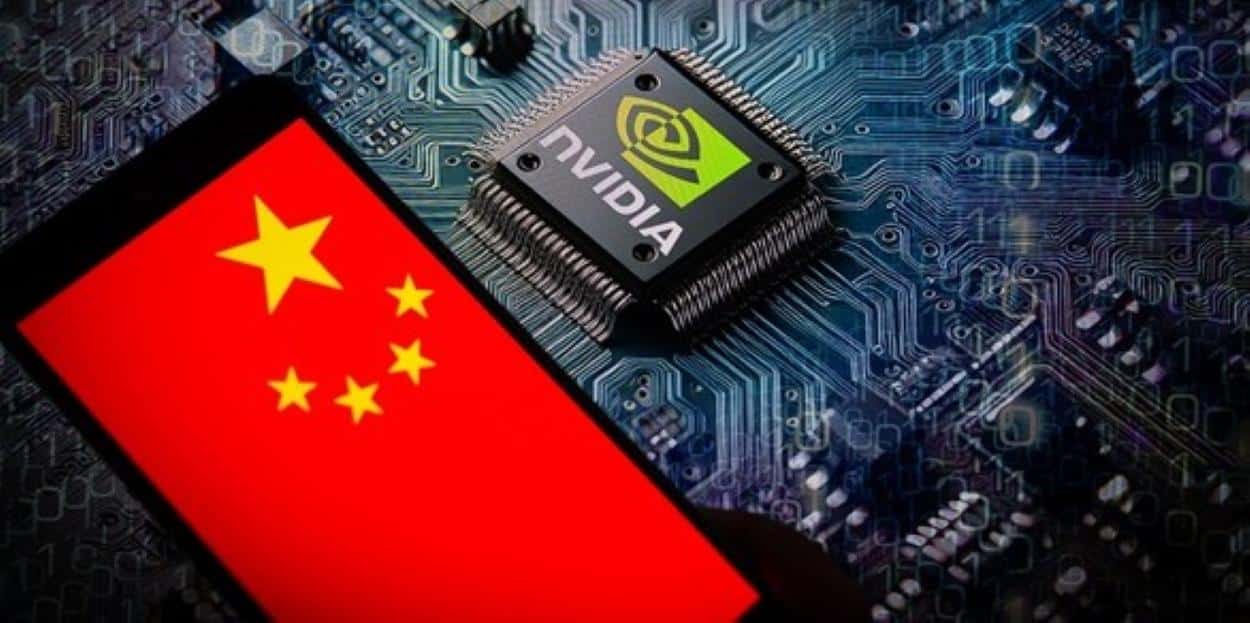

The United States will allow Nvidia’s H200 processors, its second-best AI chips, to be exported to China, subject to a 25% fee on each sale.
President Donald Trump announced the decision on Monday. The move ends a long debate in Washington over how to maintain America’s lead in AI while reducing risks linked to China’s military buildup. China has urged its firms to avoid US technology, which leaves the impact of the decision uncertain.
Nvidia’s shares climbed after Trump posted the announcement on Truth Social. Trump said he briefed President Xi Jinping on the policy and received a positive response. The US Commerce Department is preparing the final export rules. Trump confirmed that the policy will also cover AMD and Intel. He added that Nvidia’s newer Blackwell and Rubin chips remain restricted and will not be part of this agreement.
Trump did not reveal how many H200 chips will qualify for export or what limits will apply. He stated that all shipments will move forward under conditions that protect national security. Officials view the policy as a middle position. It does not allow China to buy the most advanced US chips, but it avoids a complete ban that could push China to rely only on Huawei-built processors.
JUST IN: 🇺🇸🇨🇳 US to allow NVIDIA to export H200 AI chips to China. pic.twitter.com/EFHF4aAV0Q
— BRICS News (@BRICSinfo) December 8, 2025Industry Response and Chip Performance Gap
Nvidia welcomed the decision. The company said that providing H200 chips to screened commercial buyers supports US interests. The Institute for Progress reported that the H200 is almost six times more powerful than the H20, the most advanced chip allowed in China before this announcement. Blackwell chips used by US firms remain much faster for AI training and inference, which helps preserve America’s technological edge.
The Trump administration plans to let Nvidia export its H200 chip to China, the latest twist in the AI chip designer’s efforts to maintain access to the world’s second-largest economy https://t.co/5NeKqUqxkE
— The Wall Street Journal (@WSJ) December 8, 2025Several Democratic senators called the decision a major national security risk. They argued that China could use advanced AI chips to expand military and surveillance operations. Representative John Moolenaar warned that China may copy Nvidia’s technology and weaken the company’s global position. Former US officials also said the policy could trade short-term economic gains for long-term security concerns.
Read: Nvidia Backs India Deep Tech Alliance in $850 Million Funding Pus
A White House official explained that the United States will collect a 25% import tax on the chips when they arrive from Taiwan. US officials will inspect the hardware before it goes to China. The Commerce Department, AMD, and Intel did not comment on the process.



