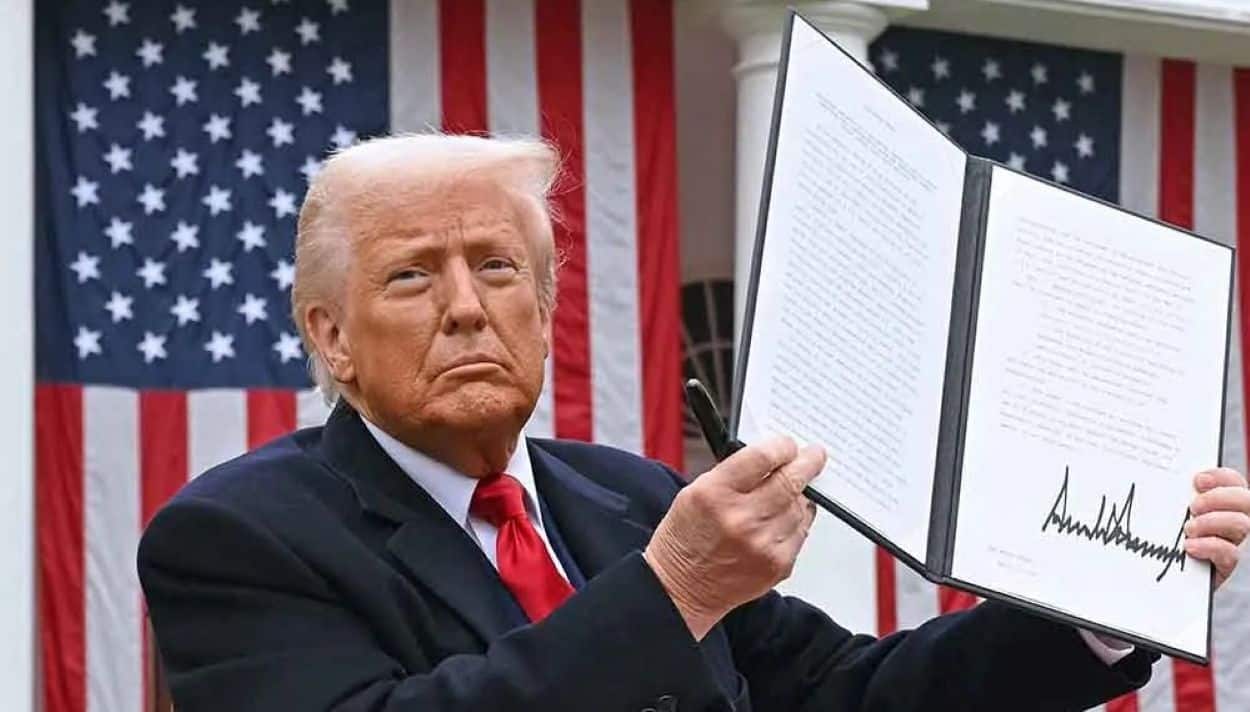

US President Donald Trump is preparing a more aggressive crackdown on immigration in 2026, backed by billions of dollars in new funding. The plan includes expanded workplace raids, even as political backlash grows ahead of next year’s midterm elections.
Trump has already increased the presence of immigration agents in major US cities. Federal officers have carried out large-scale operations in residential areas, at times clashing with local communities. While authorities previously avoided enforcement at farms and factories, officials now signal a broader approach.
Immigration and border agencies will receive an additional $170 billion in funding through September 2029. The massive increase follows approval of a spending package by the Republican-controlled Congress in July. The boost far exceeds the agencies’ combined annual budgets of about $19 billion.
Trump’s “border czar” shows how the revolving door now defines the Trump Administration’s anti-immigration network.
A $170 billion ICE windfall has become a payoff pipeline for contractors tied to Mr. Homan and other senior officials, from the $50,000 Cava-bag payoff to… pic.twitter.com/5EKuEYwkf4
— House Judiciary Dems (@HouseJudiciary) December 15, 2025The funding will support the hiring of thousands of new agents, the construction of additional detention centres, and expanded cooperation with local jails. Officials also plan to partner with private companies to help locate immigrants without legal status.
Despite the expansion, the policy shift comes amid rising political unease. In Miami, a city heavily affected by the crackdown, voters elected their first Democratic mayor in nearly three decades. The mayor-elect cited immigration enforcement as a key concern among residents.
Republican strategist Mike Madrid said public perception is changing. He noted that many voters now view the issue as one of civil rights and due process rather than border control, creating challenges for Republicans.
Trump set to expand immigration crackdown in 2026 despite brewing backlash https://t.co/Gi63jD1yMt https://t.co/Gi63jD1yMt
— Reuters (@Reuters) December 21, 2025Trump’s approval rating on immigration has fallen sharply. It dropped from 50 per cent in March to 41 per cent by mid-December, according to recent polling. Public concern has grown over masked federal agents, the use of tear gas in residential areas, and the detention of US citizens.
Workplace Raids and Growing Controversy
The administration has also expanded the pool of people eligible for deportation. Trump has revoked temporary legal status for hundreds of thousands of Haitian, Venezuelan, and Afghan immigrants. He has pledged to deport one million people per year, a target officials acknowledge he is unlikely to meet this year.
So far, authorities have deported about 622,000 immigrants since Trump returned to office in January. White House border czar Tom Homan told Reuters that arrests will rise sharply as enforcement capacity expands.
Homan confirmed that workplace raids are part of the plan. He said the number of arrests will “explode” next year as new officers come online and detention space increases.
Policy analysts warn the approach could have economic consequences. Sarah Pierce of Third Way said businesses have so far avoided confronting the administration but may respond if enforcement targets employers more directly.
Read: Trump Permanently Bans Immigration from “Third World Countries”
Government data shows that enforcement patterns have shifted. As of late November, about 41 per cent of those detained by Immigration and Customs Enforcement had no criminal record beyond an alleged immigration violation. That figure stood at just 6 per cent before Trump took office.
The administration has also targeted legal immigrants. Agents have detained green card applicants during interviews, removed individuals from naturalisation ceremonies, and revoked thousands of student visas.
Supporters of stricter enforcement argue that employers must also be held accountable. Jessica Vaughan of the Centre for Immigration Studies said workplace enforcement would pressure businesses to comply with immigration laws.
With funding secured and enforcement set to expand, Trump’s immigration agenda is poised to become even more aggressive in the coming year, setting the stage for a major political and economic debate as the midterm elections approach.
*With additional information incorporated from Reuters news reporting