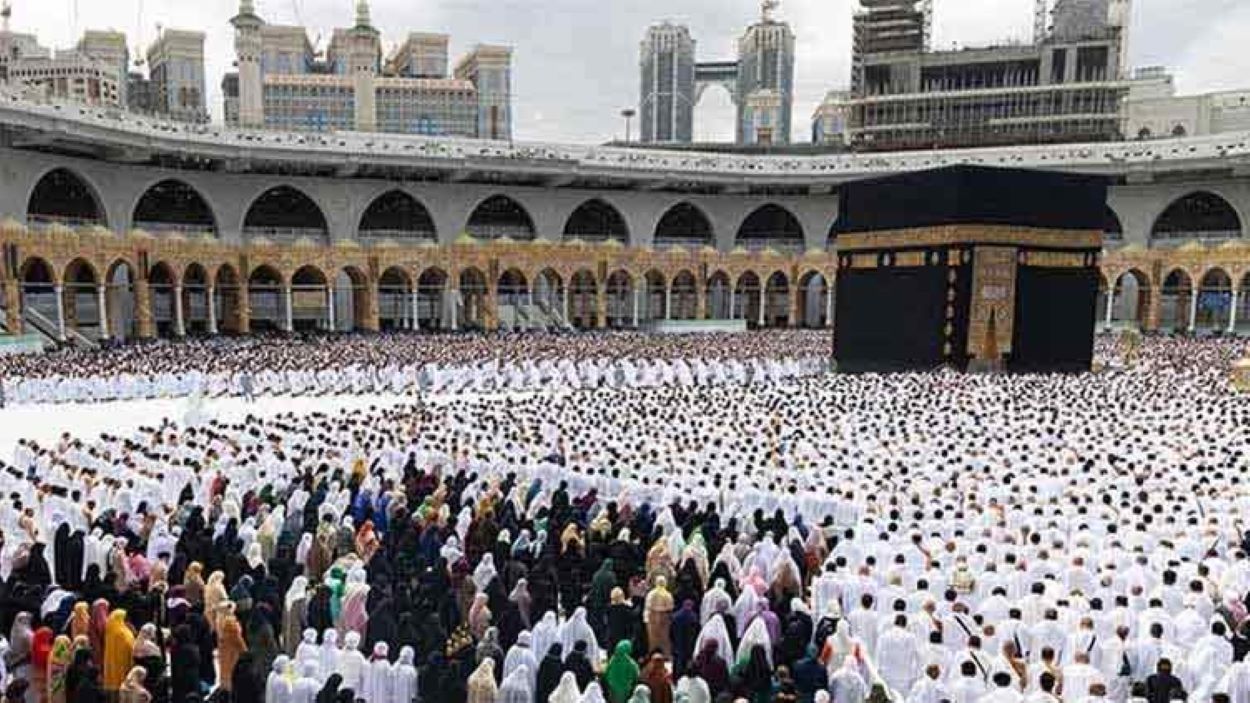

Saudi Arabia’s Hajj visa issuance will begin on February 8 for pilgrims worldwide. The Ministry of Hajj and Umrah confirmed the timeline on Thursday, marking an early start compared to previous years.
Officials said the decision reflects an accelerated schedule. The aim is to improve service readiness and ensure pilgrim comfort nearly four months before the Hajj rituals begin. The move also aligns with Saudi Arabia’s Vision 2030 goals.
Read: Pakistan Extends Hajj 2026 Application Deadline to August 18
Services and accommodation contracts finalised
The ministry confirmed that contracts covering all essential services at the holy sites for international pilgrims have been completed. Authorities have also finalised accommodation contracts in Makkah through the Nusk platform.
Officials said the early completion of contracts will help reduce last-minute challenges. It also allows service providers to focus on quality, safety, and coordination during the pilgrimage season.
Registration numbers show strong early demand
So far, around 750,000 pilgrims have registered for Hajj. According to the ministry, travel packages have already been booked for 30,000 pilgrims directly from their home countries.
Authorities also confirmed that approximately 485 camps have been allocated at the holy sites for international pilgrims. In addition, 73 Hajj affairs offices have completed their basic contractual arrangements.
Saudi Arabia Starts 2026 Hajj Visa Issuance Four Months Early…https://t.co/sjTqQUz7aF
— Saudi Expatriates (@saudiexpat) February 5, 2026Pakistan completes Hajj registrations
In Pakistan, Hajj registration has already concluded. Federal Minister for Religious Affairs Sardar Muhammad Yousaf confirmed that 119,000 pilgrims registered under the government scheme.
He also said that 60,000 pilgrims registered through private operators. The minister noted that preparations followed the Saudi timeline, allowing Pakistan to complete arrangements ahead of schedule.
Food, transport, and services finalised
The minister said arrangements for food, transportation, and other services were completed through a competitive process. Authorities aimed to improve service quality and cost efficiency for pilgrims.
He added that early planning helped ensure smoother coordination with Saudi authorities. This approach reduced logistical pressure during peak Hajj days.
Referring to Hajj 2025, the minister said refunds totalling Rs3.5 billion were returned to 75 per cent of Pakistani pilgrims. Individual refunds ranged from Rs 12,000 to Rs 110,000.
He also highlighted training efforts ahead of the pilgrimage. Authorities conducted audio-visual training sessions at 147 locations across Pakistan. According to the minister, trained pilgrims showed strong discipline during Hajj.